No Passport. No Visa. Just a Flight and a Drumbeat.
Here's the sentence that changes how a lot of Black travelers think about Puerto Rico: you can fly here the same way you'd fly to Atlanta. No passport application. No visa interview. No OFAC license paperwork, no customs form, no currency to exchange. Puerto Rico is an unincorporated US territory, which means a trip here is legally and logistically a domestic flight — the same government-issued, REAL ID-compliant driver's license or state ID that gets you through TSA for a trip to Chicago gets you through TSA for a trip to San Juan. And on the other end of that flight is one of the most culturally rich, unapologetically Afro-Caribbean destinations in the hemisphere.
That's the case for San Juan and Loíza as a flagship BTN pick: the ease of a domestic trip, paired with a depth of living Black culture that most travelers don't expect to find this close to home. Old San Juan gives you 500 years of colorful colonial architecture and Caribbean energy. Loíza, less than an hour up the coast, gives you Bomba y Plena — a drum-and-dance tradition born on 17th-century sugar plantations that traces in an almost unbroken line back to West Africa.
Loíza: Puerto Rico's Most Important Afro-Boricua Cultural Center
Most visitors never make it past Old San Juan's postcard streets. That's a mistake. Thirty to forty-five minutes northeast along the coastal Route 187, past the palm-lined seafood shacks of Piñones, sits Loíza — a small, predominantly Afro-descendant municipality that is, by wide consensus among folklorists and Puerto Rican cultural historians, the island's most important living center of Afro-Boricua culture.
Loíza's population descends heavily from enslaved Africans brought to work the coastal sugar plantations that once dominated this stretch of shoreline. Rather than being erased, that heritage became the region's defining identity. Bomba y Plena — the paired musical traditions most closely associated with the town — didn't survive here by accident. They survived because Loíza's families made preserving them a generational project, and that project continues today in community centers, backyard bombazos, and festival grounds across the town.
Bomba y Plena: A Living Link Back to West Africa
Bomba is Puerto Rico's oldest documented musical tradition, with roots reaching back to the 1600s among enslaved West Africans and their descendants on the island's coastal sugar plantations, including Loíza, Ponce, Mayagüez, and San Juan itself. Researchers trace bomba's rhythmic vocabulary and even its name to the Akan and Bantu-speaking peoples of West Africa — with some scholarship pointing specifically to Asante (Ghanaian) influence. The earliest written reference to the tradition appears in an 1797 travel account by the French botanist André Pierre Ledru, who documented enslaved communities performing it. Later waves of enslaved and free Haitians arriving during the Haitian Revolution added further rhythmic layers, particularly the yubá rhythm still played in Mayagüez.
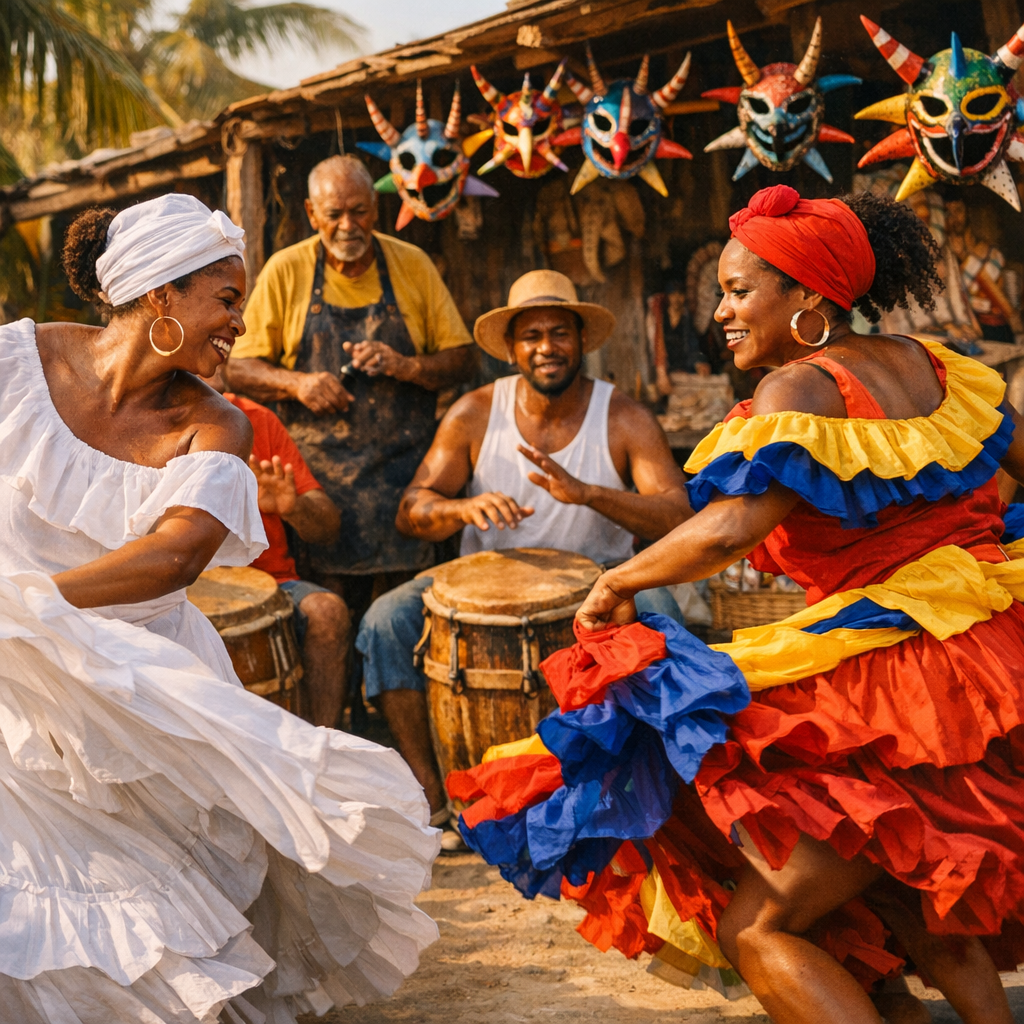
What makes bomba unlike almost any other Caribbean musical form is its structure: the dancer leads, not the drummer. A primo (lead drummer) plays the subidor, a high-pitched drum, and improvises in direct response to the dancer's spontaneous movements — a call-and-response conversation called repique, where the drum literally replicates the dancer's steps in real time. Beneath that exchange, one or more buleador drummers hold down a steady foundational rhythm. The barriles themselves are traditionally built from repurposed rum barrels topped with goatskin, accompanied by maracas and the cuás, a pair of bamboo sticks struck against the drum's wooden shell.
Plena, bomba's close cousin, emerged later — a narrative, guitar-and-hand-drum-driven style often called "the sung newspaper" of Puerto Rico because plena songs historically spread news and social commentary through working-class Afro-Boricua communities.
Both traditions are actively taught today, not preserved behind glass. Guardian families — most famously the Cepedas and the Ayalas — have passed bomba down through generations, and the grassroots "bombazo" movement that took off in the 1990s pulled the tradition out of formal stages and back into community plazas, backyards, and cultural centers, where anyone can join the circle. Visitors to Loíza can often catch community bombazos, and several cultural centers in the area offer short workshops for travelers who want to learn a few basic steps and rhythms firsthand.
Fiestas de Santiago Apóstol: Loíza's Patron Saint Festival
Loíza's biggest cultural event of the year is the Fiestas de Santiago Apóstol (Festival of Saint James the Apostle), a roughly 400-year-old tradition centered on July 25th, the feast day of Saint James. Loíza's 2026 festival is set to run approximately July 24-28, though as with any long-running local tradition, exact dates and the full event schedule are finalized by municipal organizers closer to the date — confirm details through Loíza's town government or Discover Puerto Rico before you book around it.
The festival is a genuine cultural hybrid: a Spanish Catholic patron saint tradition fused with African-rooted symbolism and performance. A statue of Santiago is carried through town in a series of processions — traditionally separated into celebrations for men, women, and children — and, according to local legend, brought to a centuries-old ceiba tree where the saint is said to have once appeared. Threaded through every procession are the vejigantes: costumed figures in wildly colorful ruffled suits wearing horned masks traditionally carved from coconut shells and painted in bold reds, yellows, and blacks. Scholars debate the vejigante's exact origin story, but the character is widely understood as carrying African ancestral and trickster-spirit symbolism, adapted over centuries into the festival's dominant visual icon. Bomba music and dancing run through the entire event, turning Loíza's streets into a multi-day, multi-generational celebration of Afro-Boricua identity.
Old San Juan: Colonial Color Meets Caribbean Soul
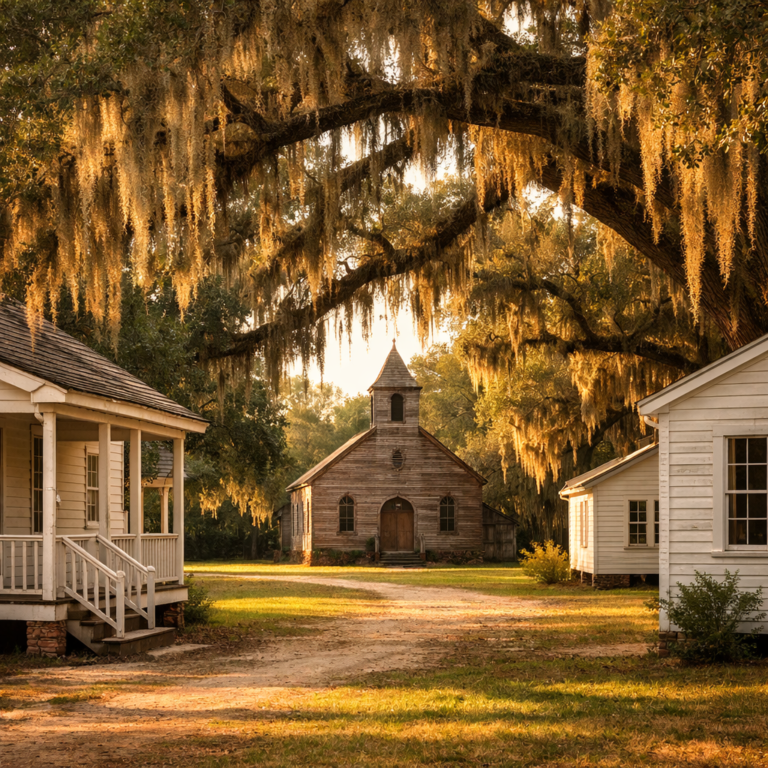
Back in San Juan, the 500-year-old walled city delivers an entirely different but equally worthwhile experience. Cobblestone streets (paved with blue-tinted adoquín stones, originally ballast from Spanish ships) wind past centuries-old buildings painted in saturated pinks, blues, and yellows. Castillo San Felipe del Morro and Castillo San Cristóbal, two massive Spanish fortresses guarding the harbor, are among the best-preserved colonial military sites in the Americas and offer sweeping Atlantic views. La Fortaleza, the governor's residence, is the oldest executive mansion in continuous use anywhere in the Western Hemisphere. Wander the Paseo de la Princesa along the old city walls at sunset, and don't skip a slow evening in Santurce, San Juan's arts and music district, where Afro-Boricua culture shows up in murals, galleries, and live music venues well beyond the tourist core.
Where to Eat
Bacalaítos and alcapurrias — Loíza and the Piñones coastal strip are ground zero for these fried Puerto Rican street food staples; roadside kiosks along Route 187 serve some of the best on the island. Mofongo — mashed fried plantain with garlic, often piled with shrimp, chicharrón, or stewed meat — is Puerto Rico's signature dish and worth seeking out in both San Juan and Loíza. Arroz con gandules (rice with pigeon peas) is the island's essential comfort food. And the piña colada, invented in an Old San Juan hotel bar in the 1950s, deserves at least one sunset toast.
Where to Stay
Luxury: Historic boutique hotels line Old San Juan's colonial streets, many in restored 16th- and 17th-century buildings. Mid-range: Condado and Ocean Park offer beachfront convenience close to the old city. Budget: Guesthouses in Santurce and Río Piedras put you near local life at a fraction of tourist-zone prices. Loíza itself has limited lodging, so most travelers base themselves in San Juan and day-trip out for the festival and bombazos.
🏨 Book San Juan Hotels →Best Time to Visit
December through April is Puerto Rico's dry season — the most reliable weather for beaches and sightseeing, though also peak pricing. For culture-first travelers, late July is the moment: it lines up with Loíza's Fiestas de Santiago Apóstol, giving you Bomba, vejigantes, and patron-saint processions all in the same trip. Hurricane season runs June through November, with September and October the highest-risk months — worth watching if traveling during that window.
Budget Guide
Budget: $80-130/day — guesthouse, street food and kiosks, públicos and walking.
Mid-range: $180-300/day — boutique hotel, restaurant dining, rental car for the Loíza day trip.
Luxury: $400+/day — historic Old San Juan property, private guided cultural tours, fine dining.
BTN Insider Tips
Get to Loíza with a local guide if it's your first trip. A guided cultural tour will get you into community bombazos and connect you with the Ayala or Cepeda family lineage in a way a solo drive-by never will.
Book flights and Old San Juan hotels early for late July. The Fiestas de Santiago Apóstol draws heavy local and diaspora crowds and rates rise accordingly.
Bring cash to Piñones and Loíza's roadside kiosks. Many of the best bacalaíto and alcapurria stands are cash-only.
Learn a little Spanish. English is common in San Juan's tourist zones but far less so in Loíza and Piñones — a few basic phrases go a long way.
Is Puerto Rico Safe for Black Travelers?
Puerto Rico is generally very safe for tourists, with Afro-Boricua identity woven into the island's mainstream culture rather than pushed to its margins. Old San Juan and the main tourist corridors see heavy foot traffic day and night. Standard urban precautions apply in San Juan after dark, and Loíza — while welcoming — is a working-class community, not a resort zone, so a respectful, guided first visit is the smart move rather than an issue of safety. As a US territory, Puerto Rico also falls under full US emergency services (911) and consumer protections, which many travelers find reassuring compared to fully international Caribbean trips.
Mark Your Calendar
- Late July (around July 24-28 in 2026) — Fiestas de Santiago Apóstol, Loíza
- Year-round — Community bombazos in Loíza and Santurce; check local cultural centers for schedules
- November — Puerto Rico Salsa Congress, San Juan
Book Your Puerto Rico Trip
Puerto Rico proves you don't need a passport to reach one of the most direct living connections to West African heritage in the Caribbean. Old San Juan gives you the postcard. Loíza gives you the heartbeat. Book the flight — it's domestic.
✈️ Book Your Puerto Rico Trip Now →*Affiliate links — BTN may earn a commission at no extra cost to you.