Paris Has Always Been Black — You Just Weren't Shown Where to Look
Every guidebook will tell you about the Eiffel Tower, the Louvre, the wine bars of the Marais. Almost none of them will tell you that a few Métro stops away, an entire neighborhood smells like grilled fish and shea butter and rings with Wolof, Lingala, and Creole. Almost none of them will walk you into the crypt beneath one of France's most sacred monuments and show you the name of a Black American woman who became, quite literally, a national hero. Paris has always had a Black story running underneath its postcard image — the question has only ever been whether anyone bothered to point it out.
This is the Paris that Josephine Baker conquered from the stage and that James Baldwin fled to and found his voice in. It's the Paris of Château Rouge, where West African and Antillean life spills out of shopfronts and market stalls in the 18th arrondissement, largely invisible to travelers who never leave the Champs-Élysées. Put it all together and you get one of the richest, most underrated Black heritage destinations in the world — one that rewards travelers willing to walk a little further off the tourist map.
Josephine Baker's Panthéon: A Cenotaph, Not a Grave
On November 30, 2021, Josephine Baker became the first Black woman and the first American-born woman ever inducted into the Panthéon, the domed Left Bank monument where France enshrines its greatest heroes alongside Voltaire, Victor Hugo, and Marie Curie. It was a stunning honor for a St. Louis-born dancer who fled American segregation in 1925, became the toast of Paris as a performer, took French citizenship, spied for the French Resistance during World War II, and later marched alongside Martin Luther King Jr. at the 1963 March on Washington — the only woman to speak that day.
Here's the detail most visitors don't know going in: Baker's body remains buried in Monaco next to her family, at her own family's wishes. What sits in the Panthéon is a cenotaph — an honorary memorial containing soil from the four places that shaped her life: the United States, France, Monaco, and the Dordogne region where she raised her "Rainbow Tribe" of adopted children. Her cenotaph rests in Vault XIII of the crypt, reached by descending a spiral staircase and following the signage through the underground galleries. It's a quiet, moving stop, and visitors regularly leave flowers at the marker.
The Panthéon is open daily, typically 10am–6:30pm in high season (April–September) and 10am–6pm in the off-season, with last entry 45 minutes before closing. Tickets run roughly €13–16 and include full access to the crypt, where Baker's vault sits alongside those of Voltaire, Rousseau, and Marie Curie. Note that the rooftop panorama has been closed for renovation, but the crypt itself — where you'll actually find Baker's memorial — remains fully open to visitors.
James Baldwin's Left Bank: Where an Exile Found His Voice
James Baldwin arrived in Paris in 1948 with almost no money and a one-way ticket out of an America he could no longer tolerate. He was 24. He didn't speak much French. What he found, instead of comfort, was room to breathe — and it was in the cafés of Saint-Germain-des-Prés that he began to write his way into becoming one of the most important American writers of the 20th century.
Café de Flore, on the corner of Boulevard Saint-Germain and Rue Saint-Benoît, is where Baldwin spent long hours working on his first novel, Go Tell It on the Mountain. A few doors down, Les Deux Magots hosted the arguments, alliances, and rivalries of the Left Bank's postwar literary scene, Baldwin among them. He also passed time at Café Tournon and Brasserie Lipp, and kept close to Le Montana on Rue Saint-Benoît and Chez Inez, a soul food spot on Rue Champollion run by fellow expatriate Inez Cavanaugh that fed a generation of Black American writers and musicians far from home. In his early, broke years, Baldwin lived in a string of cheap hotels along Rue de Verneuil — a world away from the Panthéon a few blocks south, but part of the same Left Bank geography that shaped his voice.
Walking this stretch of Saint-Germain-des-Prés today costs nothing but a Metro ticket and an afternoon. Sit at Café de Flore or Les Deux Magots, order a coffee, and read a chapter of Baldwin's Notes of a Native Son at the tables where he once wrestled with the same questions of race, exile, and belonging that still animate Black travel today.
Château Rouge & La Goutte d'Or: The Beating Heart of Little Africa
Take the Metro to Château Rouge station in the 18th arrondissement and you step into an entirely different Paris. This is the heart of what locals call "Little Africa" — a dense, sensory, block-after-block stretch of West African and Caribbean commerce anchored by La Goutte d'Or and centered on Marché Dejean, a covered and open-air market packed with fish stalls, tropical produce, spices, and imported staples you won't find anywhere else in the city.
More than a hundred shops line the surrounding streets — fabric and wax-print textile houses, hair-braiding salons specializing in box braids and cornrows, African cosmetics stores, halal butchers, and record shops selling coupé-décalé and Congolese rumba. Interestingly, research on the neighborhood shows most shoppers aren't local residents at all — many travel in from Paris's outer suburbs, and even from other regions of France, specifically to stock up on ingredients and products unavailable closer to home. That's how essential Château Rouge has become as a hub for the wider French diaspora, not just the neighborhood around it.
Go on a Saturday morning for maximum energy — the market is loud, colorful, and completely unconcerned with catering to tourists, which is exactly the point. This is real, lived-in diaspora Paris, not a curated exhibit of it.
Walk It Yourself: The Best Black Paris Walking Tours
Several guides have built their careers around exactly the history in this guide, and booking one is the single best way to go deeper than a self-guided stroll allows.
Entrée to Black Paris, run by longtime Paris resident Julia Browne, offers roughly a dozen thematic two-hour walking tours, including dedicated itineraries on James Baldwin's Paris and Richard Wright's Paris, plus a longer Josephine Baker Tour and the Black Pearl Walk. Group rates for the standard two-hour tours start around €675 for up to 15 people, scaling up with group size; the specialty Baker and Black Pearl tours are quoted individually. Book at least six weeks ahead directly through the company.
Le Paris Noir, led by guide Kévi Donat, traces the legacy of African, Caribbean, and American figures — including Baldwin and Aimé Césaire — who lived, studied, and worked in Paris, with an emphasis on colonial history that mainstream Paris tours tend to skip entirely. Tours run in both English and French; check current dates and booking through the tour's official channels, as availability shifts seasonally.
Both operators are run by guides deeply embedded in this history — confirm current pricing and schedules directly before you go, since group tour operators update rates seasonally.
Where to Stay
Left Bank / Saint-Germain-des-Prés: Staying near Baldwin's old haunts puts you within walking distance of the Panthéon, the Latin Quarter, and the Seine. Boutique hotels in this area book up fast in shoulder season — reserve early.
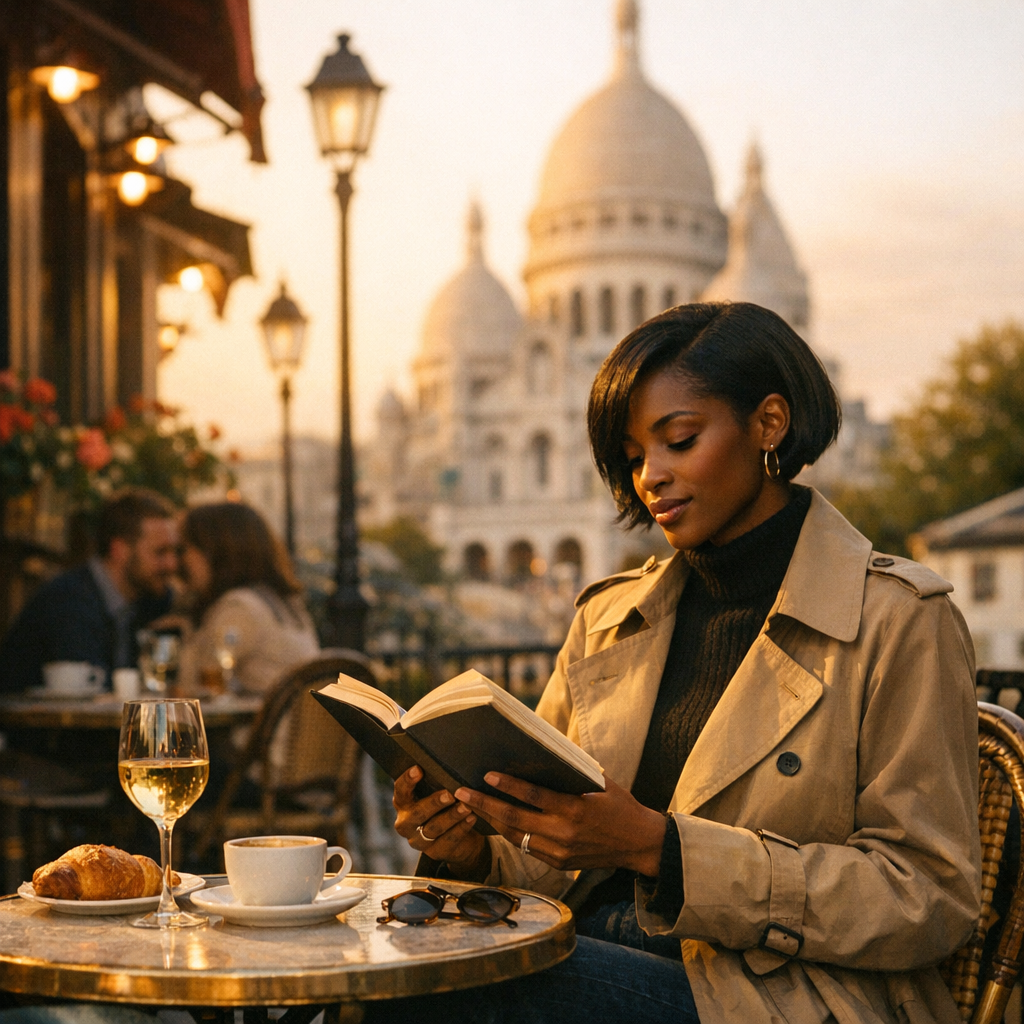
Montmartre / 18th Arrondissement: Basing yourself near Montmartre puts Château Rouge and La Goutte d'Or a short walk or one Metro stop away, letting you dip into Little Africa in the morning and be at Sacré-Cœur by sunset.
Budget: Chain hotels near Gare du Nord and Barbès offer reliable, well-located rooms from roughly €80–120/night, putting you close to both the 18th arrondissement and easy RER access to the airports.
🏨 Book Paris Hotels →Visa & Entry: What US Travelers Need to Know
US passport holders currently enter France visa-free for stays of up to 90 days within any 180-day period, under the Schengen Area's standard tourist rules — no visa application required for a standard trip. The EU's long-anticipated ETIAS travel authorization (a pre-travel registration, not a visa) has been delayed again: as of mid-2026, EU officials confirmed the system will not launch as planned by the end of 2026 and is now expected in 2027 at the earliest, following continued rollout issues with the linked Entry/Exit System at European borders. Bottom line for now: no ETIAS application is required yet — just a valid US passport with at least three months' validity beyond your travel dates. Check france-visas.gouv.fr before you fly, since this timeline has shifted multiple times.
Getting There & Around
Paris is served by Charles de Gaulle (CDG) and Orly (ORY) airports, both roughly 30–45 minutes from the city center by RER or taxi. Direct flights connect from New York, Atlanta, Washington DC, Chicago, and Los Angeles via Air France, Delta, United, and American, with East Coast flight times around 7-8 hours.
Once you're in the city, the Métro and RER networks reach every neighborhood in this guide — Château Rouge and Barbès–Rochechouart stations sit right in Little Africa, while Saint-Germain-des-Prés and Montmartre are easily walkable once you're in the center. A Navigo Easy transit card covers Metro, bus, and RER rides, and Vélib bike-share is a solid option for short hops between neighborhoods.
✈️ Find Paris Flights →Best Time to Visit
April through June and September through October are Paris's sweet spots — mild temperatures, manageable crowds, and long daylight hours for walking tours. July and August bring peak tourist crowds and many small Parisian shops (including some in Château Rouge) reduce hours as owners take their own August holidays. Winter is quieter and colder, but perfectly workable for museum- and café-heavy itineraries, and November 30 carries special resonance as the anniversary of Baker's Panthéon induction.
Budget Guide
Budget: $90-130/day — hostel or budget hotel, market meals and casual bistros, Metro pass, free walking of Château Rouge and Left Bank cafés (coffee only).
Mid-range: $150-250/day — boutique hotel, sit-down meals, one paid walking tour, Panthéon and museum entries.
Luxury: $350-600+/day — high-end hotel, private guided tours, fine dining, first-class train or car service.
BTN Insider Tips
Book your walking tour before you land. Both Entrée to Black Paris and Le Paris Noir are small, in-demand operations — reach out weeks in advance, especially for the specialty Baker and Baldwin-themed routes.
Go to Château Rouge with cash and an appetite for chaos. Card acceptance is spotty at market stalls, and the neighborhood is dense and lively — that's the appeal, not a flaw.
Pair the Panthéon with the Latin Quarter. Baker's cenotaph and Baldwin's cafés sit within a 15-20 minute walk of each other, making it easy to build a single half-day itinerary around both.
Learn a few French greetings. A simple "Bonjour" before any request goes a long way in Parisian shops and cafés, in Château Rouge and Saint-Germain alike.
August changes the rhythm of the city. Many independent shops and some restaurants close for the month — plan around it if you're visiting Little Africa specifically for its retail energy.
Is Paris Safe for Black Travelers?
Paris is generally very safe for Black travelers, with millions of Black visitors and residents moving through the city every year without incident. As in any major city, use standard precautions against pickpocketing in tourist-heavy areas and on the Metro. It's also worth knowing that France's official policy bars the collection of racial or ethnic statistics, which shapes how the country discusses race very differently than the US or UK — visible Black community life, like Château Rouge, exists at street level rather than in official data. Most Black travelers report warm, unremarkable experiences; connecting with local Black Parisians or a diaspora-focused tour guide beforehand is the best way to get current, on-the-ground context.
Mark Your Calendar
- November 30 — Anniversary of Josephine Baker's Panthéon induction (2021)
- February — Black History Month programming across Paris cultural institutions
- December — Africolor Festival, a long-running African and Caribbean diaspora music festival in greater Paris
- Year-round — Weekly market days at Marché Dejean, Château Rouge
Book Your Paris Trip
Paris will always sell you the Eiffel Tower. This guide is for the traveler who wants the fuller story underneath it — the crypt where Josephine Baker earned her place among French legends, the café tables where James Baldwin willed a masterpiece into existence, and the streets of Château Rouge where the African diaspora never left. Walk it slowly.
✈️ Book Your Paris Trip Now →*Affiliate links — BTN may earn a commission at no extra cost to you.