Before It Was a Party, It Was a Protest
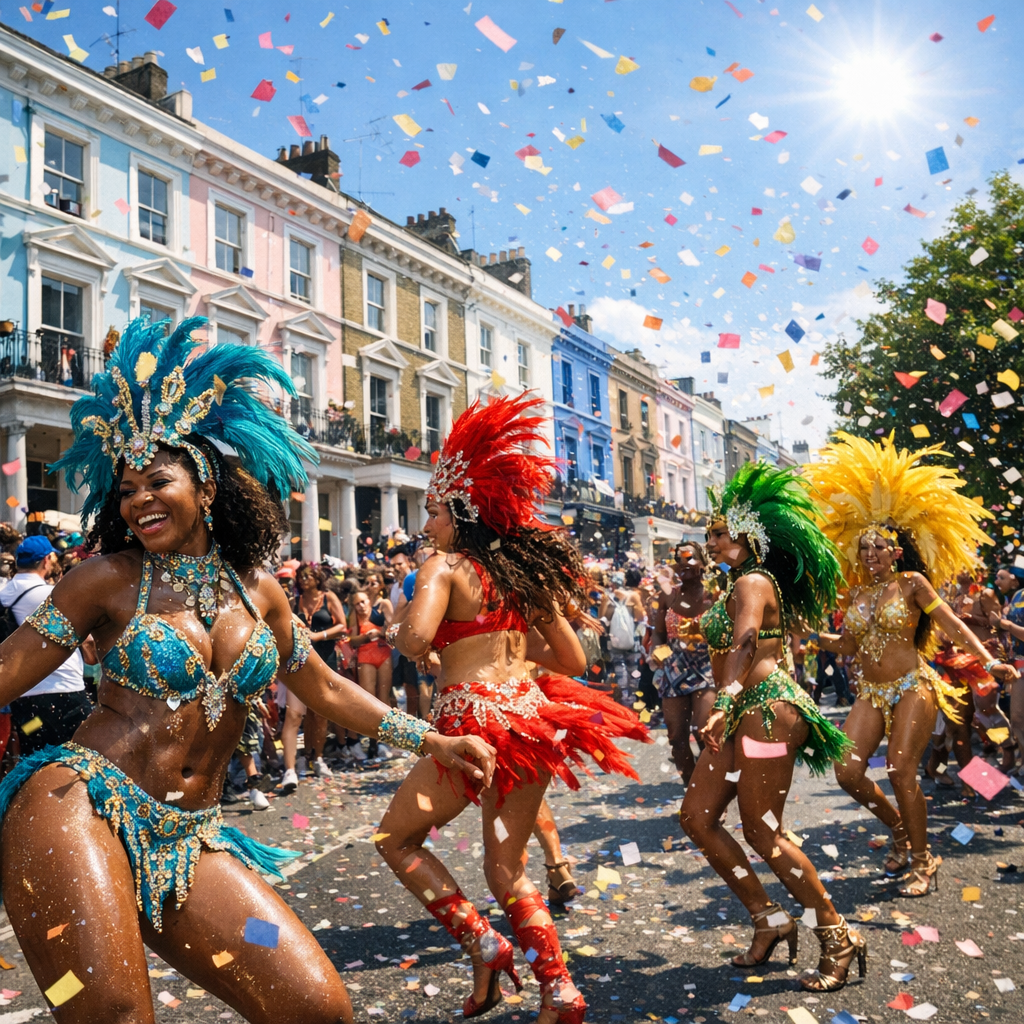
Every August, close to two million people descend on a few square miles of West London and turn it into the Caribbean. Steel pans ring out over Ladbroke Grove, soca and dancehall shake the speaker walls on All Saints Road, and the smell of jerk chicken smoke drifts over Victorian townhouses painted in ice-cream pastels. It's the biggest street party in Europe — but Notting Hill Carnival didn't start as a party at all. It started as an answer to hatred.
For the full 2026 schedule, route map, and ticket details for Carnival weekend itself, see BTN's Notting Hill Carnival 2026 event guide. This piece is about the neighborhood underneath the party — the Windrush-generation history that built it, and why Notting Hill deserves your attention long after the last soca truck rolls out of Ladbroke Grove.
The Windrush Story Behind the Carnival
Caribbean migrants began arriving in Britain in large numbers from 1948, invited to help rebuild a country devastated by war. Many settled in North Kensington, in the same crumbling, subdivided Notting Hill townhouses that today sell for millions. What they found instead of welcome was slum housing, exploitative landlords, and open racism. In 1958, white mobs attacked Black residents across the neighborhood in what became known as the Notting Hill race riots. The following year, Antiguan carpenter Kelso Cochrane was murdered in a racially motivated attack just streets from where the carnival now runs — a killing that was never solved.
Out of that grief came organizing. Trinidadian activist and journalist Claudia Jones, founder of Britain's first major Black newspaper, staged an indoor Caribbean carnival at St Pancras Town Hall in January 1959, timed to echo Trinidad's own carnival tradition and to lift a community under siege. It's Jones, more than anyone, who is credited as the mother of Notting Hill Carnival. A few years later, in 1966, local community organizer Rhaune Laslett ran a neighborhood street fair for local children of every background; when steel band leader Russell Henderson's group struck up in the street, the Caribbean residents of the area followed the music out of their homes and into a spontaneous procession. That moment is generally regarded as the birth of the outdoor carnival Notting Hill hosts today — now marking six decades as Europe's largest annual street festival.
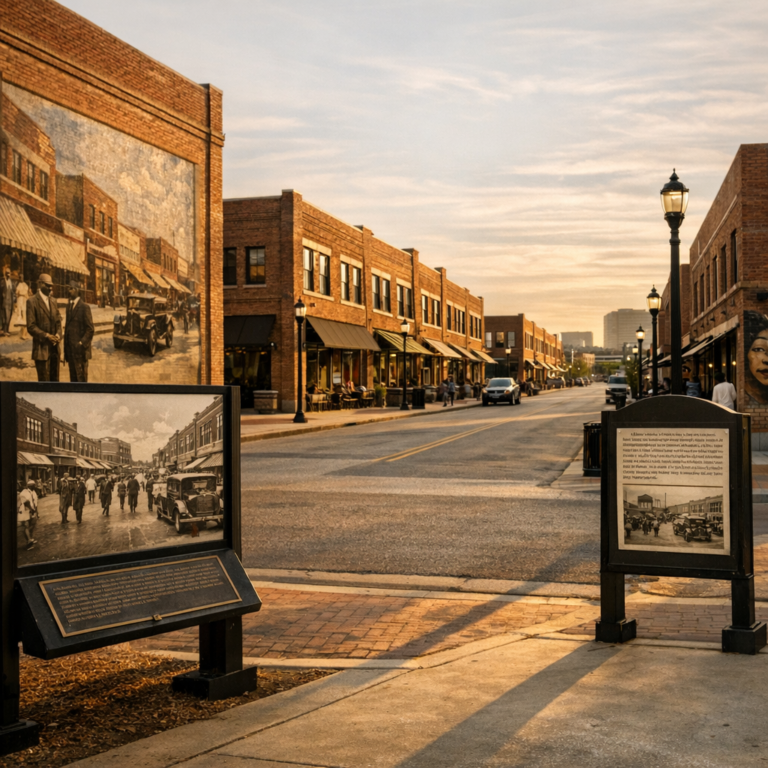
That history is still physically present in the neighborhood. The Tabernacle on Powis Square, a Grade II–listed former church built in 1887, has been the community and cultural heart of Carnival organizing since the 1970s, hosting the Carnival Arts Committee and steel bands like the Mangrove in the buildup to the big weekend; today it's an arts venue, bar, and restaurant open year-round. A few streets away on All Saints Road, the site of Frank Crichlow's Mangrove restaurant — opened in 1968 as a hub for Notting Hill's Caribbean community and repeatedly, wrongfully raided by police — led directly to the 1970 trial of the Mangrove Nine, one of the first British courtroom acknowledgments of racial bias in policing. Walk these blocks during any month but August and you're walking through one of the most consequential sites in Black British history.
Notting Hill Beyond Carnival Weekend
Most visitors only ever see Notting Hill in the chaos of Carnival weekend, which sells the neighborhood short. Outside of those three days, it's one of London's most walkable, photogenic, and layered districts — equal parts old-money Kensington and working Caribbean and North African immigrant community.
- Portobello Road Market — the world-famous antiques and produce market that runs the length of the neighborhood, busiest (and best) on Saturdays.
- Golborne Road — the less-photographed, more lived-in northern extension of Portobello, lined with Moroccan tagine counters, Portuguese custard tart bakeries, and some of the best-value food in West London.
- The Tabernacle — the Powis Square venue described above; check its calendar for live music, community events, and carnival-history exhibitions.
- Museum of Brands and the Electric Cinema, one of Britain's oldest working cinemas, both a short walk from Portobello Road.
- Kensal Green Cemetery, a quiet Victorian green space at the neighborhood's northern edge, good for a reset after market crowds.
Where the Carnival Actually Happens
The Carnival route runs through the residential streets of Notting Hill, Ladbroke Grove, and Westbourne Park — the same blocks described above, transformed for one weekend into a two-million-person parade ground. Sound systems set up on corners days in advance, mas bands assemble at Kensington and West London's staging areas, and by Sunday's J'ouvert the whole neighborhood smells like paint powder and grilled corn. For exact 2026 dates, route maps, ticket information for the Saturday steel band competition, and a day-by-day breakdown of J'ouvert, the children's parade, and the Monday adults' parade, BTN's dedicated Carnival event guide has you covered in full. What's worth knowing as a first-time visitor: this is a residential neighborhood, not a fairground, so expect narrow streets, real crowd density, and a genuinely local, unpolished energy that's part of what makes it special.
Where to Stay
Luxury: The Portobello Hotel, tucked just off the market on a quiet garden square, has been a bohemian favorite of musicians and actors for decades. The Kensington-adjacent Hotel Café Royal and The Milestone offer polished five-star comfort a short cab ride from the action.
Mid-Range Boutique: The Main House, a Georgian townhouse B&B on a leafy Notting Hill street, and Hotel Indigo Kensington — Earl's Court both put you within walking distance of the carnival route without carnival-weekend prices.
Budget: citizenM Shoreditch and the Premier Inn London Kensington (Earl's Court) are reliable, well-located options — though during Carnival weekend, book months ahead, as prices in West London spike hard and availability disappears fast.
🏨 Book London Hotels →Getting There & Around
London Heathrow (LHR) has direct flights from most major US gateway cities, roughly 8–9 hours from the East Coast. Gatwick (LGW) and London City (LCY) are useful secondary options. From Heathrow, the Elizabeth line or Piccadilly line runs into central London in 40–60 minutes; from there, transfer toward Notting Hill Gate, Ladbroke Grove, or Westbourne Park — the three Underground stations bordering the carnival footprint.
During Carnival weekend itself, plan to walk the last stretch: Notting Hill Gate and Ladbroke Grove stations are frequently exit-only or fully closed at peak crowd times, roads throughout the area are closed to vehicles, and there is no useful parking. The Tube and bus network are the only realistic way in and out.
✈️ Find London Flights →Visa & Entry: What US Citizens Need to Know
US citizens do not need a visa to visit the UK for tourism stays of up to six months. However, since the UK's Electronic Travel Authorisation (ETA) scheme fully rolled out to US visitors, Americans must obtain an ETA online before departure — it is not optional and it is checked at boarding, not just at UK border control. As of 2026, the ETA costs £20 (about $25 USD), is applied for through the official UK ETA app or GOV.UK, and typically comes through within minutes, though the Home Office recommends applying at least three working days before travel in case your application is flagged for manual review. Once approved, it's valid for two years (or until your passport expires, whichever comes first) and covers unlimited trips, each up to six months. Apply only through the official gov.uk ETA page or the official app — third-party sites often charge inflated "service fees" for the same government form.
Best Time to Visit & Budget
If Carnival is the draw, the last weekend of August is non-negotiable — and it's also peak season for London generally, so book flights and hotels as early as possible. Outside of Carnival, London is at its best May through September, with long daylight hours and the mildest weather of the year. Winters are gray and short on daylight but carry lower airfares and hotel rates if Carnival isn't the point of your trip.
Budget: $100–150/day — hostel or budget hotel, market food and casual dining, Tube travel, mostly free museums and markets.
Mid-range: $180–280/day — boutique hotel, sit-down restaurants, black cab or rideshare use, paid attractions and day trips.
Luxury: $400+/day — five-star hotel, fine dining, private transport, premium Carnival viewing areas where available.
BTN Insider Tips
Book Carnival-weekend lodging as early as you can. West London hotel prices multiply for the bank holiday weekend, and rooms near the route sell out months in advance.
Get your UK ETA sorted well before Carnival season. Everyone flying to the UK for the last weekend of August is applying at the same time — don't leave it to the week of your flight.
Visit The Tabernacle and All Saints Road on a non-Carnival day. The history lands differently without two million people and a sound system on every corner.
Cash still matters at Carnival food stalls even though most of London runs on contactless — card readers get overwhelmed in crowds, and lines move faster with cash in hand.
Wear shoes you can stand in for hours and dress for a hot, sweaty, densely packed crowd even if the London weather forecast looks mild.
Is London Safe for Black Travelers?
London is a large, diverse, majority-minority-in-parts global city, and Black travelers — including solo travelers and groups — generally report feeling comfortable and welcome, particularly in diaspora-heavy neighborhoods like Brixton, Peckham, and Notting Hill itself. As with any major city, use standard precautions with belongings in crowds, especially during Carnival, when pickpocketing is the primary (not violent) crime concern organizers and police flag every year. Public transport is safe and heavily used at all hours during Carnival weekend, and the Met Police carry a large, visible presence along the route.
Mark Your Calendar
- Late August — Notting Hill Carnival, the August Bank Holiday weekend
- June–August — Wireless Festival and UK Black Pride, both drawing diaspora crowds to London
- October — Black History Month UK, with programming across the city's Black cultural institutions
- Year-round — The Tabernacle's ongoing arts and music calendar in Notting Hill
Book Your London Trip
Notting Hill Carnival is the reason most people first hear of this neighborhood — but the streets that host it carry sixty years of Black British history worth understanding on their own terms, Carnival weekend or not.
✈️ Book Your London Trip Now →*Affiliate links — BTN may earn a commission at no extra cost to you.