Two Nigerias, One Unforgettable Trip
There is a version of this trip that sounds almost impossible until you've lived it. One week you're in a rooftop club in Victoria Island at 1AM, Afrobeats bass shaking the glass in your hand, surrounded by the most fashionable crowd you've ever stood in. The next week you're three hundred kilometers north, standing barefoot at the edge of a sacred river inside a 400-year-old forest, watching a virgin priestess carry a calabash through a crowd of a million devotees honoring a goddess who has been worshipped continuously since long before Lagos was a fishing village. Same country. Same currency. Same seven-day trip, if you plan it right.
That is Nigeria's twin pulse — Lagos and Osogbo, the club and the shrine, the most modern city in West Africa and one of the oldest living spiritual traditions on the continent. Black Travel Now built this guide because most travelers only ever hear about one half of this story. You deserve both.
Lagos: The Engine Room of Global Afrobeats
Lagos is not a city that eases you in. With more than 20 million people, brutal traffic ("go-slow" in local parlance), and an energy that never fully powers down, Africa's largest city can overwhelm a first-time visitor in the first hour. Then, usually by the first night out, it converts you completely.
This is the city that built the sound now dominating global pop charts. Burna Boy, Wizkid, Davido, Tems, Rema, and a generation of Afrobeats stars either grew up here or built their careers in its studios, and the industry infrastructure — labels, producers, video directors, stylists — is concentrated in Lagos more densely than anywhere else on Earth. Walking into a Lagos recording studio, radio station, or listening party isn't a novelty experience for locals; it's Tuesday. For visiting music fans, it's a pilgrimage.
Lagos Nightlife: Where the Culture Actually Lives
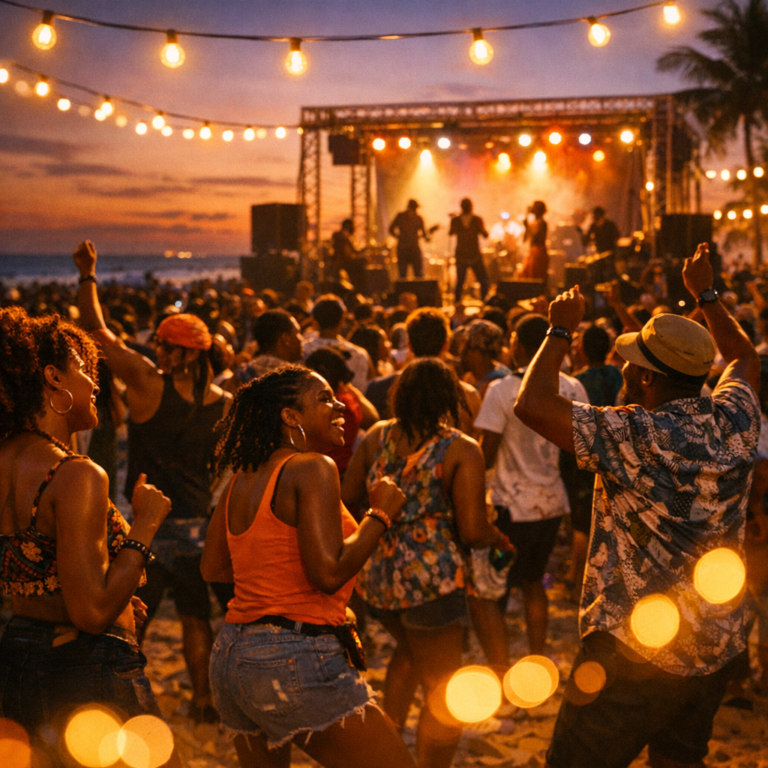
Victoria Island and Lekki form the nucleus of Lagos nightlife — high-end lounges, rooftop bars, and clubs where the city's musicians, footballers, and entrepreneurs mix with an international crowd flying in specifically for the scene. Expect dress codes, bottle service, and a soundtrack of Afrobeats, Amapiano, and hip-hop blending seamlessly.
- Quilox — one of Lagos's most iconic nightclubs, a regular stop for A-list Afrobeats artists and a genuine barometer of what's hot in the scene right now.
- Cubana Lounge — part of a nightlife empire with real cultural cachet; expect a see-and-be-seen crowd and a serious sound system.
- Bogobiri House — a more intimate, art-and-music-forward space in Ikoyi for live bands, poetry, and a quieter but no less soulful night out.
- Freedom Park — a former colonial prison reborn as an open-air cultural venue hosting live music, comedy, and festivals; a daytime-to-evening crossover spot with real history underfoot.
If your trip lands in late December, you'll walk straight into "Detty December" — Lagos's now-legendary concert and party season that draws diaspora travelers, musicians, and industry executives from across the globe for weeks of back-to-back shows, homecoming events, and beach parties. Book accommodations for that window many months out; prices and demand both spike hard.
Where to Eat in Lagos
- Jollof rice — Nigeria's version of the dish that fuels endless friendly rivalry with Ghana. Smokier, spicier, and (Nigerians will insist) simply better. Try it at any local buka or upscale restaurant alike.
- Suya — spiced, skewered grilled meat sold by roadside vendors after dark; some of the best in the city is found on Allen Avenue in Ikeja.
- Pounded yam and egusi soup — a rich, ground-melon-seed stew with leafy greens and meat or fish, eaten by hand with pounded yam. A true taste of home cooking.
- Moin moin — a steamed bean pudding often served alongside jollof or as a savory snack on its own.
- Nkwobi and pepper soup — spicy, bold, and best enjoyed with a cold Star or Gulder beer at any lively Lagos joint on a Friday night.
The Road to Osogbo: A Different Kind of Pilgrimage
Roughly three to four hours by road from Lagos — up the Lagos-Ibadan expressway and into the heart of Osun State — sits Osogbo, a city that could not feel more different from the coastal capital you just left. Here, the rhythm slows. The forest thickens. And once a year, this city becomes the spiritual center of the entire Yoruba world.
The Osun-Osogbo Festival: A Living Yoruba Tradition
The Osun-Osogbo Festival is not staged for tourists, and that is exactly why it matters. It is a genuine, centuries-old religious observance honoring Osun, the Yoruba river goddess associated with fertility, prosperity, and protection — one of the most revered orishas in the Yoruba spiritual pantheon and, through the diaspora created by the transatlantic slave trade, a deity still actively worshipped today across Brazil, Cuba, and the Caribbean under names like Oshun and Ochún.
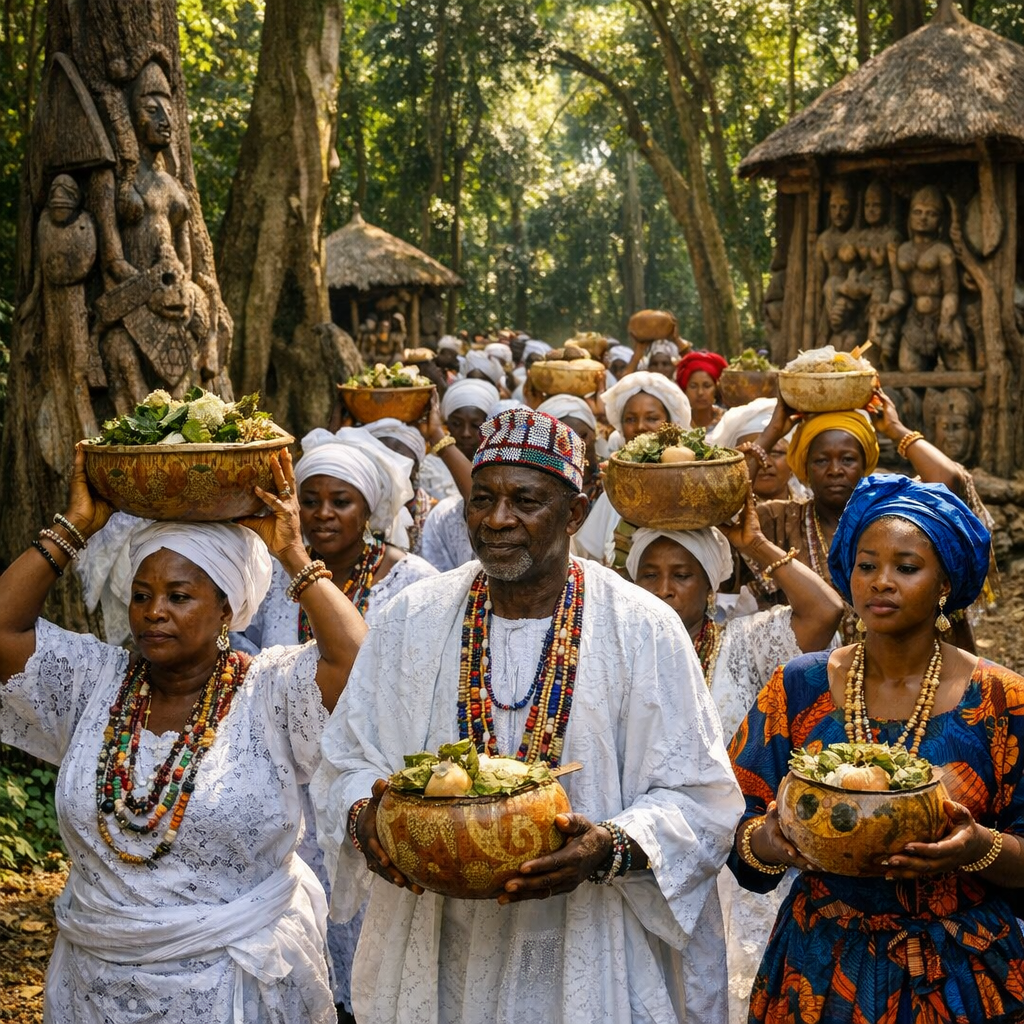
Held annually — typically across a twelve-day processional period in the July-to-August window — the festival culminates in a grand procession to the Osun River led by the Arugba, a young virgin priestess who carries a sacred calabash believed to hold offerings for the goddess. Traditional rulers, priests and priestesses, drummers, and hundreds of thousands of devotees and spectators — from across Nigeria and from the Yoruba diaspora worldwide — converge on the grove for days of ritual, music, and communal celebration. Because the festival follows a traditional ritual calendar rather than a fixed civil date, the exact dates are set and announced by the Ataoja (the traditional king of Osogbo) and Osun State cultural authorities closer to the event each year. If you're planning a trip around the festival, confirm the current-year dates directly with the Osun State Government or Nigeria's Federal Ministry of Arts, Culture and the Creative Economy before booking flights — do not rely on a fixed date from a prior year.
A respectful note for visitors: this is living religion, not folklore performed for an audience. Yoruba spirituality, and the veneration of Osun specifically, is a legitimate, practiced faith for millions of people in Nigeria and across the diaspora today. Dress modestly, follow the guidance of local guides and devotees, ask before photographing individuals or rituals up close, and approach the grove the way you would any active site of worship — with humility rather than as a curiosity to be consumed.
The Osun-Osogbo Sacred Grove: A UNESCO World Heritage Site
The festival's home, the Osun-Osogbo Sacred Grove, was inscribed as a UNESCO World Heritage Site in 2005. It spans roughly 75 hectares (with an additional 47-hectare buffer zone) along the banks of the Osun River and is considered one of the last remnants of primary high forest in southern Nigeria — and the largest and best-preserved of what was once a network of sacred groves maintained by nearly every Yoruba settlement.
Inside the grove, more than 40 shrines, sculptures, and works of art honor Osun and other orishas, including striking mid-to-late-20th-century artistic additions that helped revitalize the site's international profile. Ecologically, the grove is remarkable in its own right, home to more than 400 plant species, over 200 of which are used in traditional medicine — a living pharmacy as much as a living temple. UNESCO recognized the site for exactly this dual significance: an active, unbroken spiritual landscape and an ecological sanctuary in one.
Visa Requirements for US Travelers
Nigeria has moved to a mandatory advance-visa system for tourism. US citizens must apply for the Nigeria Tourism Visa (category F5A) online before departure — Nigeria phased out routine visa-on-arrival for tourists as part of its 2024–2025 immigration policy overhaul, and arriving without an approved eVisa is a real risk of being turned away. Only ECOWAS nationals currently enjoy visa-free entry.
- Apply through Nigeria's official immigration eVisa portal well in advance of travel.
- Third-party visa-assistance services (which handle document review and submission for a fee) commonly quote processing packages starting around $90, though the underlying government visa fee is a separate, generally lower cost — always check the official government portal first for the base fee before using a paid facilitation service.
- Standard processing runs roughly 3–6 business days once your application and documents are submitted; build in a buffer of at least two to three weeks before your trip.
- You'll need a passport valid for at least six months beyond your travel dates, a passport-style photo, proof of onward/return travel, and accommodation details.
Safety: An Honest, Region-by-Region Look
Nigeria carries a real and current US State Department travel advisory, and it deserves a straight answer rather than a glossed-over one. The overall advisory sits at a "Reconsider Travel" level, driven primarily by conditions in specific regions — not the entire country uniformly.
The most serious warnings apply to northern Nigeria, where multiple states are flagged at the highest "Do Not Travel" level due to terrorism, armed banditry, and kidnapping risk, and to the Niger Delta and Southeast, where civil unrest and armed groups have been active. Lagos and Osun State, in Nigeria's Southwest, are not designated "Do Not Travel" zones and carry a meaningfully lower risk profile than the country's north or the Niger Delta — though they still fall under the general national caution and require the same street-smart habits you'd use in any major global city: use registered ride-hailing apps (Uber and Bolt both operate in Lagos) rather than unmarked taxis, avoid displaying valuables, stay alert in crowds during the festival, and travel between Lagos and Osogbo during daylight hours. Register your trip with the US Embassy in Abuja or the Consulate in Lagos before you go, and check the current advisory again close to your departure date, since conditions and designations are reviewed and updated periodically.
Planning Your Two-City Itinerary
A one-week trip is enough to do this properly:
- Days 1–4, Lagos: Settle in, adjust to the pace, explore Victoria Island and Lekki, hit the beach at Elegushi or Landmark Beach, browse Nike Art Gallery and the Yaba arts scene, and give yourself at least two nights out to feel the music scene properly.
- Day 5, Travel day: Arrange a private driver or licensed car service for the 3–4 hour road trip to Osogbo (or fly into Ibadan/Osogbo-adjacent airports where available and connect by road). Don't attempt this drive after dark.
- Days 6–7, Osogbo: Experience the Sacred Grove, connect with a local guide who can explain the rituals and etiquette respectfully, and if your dates align, witness the festival procession itself.
Getting There & Getting Around
Murtala Muhammed International Airport (LOS) in Lagos is West Africa's busiest air hub, with direct or one-stop flights from New York, Atlanta, Washington DC, Houston, London, and major European and African cities. Within Lagos, Uber and Bolt are reliable and the easiest way to move around; the city's traffic is genuinely severe, so build extra time into any itinerary. Between Lagos and Osogbo, a private driver is strongly recommended over public transport, particularly around festival dates when roads are far busier than usual.
Best Time to Visit
November through March brings Nigeria's coolest, driest weather and coincides with Detty December energy in Lagos. If the Osun-Osogbo Festival is your priority, plan around its July–August window, but hold your flight bookings loosely until the current year's dates are officially confirmed by Osun State authorities.
Where to Stay
Lagos Luxury: Eko Hotels & Suites and the Federal Palace Hotel both anchor Victoria Island with full-service comfort and easy nightlife access. Lagos Mid-Range: Boutique properties across Ikoyi and Lekki offer strong value with pool and breakfast included. Osogbo: Accommodation is far more limited and simpler than Lagos — book well ahead of festival dates, as rooms sell out fast, and consider a day trip from Ibadan if Osogbo lodging is unavailable.
🏨 Book Lagos Hotels →BTN Insider Tips
- Get a local SIM immediately. MTN, Glo, and Airtel are all available at the airport and make Uber, maps, and translation apps effortless.
- Dress respectfully at the Sacred Grove. Modest clothing and a humble posture go a long way, and always ask before photographing devotees or ceremonies up close.
- Confirm festival dates directly with official sources before booking flights — the ritual calendar shifts annually and last year's dates will not repeat exactly.
- Carry small naira notes. Cash is still king outside upscale Lagos venues, and street food, markets, and Osogbo vendors typically won't take cards.
- Hire a local guide in Osogbo. A knowledgeable local guide transforms the grove from a beautiful walk into a genuinely meaningful cultural and spiritual experience.
Mark Your Calendar
- July–August — Osun-Osogbo Festival (dates announced annually by the Ataoja of Osogbo; confirm current-year dates before booking)
- December — Detty December, Lagos's month-long concert and homecoming season
- October 1 — Nigeria Independence Day, celebrated nationwide
Book Your Nigeria Trip
Lagos will show you where Afrobeats is headed next. Osogbo will show you where an entire spiritual world began — and never stopped. Very few trips on Earth offer both in a single week.
✈️ Find Nigeria Flights & Hotels →*Affiliate links — BTN may earn a commission at no extra cost to you.