The Nicaragua the Postcards Don't Show
Say "Nicaragua" and most people picture Granada's colonial rooftops, León's volcanoes, or surf towns on the Pacific coast. That is Mestizo, Spanish-speaking, Pacific-facing Nicaragua — and it is a different cultural world from the country's other coast. Cross the mountains and rainforest to the Caribbean side, and the language changes, the music changes, the food changes, and the population itself changes. This is the South Caribbean Coast Autonomous Region — Bluefields and the Corn Islands — and it is one of the most under-marketed Afro-Caribbean destinations left in Central America.
This is also a trip that requires a clear head about current conditions. Nicaragua carries a Level 3 'Reconsider Travel' advisory from the US State Department right now, and we're not going to bury that under the beach photos. More on exactly what that means, in plain terms, further down. First, the culture — because it's real, it's living, and almost nobody outside the region knows the story.
Creole and Miskito: A Different Nicaragua
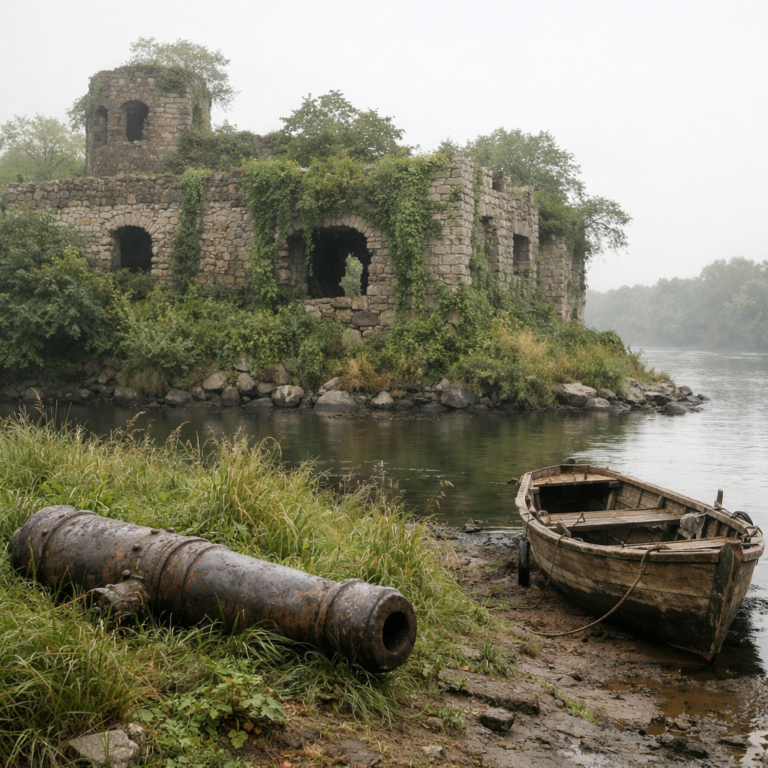
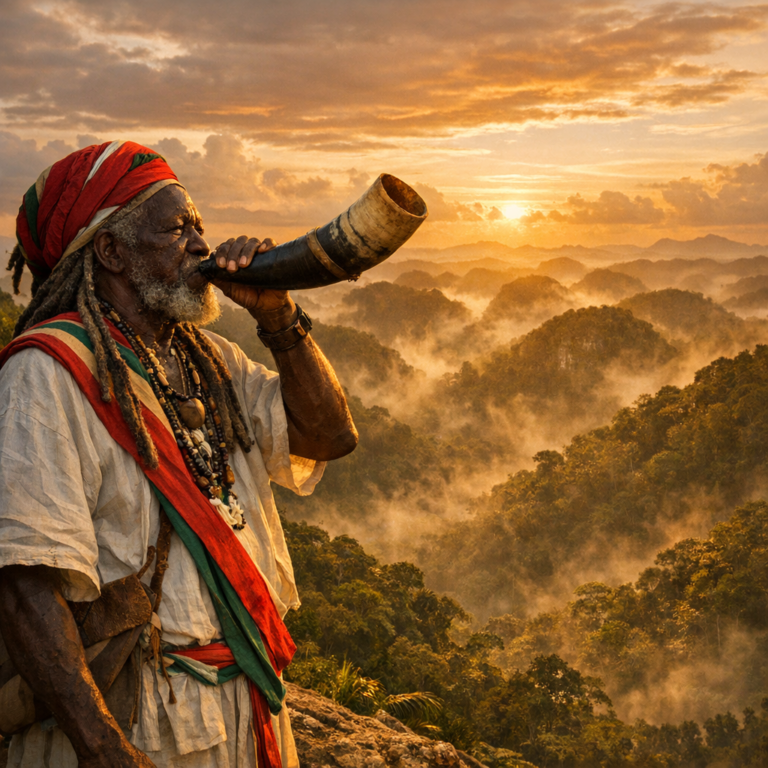
The Caribbean coast's distinct identity traces back to the 17th century, when England established an informal protectorate over the region then known as the Mosquito Coast — a relationship with the Indigenous Miskito Kingdom that lasted, in various forms, from the 1650s until Nicaragua formally absorbed the territory in 1894. English colonists arrived from the 1630s onward, Africans were brought to the coast beginning in the 1630s as well, and waves of Jamaican migrants, both free and enslaved, settled through the 1700s and 1800s. Bluefields grew into a cosmopolitan trading port by the 1880s, and that layered history is still visible in its population today: Afro-descendant Creoles, Indigenous Miskito, Mestizo settlers from the interior, Garinagu (Garifuna), Rama, and even a small historic Chinese community.
Kriol — an English-based Creole distinct from the Spanish spoken across the rest of Nicaragua — remains a living first language for much of Bluefields and the Corn Islands, alongside Spanish and Miskito. Walk through Bluefields and you'll hear all three in the same conversation. This isn't a preserved relic for tourists; it's simply how the Caribbean coast talks to itself, the same way Limonese Creole functions in Costa Rica or Kriol functions in Belize.
Worth knowing: this is a Creole and Miskito identity, not a Garifuna one, even though a Garifuna minority does live in the region. Unlike the Garinagu of Belize, Honduras, and Guatemala — who trace their specific lineage to the 1797 British exile from St. Vincent — Bluefields' Creole community descends more directly from enslaved and free Africans brought straight to the Mosquito Coast and from Jamaican settlers, under British influence rather than Spanish. If you're building a regional Afro-Caribbean Central America itinerary, this piece pairs naturally with BTN's guides to Costa Rica's Limón coast, Belize's Garifuna Coast, and Honduras' Roatán and Trujillo — four different Afro-descendant stories along the same sea.
Palo de Mayo: Bluefields' Signature Festival
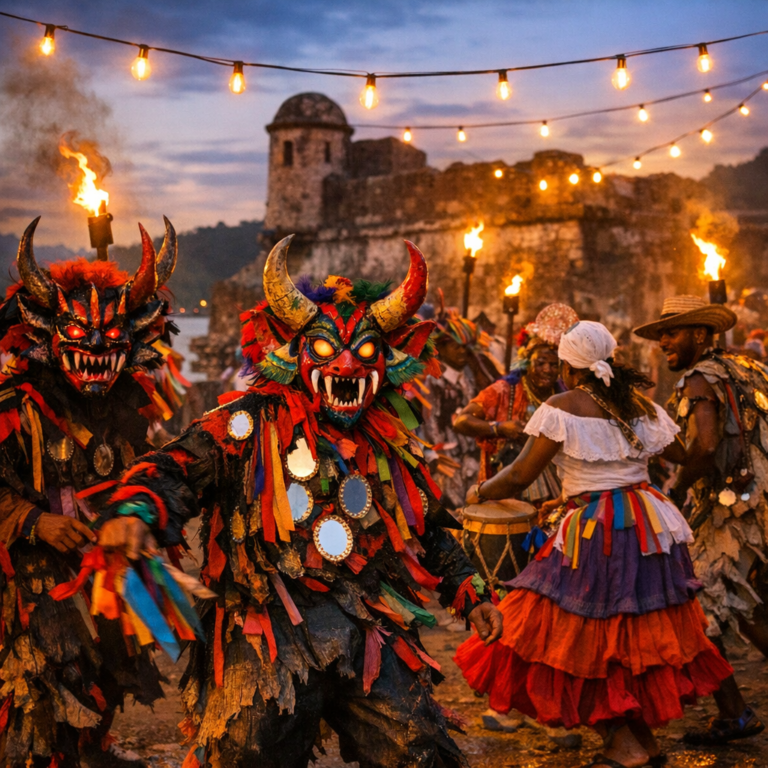
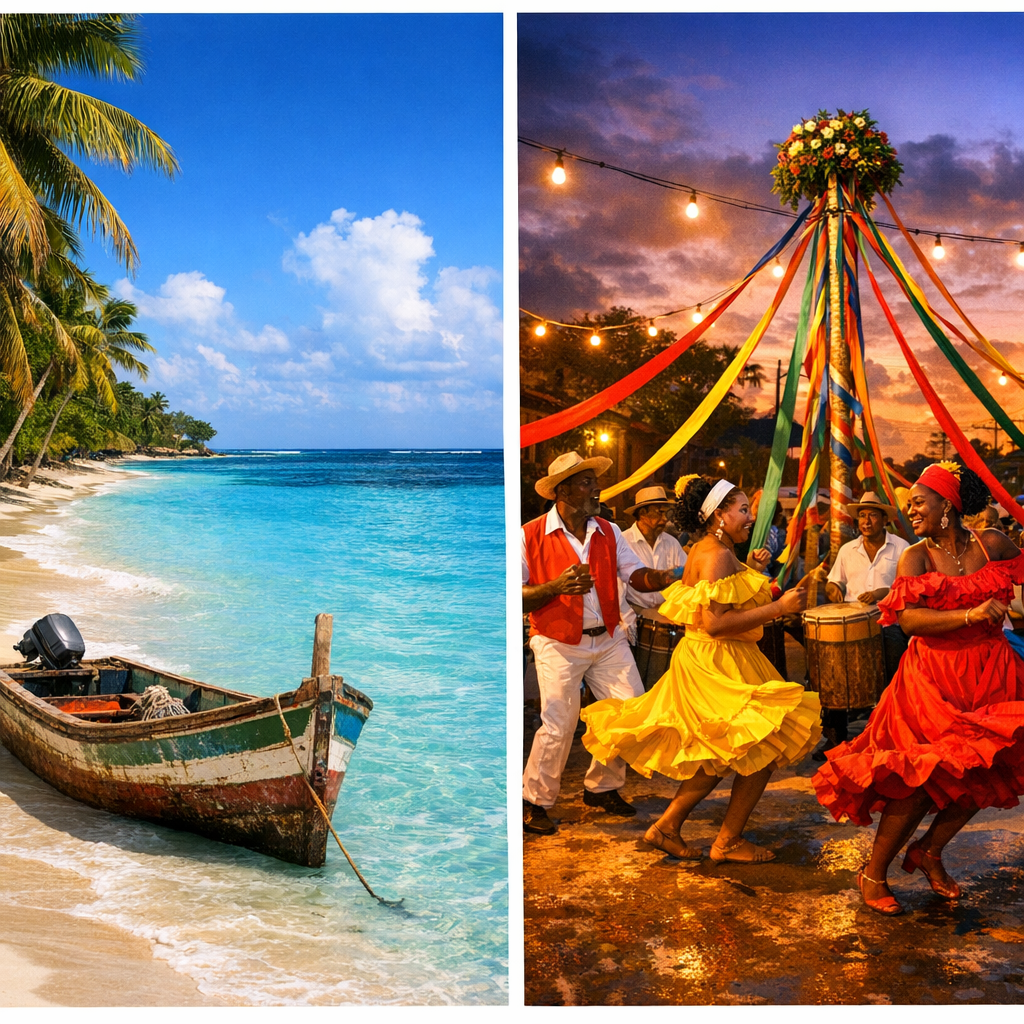
Every May, Bluefields throws itself into Palo de Mayo (Maypole) — a monthlong celebration built around a tall wooden pole wrapped in colored ribbons, circle dancing, and a driving, percussive music genre that has become the sound of the Nicaraguan Caribbean. Historians trace its roots to British settlers who may have introduced a Maypole tradition to the coast around the 1830s, which was then reshaped by Creole communities with elements of Shango, a West African spirit-possession religious tradition, and Indigenous influence — producing something that belongs fully to none of its source cultures and entirely to Bluefields.
The music itself grew out of Creole acoustic folk called mento, and modern Palo de Mayo bands play it with electric guitar, bass, and organ over the old call-and-response vocal patterns, replacing the bongo drums and jawbone percussion of earlier generations. The dancing is unapologetically sensual — hip-driven, circular, close — and it draws crowds from across the Caribbean coast into Bluefields' streets and Long Field, the historic gathering ground, for a full month of parades, pageants, and block parties culminating around May 30 (Bluefields Mother's Day, a local twist on the timing). If your BTN trip has one non-negotiable date, this is it.
The Corn Islands: Where the Caribbean Gets Quiet
An hour's flight or a half-day of boat travel from Bluefields sit Big Corn Island and Little Corn Island — roughly 7,900 residents combined, speaking the same English-based Creole as the mainland, with a culture shaped by 19th-century British and Jamaican settlement layered onto Miskito and Rama roots.
Big Corn Island is the developed one — about 10 square kilometers with a paved ring road, taxis, a local bus, small guesthouses and a handful of beach hotels around Brig Bay and South End, and Corn Island Airport (RNI) connecting it to the mainland. Little Corn Island, three square kilometers with zero motor vehicles, is the reason people fly this far south in the first place: no cars, no roads, powder sand, and reef diving with barracuda, nurse sharks, hammerheads, sea turtles, and spotted eagle rays a short swim from shore. You reach it by panga speedboat from Big Corn, three to four crossings a day, weather permitting.
This is still a fishing-and-lobster economy first, tourism economy second — which is exactly the appeal for travelers tired of resort corridors. Baseball, brought by the same Anglophone Caribbean influence that shaped the language, is the dominant local sport; Karen Tucker Baseball Stadium on Big Corn hosts the games.
Where to Stay
Big Corn Island: Small beachfront hotels and family-run guesthouses cluster around Brig Bay and South End — comfortable, simple, and modestly priced compared to the Pacific coast's resort towns.
Little Corn Island: Beach bungalows and dive-focused lodges are the norm, most walkable from the boat dock, ranging from backpacker-simple to a few boutique eco-lodges on the island's quieter east side.
Bluefields: Modest in-town hotels serve business and festival travelers; most visitors treat Bluefields as a short cultural stop en route to or from the islands rather than a multi-night base, except during Palo de Mayo itself.
🏨 Book Corn Island & Bluefields Stays →Must-Try Foods
Caribbean-Nicaraguan Creole cooking runs on coconut and seafood: rondón (a slow-simmered coconut-milk seafood stew, the same dish Belize calls sere and the wider Caribbean calls "run down") is the signature plate. Look also for coconut bread, cassava and plantain sides, patacones, whatever red snapper or lobster came off the boat that morning, and ginger cake for dessert. Coconut water, cracked fresh, is the default drink on both islands.
Getting There & Getting Around
Fly into Managua's Augusto C. Sandino International Airport (MGA) from the US via Avianca, Copa, or United, typically connecting through Panama City, San Salvador, or Houston. From Managua, domestic carrier La Costena flies twice daily direct to Corn Island Airport (RNI), or you can route through Bluefields and connect onward by ferry (Wednesdays and Saturdays) or speedboat. There's no highway link between Managua and the Caribbean coast — flying is the practical option for most visitors.
Once on Big Corn, taxis and a local bus circle the 12km ring road; Little Corn is walk-only. In Bluefields, taxis and mototaxis cover in-town trips.
✈️ Find Flights to Nicaragua →Entry Requirements for US Citizens
US citizens do not need a visa for tourism. A 90-day tourist card is purchased on arrival for about $10, and your passport needs at least 6 months' validity beyond your arrival date. Nicaragua also participates in the CA-4 Border Control Agreement with Guatemala, El Salvador, and Honduras — once you legally enter any one of the four, you can travel freely among the other three for a combined stay of up to 90 days, without a separate visa at each border. Confirm current requirements with the Nicaraguan consulate or your airline before departure, since entry rules can change with little notice.
Current Safety Advisory — Read This Before You Book
Here is the part we won't soften: as of this writing (advisory reissued May 14, 2026), the US State Department rates Nicaragua a Level 3: Reconsider Travel country — citing the risk of arbitrary enforcement of local laws, wrongful detention, limited healthcare availability, and crime. This is a nationwide rating; the State Department's guidance does not carve out an exception for the Caribbean coast, Bluefields, or the Corn Islands, even though the political unrest driving most of the concern is concentrated on the Pacific side, in and around Managua.
What that means in practice: this is not a routine beach-vacation risk profile, and it should factor into your decision the same way it would for any Level 3 country. If you travel, register your trip with the US Embassy in Managua's STEP program before you go, keep copies of your documents separate from the originals, avoid political gatherings and commentary, carry proof of your itinerary and lodging, and check the advisory again in the weeks before departure, since conditions and guidance can shift. BTN is not telling you not to go — we're telling you to go in with accurate information rather than either panic or denial. Plenty of travelers, including Black travelers, do visit the Corn Islands and Bluefields without incident; that doesn't cancel out the current advisory, and you should weigh both facts together.
Best Time to Visit
For the cultural experience, plan around May for Palo de Mayo in Bluefields — the festival runs the full month with its biggest events clustered toward the end. For pure beach time on the Corn Islands, the dry season from February through April offers the calmest seas and least rain; the Caribbean coast is wetter and more hurricane-exposed from June through November.
Budget Guide
Budget: $70–100/day — guesthouse on Big or Little Corn, local cook-shop meals, panga boat transport, free beach time.
Mid-range: $130–220/day — beachfront bungalow or small hotel, restaurant dining, a guided dive or snorkel trip.
Luxury: $250+/day — the islands' handful of boutique eco-lodges, private boat charters, and full dive packages.
A representative trip — round-trip domestic flights plus four nights on the Corn Islands — runs from roughly $750 per person before international airfare to Managua.
BTN Insider Tips
Book your Managua-to-Corn Island domestic flight well ahead of May. La Costena's small planes sell out fast around Palo de Mayo and during peak dry-season weeks.
If you're going for the festival, base in Bluefields, not the islands. Palo de Mayo is a Bluefields event first; day-tripping in from Corn Island isn't realistic given the flight schedule.
Bring cash in small córdoba denominations for the islands. ATMs are limited, especially on Little Corn, and card acceptance is inconsistent outside larger hotels.
Register with STEP before you fly, given the current advisory level — it's free, takes five minutes, and puts the embassy on notice that you're in-country.
Respect Palo de Mayo as a living tradition, not a photo op. Ask before filming close-up, and support Creole-owned guesthouses and food vendors directly.
Mark Your Calendar
- All of May — Palo de Mayo, Bluefields' month-long Maypole festival, biggest events in the final week
- February–April — dry season, best window for calm-water diving and snorkeling on the Corn Islands
- Year-round — live Palo de Mayo-style Creole music in Bluefields' bars and clubs outside festival month
Book Your Trip
The Corn Islands and Bluefields aren't a casual add-on to a Nicaragua trip — for most travelers, right now, they're the whole reason to go, and they come with a real, current advisory that deserves your full attention before you book anything. Go in informed, register your travel, and you'll find a Creole and Miskito Caribbean coast, a Maypole festival with African roots wrapped around a British name, and water clear enough to see the reef from the boat. Few Black travelers have made this trip. That's exactly what makes it worth planning carefully.
✈️ Book Your Nicaragua Caribbean Coast Trip Now →*Affiliate links — BTN may earn a commission at no extra cost to you. Nicaragua currently carries a US State Department Level 3 'Reconsider Travel' advisory (reissued May 2026) — confirm the current advisory at travel.state.gov before booking.