The Ruins, the Courthouse, and the Marker That Wouldn't Stay Silent
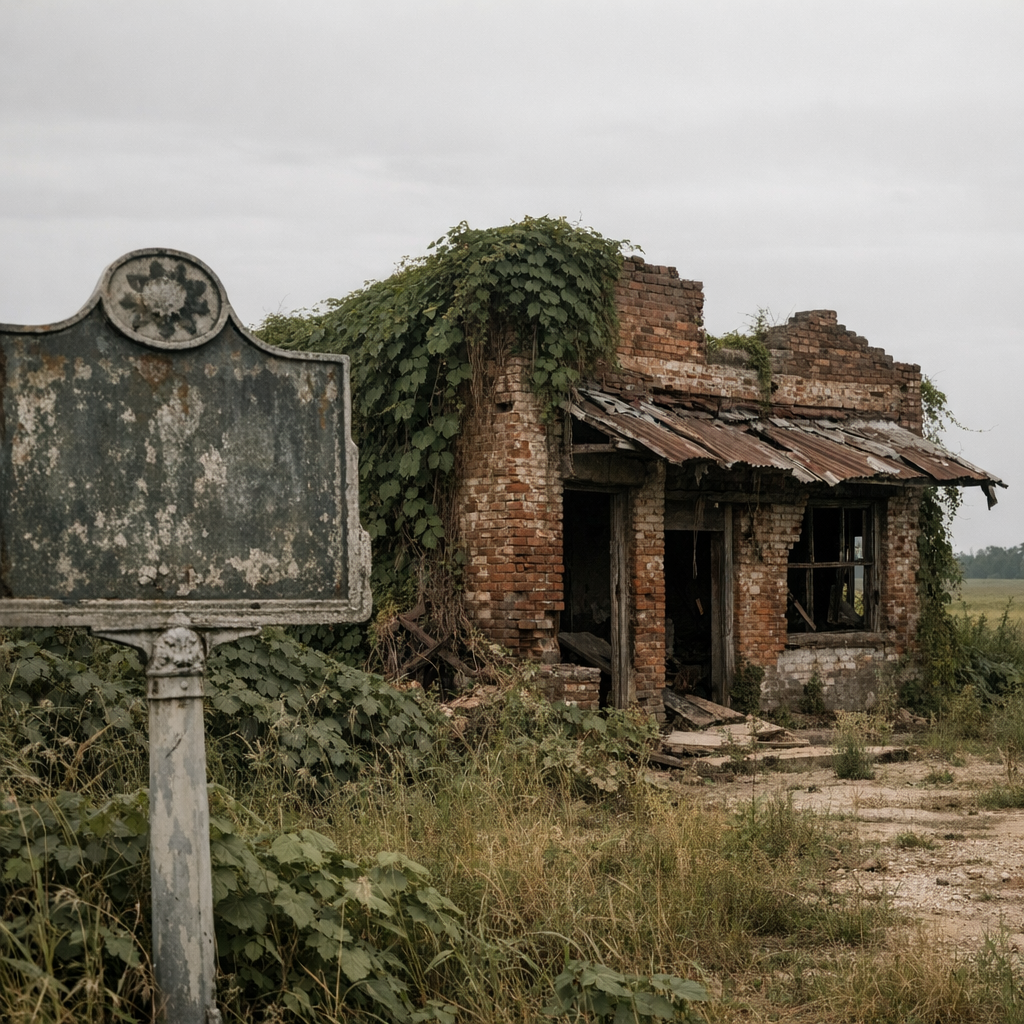
In the Mississippi Delta, just off Money Road outside the unincorporated community of Money, a crumbling brick shell sits behind a low chain-link fence, half-swallowed by kudzu and Johnson grass. There is no gift shop, no ticket booth, no line of tour buses. Most visitors who find it do so slowly, driving past twice before realizing the pile of collapsed brick and rusted tin roofing is what remains of Bryant's Grocery and Meat Market — the store where, on August 24, 1955, a fourteen-year-old boy named Emmett Till stopped in for candy and, within four days, was dead.
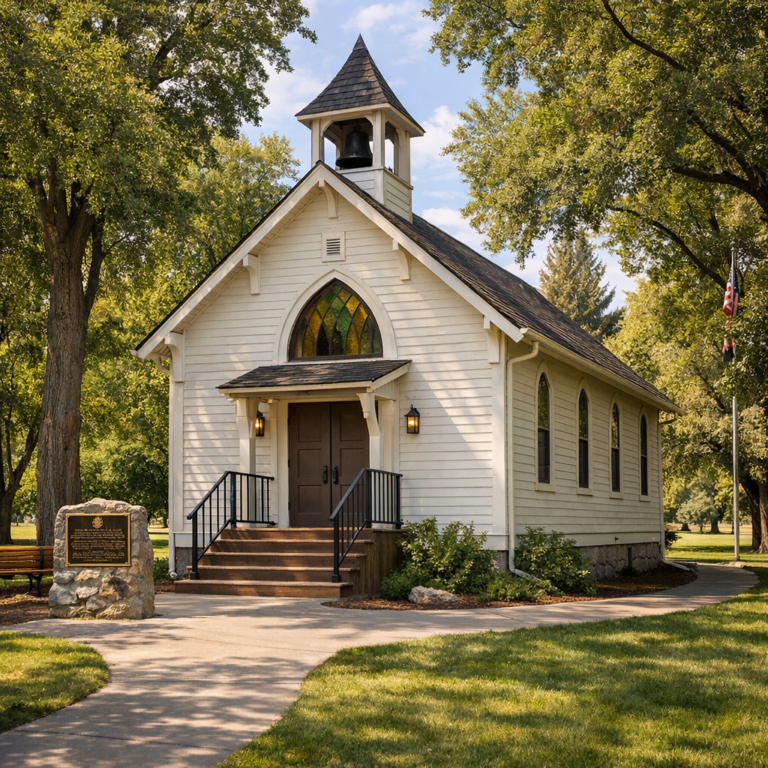
Thirty miles south, in the small town of Sumner, a very different scene unfolds. The Tallahatchie County Courthouse has been lovingly restored to its 1955 appearance, its courtroom preserved so precisely that visitors can stand in the same space where an all-white, all-male jury deliberated for roughly an hour before acquitting Till's killers. Across the street, the Emmett Till Interpretive Center welcomes visitors with the same unflinching honesty the family itself has always asked for: tell the truth, plainly, and let the history do the work.
This is the Emmett Till Memory Trail — one of the most historically significant and least-visited stretches of American ground. It asks nothing of travelers except attention, humility, and time. What it gives back is an unvarnished understanding of how one Chicago teenager's murder, and his mother's refusal to let the world look away from it, helped ignite the modern civil rights movement.
Why This Case Changed the Course of American History
Emmett Till was born and raised in Chicago. In the summer of 1955, at fourteen years old, he traveled south to Money, Mississippi to visit relatives — his great-uncle, Mose Wright, a sharecropper and Baptist preacher. On August 24, he and a group of cousins stopped at Bryant's Grocery and Meat Market, a small store serving the local sharecropping community, where an interaction with the white woman working the counter, Carolyn Bryant, took place. Accounts of exactly what occurred inside the store have long been disputed, and decades later Carolyn Bryant herself admitted to a historian that portions of her original testimony were untrue.
Four days later, in the early hours of August 28, 1955, Roy Bryant and his half-brother J.W. Milam arrived armed at Mose Wright's home and demanded the boy who had been at the store. They took Emmett Till from the house. His body was recovered days later from the Tallahatchie River, weighted down with a cotton-gin fan tied around his neck with barbed wire. He was identified in part by a ring that had belonged to his father.
What happened to Emmett Till in the hours between his abduction and his death is a matter of historical record, and this is not the place to recount it in detail. What matters for understanding why this trail exists is what came next: a mother's decision, a trial, a verdict, and a country forced — however briefly, however incompletely — to see itself clearly.
Mamie Till-Mobley's Unbearable, Necessary Courage
When Emmett Till's body was shipped back to Chicago, his mother, Mamie Till-Mobley, made a decision that would ripple through the next decade of American history. Rather than a private, closed-casket burial, she insisted on an open casket at Roberts Temple Church of God in Christ in Chicago's Bronzeville neighborhood, and she insisted that photographs be allowed. Tens of thousands of mourners filed past the casket over four days. Jet magazine published the photographs, and they traveled across the country and around the world.
“There was just no way I could describe what was in that box,” Mamie Till-Mobley later said. “No way. And I just wanted the world to see.”
It is difficult to overstate what this decision cost her, and it is impossible to overstate what it did for the country. Historians and civil rights leaders alike have pointed to those photographs as a turning point — the moment when racial violence that Black communities in the South had lived under and organized against for generations became impossible for the rest of America to claim ignorance of. Rosa Parks later said she was thinking of Emmett Till when she refused to give up her seat on a Montgomery bus just three months later, on December 1, 1955. Mamie Till-Mobley spent the rest of her life as an educator and civil rights advocate, insisting that her son's death be remembered as testimony, not tragedy alone.
The Trial at Tallahatchie County Courthouse
Roy Bryant and J.W. Milam were tried for Emmett Till's murder in September 1955, in a five-day trial held at the Tallahatchie County Courthouse in Sumner — a town whose own welcome sign at the time reportedly read “A Good Place to Raise a Boy.” Mose Wright, Till's great-uncle, took the stand and identified both men as the ones who had come to his home and taken his great-nephew — an act of extraordinary courage for a Black sharecropper in 1955 Mississippi, done in open defiance of the near-certain danger it invited.
It did not matter. On September 23, 1955, the all-white, all-male jury deliberated for approximately 67 minutes before returning a verdict of not guilty on both men. One juror later told a reporter, “If we hadn't stopped to drink pop, it wouldn't have taken that long.” Protected by double jeopardy, Bryant and Milam later sold their confession to a magazine for payment, describing the killing in detail with no fear of consequence. Both men have since died without ever being held legally accountable.
The injustice of that verdict, delivered in that courtroom, is precisely why the building matters today. The Tallahatchie County Courthouse was restored and reopened to the public in 2012 as both a functioning county courthouse and a preserved historic site, its second-floor courtroom kept as close to its 1955 appearance as possible.
Visiting the Sites Today
Bryant's Grocery and Meat Market, Money — What remains of the store is a partially collapsed brick facade and rubble, privately owned and unrestored, standing behind a fence along Mississippi Highway 3/Money Road. There is no formal visitor center on site. A historical marker stands near the ruins providing context. Visitors should stay outside the fenced area, treat the site as the fragile and unprotected historic ruin it is, and resist the urge to remove brick or debris as a “souvenir” — a disrespect that has happened before and that local preservationists actively discourage.
Tallahatchie County Courthouse and the Emmett Till Interpretive Center, Sumner — The restored courthouse and the Interpretive Center directly across the street form the heart of a respectful visit. The Center offers exhibits, guided tours, and educational programming built around what its founders describe as a mission of restorative justice — public education, storytelling, and historic preservation aimed at community healing rather than spectacle. The Center also operates “Let the World See,” a traveling exhibit developed with the Till family and the Children's Museum of Indianapolis. Because hours and tour availability can shift seasonally and with staffing, confirm current hours and book any guided tour directly through the Center's website before your visit.
Graball Landing, near Glendora — This quiet bend of the Tallahatchie River is where Emmett Till's body was recovered. It has also become, unfortunately, a case study in how contested this history remains: the original historical marker placed here was stolen in 2008 and never recovered, and replacement signs were repeatedly shot and vandalized in the years that followed. In October 2019, the Emmett Till Memorial Commission installed a new marker built from over an inch of steel and weighing more than 500 pounds — effectively bulletproof, and reportedly costing more than $10,000 to produce and install. Even that marker has drawn hostility since, underscoring exactly why this trail exists and why visiting it, respectfully and in numbers, matters.
The Emmett Till and Mamie Till-Mobley National Monument — In July 2023, President Biden formally designated a National Monument spanning three sites tied to this history: Graball Landing, the Tallahatchie County Courthouse in Sumner, and Roberts Temple Church of God in Christ in Chicago, where Mamie Till-Mobley held her son's open-casket funeral. The designation was announced on what would have been Emmett Till's 82nd birthday, and it formally places these sites under federal recognition and long-term preservation attention for the first time.
How to Visit This Trail Respectfully
- Approach this as a pilgrimage, not a curiosity stop. Move slowly, read the markers in full, and allow silence.
- Start at the Emmett Till Interpretive Center in Sumner before visiting Money or Graball Landing — the Center's context makes the other sites far more meaningful, and its staff can advise on current road conditions and marker status.
- Do not climb on, remove material from, or pose for casual photos in front of the Bryant's Grocery ruins. This is an active grave-adjacent historic site for many in the region, not a backdrop.
- Bring cash for the Interpretive Center gift shop and any local Delta diners; many small-town Mississippi Delta businesses remain cash-preferred.
- Consider visiting around key dates — August 24 and 28 mark the anniversary of the store encounter and the murder, and July 25 marks the National Monument's designation and what would be Emmett Till's birthday — when the Interpretive Center often hosts commemorative programming.
Getting There and Getting Around
The trail sits in the heart of the Mississippi Delta, roughly two hours south of Memphis, Tennessee, by car. Memphis International Airport (MEM) is the most practical air gateway, with direct flights from most major US hub cities; Greenwood-Leflore County Airport (GWO) offers limited regional service closer to the sites. A rental car is not optional here — Money, Sumner, and Glendora are small, spread-out communities with no public transit, no rideshare coverage, and patchy cell service in stretches between them. Download offline maps before you set out.
Best Time to Visit
September through May offers the most comfortable conditions for a trail that involves standing outdoors at unshaded historic markers; Delta summers bring intense heat and humidity that can make lingering at Graball Landing or the Bryant's Grocery ruins uncomfortable. Late August, despite the heat, draws visitors specifically for the case's anniversary, and late July draws visitors around the National Monument's designation date.
Where to Stay
There is no lodging in Money or Sumner themselves. Most visitors base in Greenwood, about 20 minutes from Sumner, home to the historic Alluvian Hotel and several reliable mid-range chain properties, or in Clarksdale, the Delta blues capital roughly 45 minutes north, which combines civil rights history with blues heritage sites and juke joints. Both towns offer authentic Delta dining and comfortable, affordable bases for exploring the full trail over one or two unhurried days.
🏨 Find Delta Lodging in Greenwood or Clarksdale →BTN Insider Tips
Call ahead before visiting the Interpretive Center. Hours and tour schedules can shift with staffing and community programming; confirming in advance avoids a wasted trip to a rural area with few backup plans.
Pair this trail with the Mississippi Freedom Trail and Blues Trail markers scattered throughout the same region for a fuller picture of the Delta's civil rights and cultural history.
Bring water and sun protection. Several stops, including Graball Landing and the Bryant's Grocery ruins, have no shade, shelter, or facilities.
Read before you go. Mamie Till-Mobley's memoir, Death of Innocence, and the Emmett Till Interpretive Center's own materials provide essential context that will change how you experience each stop.
Leave every site exactly as you found it. These markers have already survived theft and gunfire; visitors are part of what keeps them standing.
Is This Trail Safe to Visit?
The physical act of visiting — driving rural Delta roads, walking up to outdoor markers in small towns — carries no more risk than any quiet rural travel in the United States, and local communities in Sumner and Greenwood are generally welcoming to the respectful visitors this history draws. The vandalism history at Graball Landing reflects ongoing hostility toward the memory of what happened here, not a threat to visitors themselves; it is precisely why the Emmett Till Memorial Commission and now the National Park Service continue to invest in preserving and protecting these markers. As with any solo or small-group travel through rural areas, let someone know your route, keep your phone charged, and fuel up before you leave larger towns.
Plan Your Visit
There is very little tourism infrastructure along the Emmett Till Memory Trail, and that is, in its own way, the point. This is not a polished attraction built for crowds; it is a set of real places where a real injustice happened, preserved by a community and a family who insisted — against theft, against gunfire, against seventy years of a country's reluctance to look — that the world keep seeing. Mamie Till-Mobley opened that casket so no one could look away. Visiting Money and Sumner, quietly and with care, is one way of keeping that promise.
✈️ Plan Your Mississippi Delta Trip →*Affiliate links — BTN may earn a commission at no extra cost to you. Site hours, marker conditions, and tour availability change; confirm current details directly with the Emmett Till Interpretive Center at emmett-till.org before your visit.