The Black Mexico Nobody Told You About
Ask most Americans about Black history in Mexico and you'll get a blank stare, maybe a mumbled reference to Vicente Guerrero, the country's only Afro-descendant president. What almost nobody knows is that along a stretch of Pacific coastline where Oaxaca and Guerrero meet, there are towns where the majority of residents are Afro-Mexican — where the drumbeats, the dances, the last names, and the faces on the street tell a story of African survival and resistance that predates the United States. This is the Costa Chica, and it is, hands down, the single most under-covered Black-heritage destination in the country.
This is a living, breathing regional culture — its own music, its own dance, its own food, its own emerging political identity — carried by the descendants of enslaved Africans brought to New Spain's Pacific coast starting in the 1500s, and by the maroons (cimarrones) who escaped inland plantations and built free communities in this isolated coastal lowland. If you've ever wanted to see a side of Mexico that upends everything you thought you knew about the country, this is it.
How Costa Chica Became Mexico's Afro-Descendant Heartland
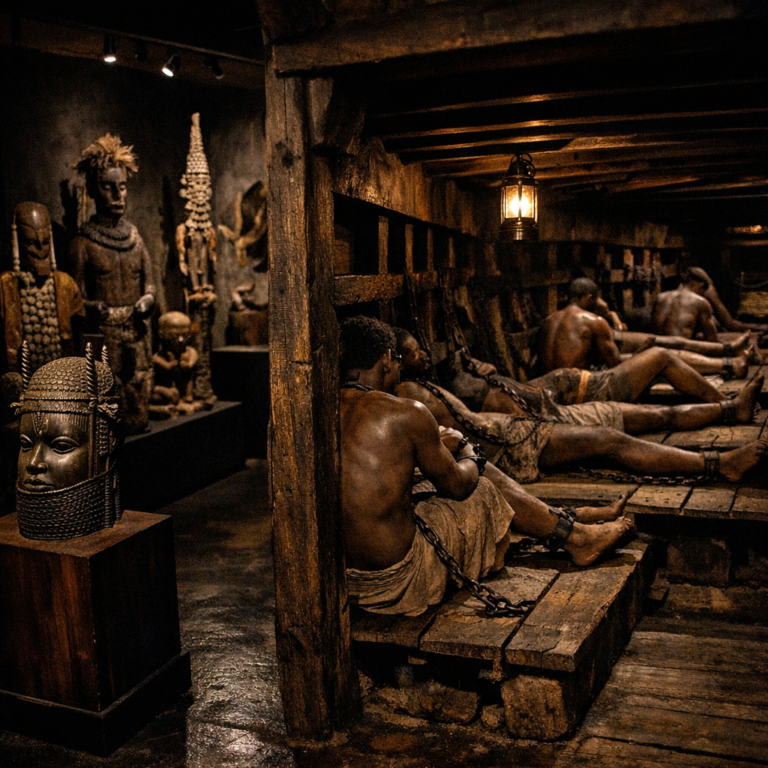
The Costa Chica ("small coast") stretches roughly 200 miles along the Pacific from Acapulco, Guerrero down through Puerto Ángel, Oaxaca. During the colonial period, the Spanish crown funneled enslaved Africans into this region to work cattle ranches, sugar plantations, and cotton fields — labor considered too brutal for the shrinking, disease-devastated Indigenous population under Spanish forced-labor systems. Unlike the Gulf Coast port of Veracruz, where African arrivals assimilated more quickly into the broader mestizo population, Costa Chica's mountainous isolation let African cultural forms take root and persist with far less dilution. Enslaved people also escaped inland ranches and formed cimarrón (maroon) settlements in the coastal lowlands and lagoon country, mixing with local Indigenous communities and building an identity distinct from both.
The result, five centuries later, is a string of towns — Cuajinicuilapa, El Ciruelo, Corralero, Collantes, Punta Maldonado, and neighborhoods of Pinotepa Nacional — where Black Mexican identity isn't a historical curiosity. It's simply who people are.
2019 and 2020: The Years Mexico Finally Counted Its Black Population
For most of Mexican history, the national mythology of "mestizaje" — the blending of Spanish and Indigenous peoples — had no room for a third root. Afro-Mexicans were culturally erased from the country's own self-image, even as their communities in Costa Chica never stopped existing. That began to change only recently, and the timeline is worth knowing before you go:
- 2019 — The Mexican Congress amended the federal constitution to formally and explicitly recognize Afro-Mexican people and communities as part of the nation's pluricultural composition, decades after Indigenous peoples received similar recognition.
- 2020 — For the first time in Mexican history, the national census (conducted by INEGI) included a direct self-identification question for "Afro-Mexican, Afro-descendant, or Black." The result: roughly 2.6 million people, about 2% of Mexico's population, identified as Afro-descendant — with Guerrero (around 8%) and Oaxaca (nearly 5%) posting the country's highest concentrations, centered squarely on Costa Chica.
This wasn't handed down from above. It was the product of a two-decade grassroots organizing campaign by Afro-Mexican activists and community leaders from Costa Chica itself who spent years demanding to simply be counted. Visiting this region today means walking through the living result of that fight.
Museo Nacional de las Culturas Afromestizas
The anchor institution for understanding all of this is the Museo Nacional de las Culturas Afromestizas in Cuajinicuilapa, Guerrero — the largest "pueblo negro" (Black town) in the state and widely considered the cultural capital of Afro-Mexican Costa Chica. This is the only museum in Mexico dedicated specifically to Afro-Mexican history and culture, and it does not disappoint: exhibits trace the transatlantic slave trade's arrival on the Pacific coast, the formation of maroon communities, regional dress and craftwork, and the musical and dance traditions that have kept this identity alive across generations. For diaspora travelers, it functions as something close to what the W.E.B. Du Bois Center is to Accra — a place that names and honors a history the rest of the country long refused to see.
Danza de los Diablos: Devils, Drums, and Ancestral Memory
If you can time your trip around it, the single most powerful cultural experience in Costa Chica is the Danza de los Diablos ("Dance of the Devils"), traditionally performed around Día de los Muertos on November 1st and 2nd. Dancers wear elaborate masks with exaggerated features, fringed beards, and ragged, tattered costumes, led by a lead performer known as the "Diablo Mayor" who sets the rhythm and choreography for the group. The dance itself — stamping footwork, low hunched postures, guttural vocalizations — is accompanied by a raw, percussive ensemble of charrasca (scraped instrument), armadillo-shell bote drum, harmonica, and violin.
Scholars trace the dance's roots to the colonial period, likely a coded, syncretic ritual blending West and Central African spiritual practices with Catholic Day of the Dead observance — a way of honoring ancestors and, some argue, mocking the enslavers through devil imagery. Today it's recognized by Mexican cultural authorities as patrimonio afromexicano (Afro-Mexican heritage). Seeing it performed on a dusty village street at dusk, torchlight flickering off carved wooden masks, is not something you forget.
What Else to See and Do
- Cuajinicuilapa, Guerrero — Home to the Museo Nacional de las Culturas Afromestizas and the region's unofficial Afro-Mexican capital.
- El Ciruelo, Oaxaca — Known for its distinctive "artesa" tradition: dancers performing atop an overturned wooden trough that doubles as a resonating drum.
- Pinotepa Nacional, Oaxaca — The Costa Chica's largest town and practical home base, with a lively market and the best accommodation options in the region.
- Punta Maldonado & Corralero lagoon — Quiet, undeveloped beach and lagoon country where fishing communities preserve Afro-Mexican foodways largely untouched by tourism.
Food to Try
Costa Chica cuisine reflects its coastal, African, and Indigenous roots in equal measure.
- Pescado a la talla — Whole fish butterflied and grilled over an open flame with a smoky chile-adobo paste, a Costa Chica coastal signature.
- Tamales costeños — Regional tamales often wrapped in banana leaf rather than corn husk, a preparation style with clear West African and Afro-Caribbean parallels.
- Arroz con camarón seco — Rice cooked with sun-dried shrimp, a lagoon-country staple.
- Empanadas de camarón — Shrimp-stuffed empanadas sold by street vendors in Pinotepa Nacional's market.
- Mezcal oaxaqueño — You're in Oaxaca; small-batch, family-distilled mezcal is everywhere and worth seeking out over tequila.
Is Costa Chica Safe? An Honest Answer
This matters too much to soften, so here it is straight: safety in this region is genuinely uneven, and you need to plan around real, current, official guidance rather than vibes.
As of this writing, the U.S. State Department rates Mexico overall at Level 2 — Exercise Increased Caution, and rates Oaxaca state at the same Level 2, citing crime and, in some interior areas, cartel and gang activity. The Oaxaca side of Costa Chica — Pinotepa Nacional, El Ciruelo, and the coastal corridor along Highway 200 — falls under this more moderate advisory, similar to much of touristic coastal Mexico. Guerrero state, however, is currently rated Level 4 — Do Not Travel, the government's most severe advisory category, citing terrorism, crime, and kidnapping, with armed groups operating independently of government authority in many parts of the state. The advisory draws no carve-out for tourist areas — it specifically states U.S. government employees may not travel to any part of Guerrero, including Acapulco, Zihuatanejo, Taxco, and Ixtapa. Cuajinicuilapa, home to the Museo Nacional de las Culturas Afromestizas, sits just inside the Guerrero state line along the coastal highway, geographically distinct from the higher-risk interior "Tierra Caliente" region — but it is, on paper, inside a Level 4 zone, and that deserves your attention, not a footnote.
What this means practically:
- Check the current advisory before you book. Advisory levels shift; verify the live status at travel.state.gov for both Oaxaca and Guerrero before finalizing any itinerary that includes Cuajinicuilapa.
- Base yourself on the Oaxaca side. Pinotepa Nacional and El Ciruelo are well within the more moderate Oaxaca advisory zone and give you full access to Costa Chica's artesa music tradition, beaches, and Afro-Mexican communities without crossing into Guerrero.
- Travel the coastal highway corridor in daylight, ideally with a local guide or a reputable regional tour operator who monitors current road conditions, rather than self-driving into Guerrero on a whim.
- Register with the U.S. Embassy's STEP program and keep the Oaxaca consular agency's contact information on hand.
- Don't treat the museum visit as non-negotiable. If conditions in Guerrero are unfavorable at the time of your trip, El Ciruelo's artesa tradition and Pinotepa Nacional's market and Afro-Mixtec culture still deliver a rich, safe, and authentic Costa Chica experience on the Oaxaca side alone.
None of this means Costa Chica is off-limits — thousands of visitors travel the Oaxaca coast every year without incident. But an honest guide doesn't bury a Level 4 "Do Not Travel" advisory to make the story prettier. Go in informed, and make your own risk decision with full information.
Getting There & Getting Around
The most practical gateway is Puerto Escondido International Airport (PXM) in Oaxaca, with connections from Mexico City and seasonal U.S. direct flights. From there, it's roughly a 2-2.5 hour drive southeast along Highway 200 to Pinotepa Nacional and El Ciruelo. Acapulco's airport (ACA) is closer to Cuajinicuilapa on paper, but given the current Guerrero advisory, most cautious travelers route through Oaxaca instead. Rental cars are available in Puerto Escondido and Oaxaca City; ADO buses also connect Puerto Escondido to Pinotepa Nacional.
✈️ Find Flights to Oaxaca →Where to Stay
Mid-range: Pinotepa Nacional has the region's best hotels — clean, secure properties in the $40-70/night range, ideal as a base for day trips to El Ciruelo and the coast.
Budget: Family-run guesthouses (posadas) in Pinotepa Nacional and Puerto Escondido run $25-45/night.
Beach option: Puerto Escondido — in the more moderate Oaxaca advisory zone — offers everything from hostels to boutique surf resorts, with Costa Chica day trips easily arranged from there.
🏠 Book Oaxaca Coast Hotels →Best Time to Visit
The dry season (November through April) offers the most comfortable travel weather. For the full cultural experience, target October 31 – November 2 to catch Día de los Muertos observances and, where performed, the Danza de los Diablos. Temperatures run hot and humid year-round on the coast, typically 80-95°F.
Budget Guide
Budget: $40-60/day — guesthouse, market food, local buses.
Mid-range: $70-120/day — hotel, restaurant meals, rental car or private driver, guided museum and cultural visits.
Comfort: $150+/day — Puerto Escondido boutique stay, private guide for Costa Chica day trips, beach and cultural itinerary combined.
BTN Insider Tips
Hire a local guide who works this region regularly. Costa Chica isn't set up for independent tourism the way Oaxaca City is — a guide with local relationships turns a pass-through into a genuine cultural encounter.
Ask before you photograph. These are living communities, not open-air museums; performers and residents deserve the same consent you'd expect for yourself.
Bring cash. Card acceptance is limited outside Pinotepa Nacional and Puerto Escondido.
Re-check the Guerrero advisory the week of your trip. Conditions and official guidance can change; don't rely on information more than a few weeks old.
Mark Your Calendar
- October 31 – November 2 — Día de los Muertos and Danza de los Diablos performances across Costa Chica towns.
- Year-round — Museo Nacional de las Culturas Afromestizas, Cuajinicuilapa (advisory-dependent; verify access conditions before traveling).
Book Your Trip
Costa Chica isn't a polished, tourist-ready circuit — it's something rarer: an unfiltered, still-emerging chapter of Black history that most of the world, including most of Mexico, is only now learning to see clearly. Go informed, go respectfully, and go with your eyes open to both the richness and the real safety context of the region.
✈️ Start Planning Your Costa Chica Trip →*Affiliate links — BTN may earn a commission at no extra cost to you.