The Balcony That Changed America
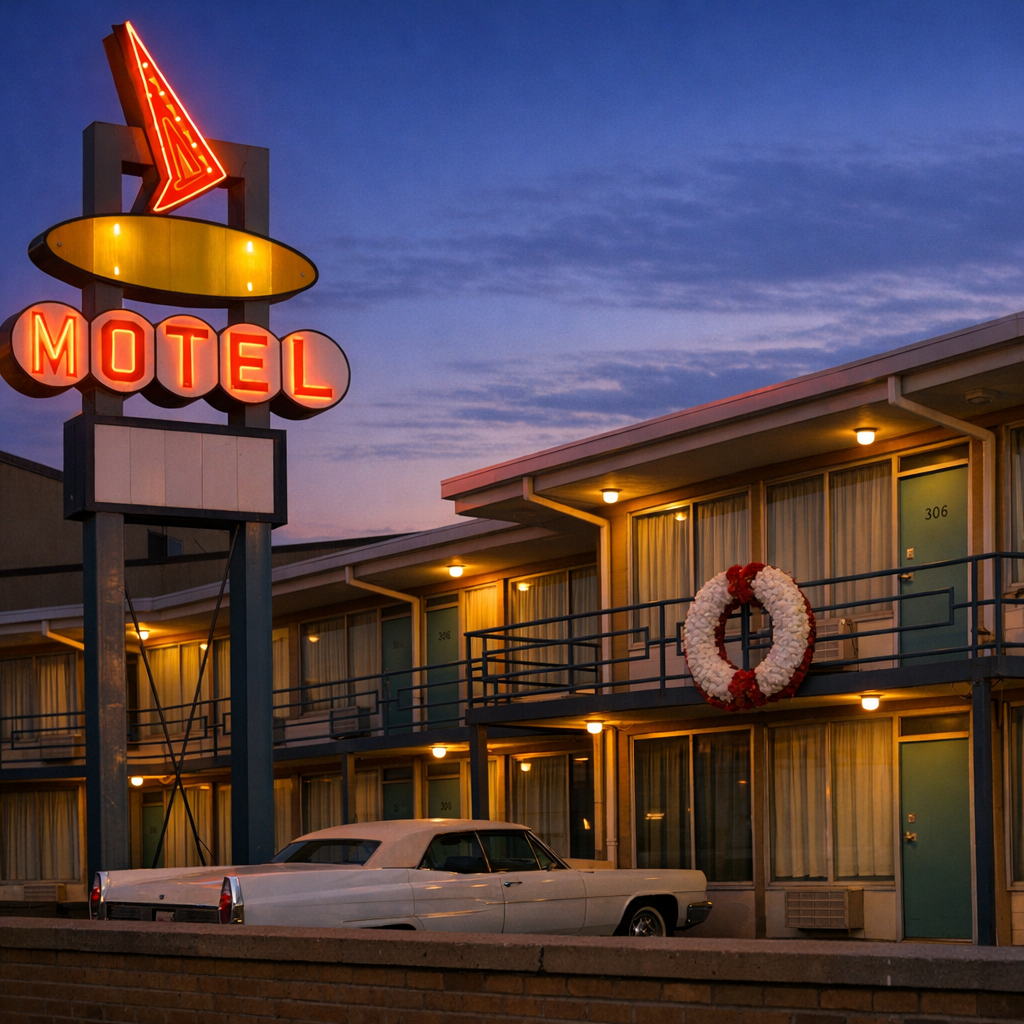
There is a particular kind of silence that falls over visitors standing in the courtyard of the Lorraine Motel in Memphis, Tennessee. Above them, on the second-floor balcony outside Room 306, a wreath marks the exact spot where Dr. Martin Luther King Jr. was standing on the evening of April 4, 1968, when he was assassinated. Below, two vintage Cadillacs sit parked exactly where they were that night, frozen in time as part of the museum's permanent exhibit. It is one of the most solemn, important, and quietly overwhelming places any traveler can visit in the United States.
This is the National Civil Rights Museum — a museum built not near the site of Dr. King's death, but literally around it. The Lorraine Motel's facade, balcony, and Room 306 itself have been preserved, while the museum's exhibition halls wrap around and behind the historic structure, tracing nearly 400 years of the Black freedom struggle from the earliest slave ships to the movement that brought Dr. King to Memphis in the final days of his life. For Black travelers, it is not simply a museum stop on a Memphis itinerary — it is one of the most essential pilgrimages in American travel.
Why Black Travelers Come to Memphis
Memphis holds a singular place in Black American history and culture. This is the city of Beale Street and the Memphis blues, of Stax Records and the soul sound that shaped American music, of the Mississippi River that carried so much of the story of the Great Migration. But it is also, unavoidably, the city where the movement's most towering figure was killed while standing in solidarity with Black sanitation workers fighting for basic dignity on the job.
Visiting the National Civil Rights Museum is an act of remembrance, but it is also an act of education. The museum does not linger on the tragedy of April 4, 1968, as its centerpiece. Instead, it uses the Lorraine Motel as the anchor for a sweeping, meticulously researched narrative of the entire civil rights movement — the courage, the strategy, the sacrifice, and the ordinary people who built something extraordinary together. Leaving the museum, most visitors describe feeling not just informed, but changed.
Room 306 and the Lorraine Motel
Before it became a museum, the Lorraine Motel was already historic in its own right. Opened in the 1920s and rebuilt in the 1940s, the Lorraine was one of the relatively few Memphis motels that welcomed Black travelers, entertainers, and musicians during the era of segregation, when the Green Book guided Black Americans to safe lodging across the country. Stax Records artists, touring musicians, and civil rights organizers all stayed there over the decades, giving the motel a rich history of its own well before that April evening.
Dr. King and his colleagues in the Southern Christian Leadership Conference regularly stayed at the Lorraine when in Memphis. On April 4, 1968, King was staying in Room 306 — a room that had been used often enough by SCLC staff that it was informally known as the "King-Abernathy suite," shared with his close friend and colleague Ralph Abernathy. Today, Room 306 and the adjoining Room 307 are preserved as period exhibits, viewable through glass, furnished exactly as they were left that day — down to the coffee cups on the table and the newspaper on the bed. The museum handles this space with enormous care, presenting it not as a scene of tragedy to be sensationalized, but as a moment frozen in respect, allowing visitors to absorb the weight of the history without being confronted by graphic detail.
The museum itself opened at the Lorraine Motel site in 1991, after years of community effort to preserve the building rather than allow it to be demolished or redeveloped. In 2002, the museum expanded significantly, acquiring the building across Mulberry Street that once housed the boarding house from which the fatal shot was fired. That building, now called the Legacy Building, houses additional exhibits examining the investigation and legacy of King's assassination. A major renovation completed in 2014 modernized and expanded the museum's exhibits throughout both buildings, resulting in the comprehensive, deeply researched institution that stands today.
A Journey Through the Movement: Slave Ships to the Mountaintop
What distinguishes the National Civil Rights Museum from a simple historical marker is the depth and scope of the story it tells. Visitors begin their journey not in 1968, but centuries earlier, with exhibits examining the transatlantic slave trade and the brutal realities of chattel slavery in America. From there, the museum moves methodically through Reconstruction and its betrayal, the rise of Jim Crow segregation, and the early 20th-century foundations of organized resistance.
The core of the museum then walks visitors through the movement's landmark chapters in vivid, immersive detail: the 1955 Montgomery Bus Boycott and Rosa Parks's refusal to give up her seat; the 1957 desegregation of Little Rock Central High School; the sit-in movement that began at a Woolworth's lunch counter in Greensboro in 1960; the Freedom Rides of 1961 that tested desegregation on interstate buses; the 1963 March on Washington and Dr. King's "I Have a Dream" speech; the brutal violence of Birmingham; and the 1965 Selma to Montgomery marches that helped secure the Voting Rights Act. Each gallery uses artifacts, photography, oral histories, and full-scale recreations — including a replica of the Montgomery bus and a lunch counter visitors can sit at — to make the history tactile rather than abstract.
The museum's narrative then arrives, inevitably and carefully, at Memphis in the spring of 1968 — and at the reason Dr. King was in the city at all.
The Sanitation Workers' Strike and "I AM A MAN"
Dr. King did not come to Memphis for a symbolic visit. He came because 1,300 Black sanitation workers were on strike, demanding safety, fair wages, and recognition of their union after two of their colleagues, Echol Cole and Robert Walker, were crushed to death in a malfunctioning garbage compactor truck on February 1, 1968 — a death made more devastating by the fact that the men had been denied shelter from a rainstorm in any nearby building because of their race, and had taken refuge in the truck's compactor mechanism instead.
The strike that followed became one of the movement's most powerful expressions of dignity and economic justice. Workers marched daily through downtown Memphis carrying signs with four simple words: "I AM A MAN." The phrase, stark and direct, insisted on a basic humanity that the city's labor practices had denied Black workers for generations. It remains one of the most recognized and reproduced images of the entire civil rights era, and the museum devotes significant gallery space to the strike, the marches, and the broader Poor People's Campaign that Dr. King was helping to organize at the time of his death — an effort to expand the movement's focus from legal segregation to economic inequality nationwide.
Dr. King traveled to Memphis specifically to support the sanitation workers, delivering his now-famous "I've Been to the Mountaintop" speech at Mason Temple on the evening of April 3, 1968 — the night before his death. The museum presents this final chapter with restraint and gravity, allowing the workers' courage and King's commitment to economic justice to stand as the story, rather than dwelling on the violence that followed.
Planning Your Visit
The National Civil Rights Museum is located at 450 Mulberry Street in downtown Memphis, adjacent to the South Main Arts District. As of this writing, general admission is $25 for adults, $23 for seniors (65+) and college students, and $22 for children ages 5–17. The museum is open daily from 9:00 AM to 6:00 PM, with last admission at 5:00 PM, and is closed on Tuesdays. Tennessee residents receive complimentary admission on Monday evenings from 3:00 PM until closing (excluding holidays), a benefit that covers one adult and up to five children with valid state ID. Timed-entry tickets are recommended and available for purchase online in advance, particularly during spring and summer travel season and around the anniversary of Dr. King's death each April.
Plan for at least three hours to move through both the main museum building and the Legacy Building across the street — rushing this museum does it a disservice. Many visitors find they need to pause, sit, and process what they've seen before continuing through certain galleries, and the museum's layout accommodates that need for reflection.
Beyond the Museum: Memphis's Broader Black History
The National Civil Rights Museum anchors a Memphis visit, but it sits within a city rich in Black cultural history worth exploring further. The Stax Museum of American Soul Music, built on the site of the original Stax Records studio, celebrates the label that gave the world Otis Redding, Isaac Hayes, and the Memphis soul sound. The Withers Collection Museum & Gallery showcases the work of Ernest Withers, the photographer whose images — including of the "I AM A MAN" marches and Dr. King's final days — helped define how the movement was seen by the world. Beale Street remains the historic heart of Memphis blues and Black entertainment, and the Clayborn Temple, restored as a National Treasure, served as the organizing headquarters for the sanitation workers' strike itself.
Where to Stay
Downtown/South Main: The Peabody Memphis is the city's historic grand hotel, famed for its lobby ducks and centrally located within walking distance of the museum, Beale Street, and the Mississippi riverfront. The Central Station Hotel, housed in a beautifully restored train station, offers a stylish boutique alternative in the South Main Arts District, just blocks from the museum.
Budget-Friendly: Several reliable mid-range chain hotels cluster downtown along Union Avenue and around AutoZone Park, offering comfortable, affordable access to all the major sites on foot or via a short rideshare.
Getting There and Getting Around
Memphis International Airport (MEM) offers direct flights from most major US hub cities and is roughly a 15-20 minute drive from downtown. Memphis is also a classic road-trip stop for travelers moving along the Mississippi River corridor between Nashville, New Orleans, and St. Louis. Downtown Memphis is highly walkable, with the museum, Beale Street, and the riverfront all within easy reach on foot; the free Main Street Trolley provides a charming, low-cost way to move between downtown attractions, and rideshare services operate reliably throughout the city.
Best Time to Visit
Spring (March–May) and fall (September–November) offer Memphis's most comfortable weather, with mild temperatures ideal for walking downtown and visiting outdoor sites like Clayborn Temple and the riverfront. Summers run hot and humid, though the city's indoor cultural attractions make it a viable year-round destination. Many visitors intentionally plan trips around April 4, when the museum and the broader Memphis community host commemorative programming marking the anniversary of Dr. King's death.
Budget Guide
Budget: $100–150/day — budget hotel, casual Memphis barbecue and soul food, museum admission, trolley and rideshare transport.
Mid-range: $200–300/day — boutique or upscale hotel, sit-down dining on Beale Street, multiple museum visits, guided tours.
Luxury: $350+/day — The Peabody or comparable historic property, fine dining, private historical tours of civil rights sites.
BTN Insider Tips
Book timed-entry tickets online in advance. Walk-up availability is not guaranteed, especially around the April 4 anniversary and during peak spring and summer travel months.
Give yourself time in Room 306's viewing area. Many visitors need a few quiet minutes here before moving on — there's no reason to rush.
Cross the street to the Legacy Building. Some visitors mistakenly treat the main Lorraine Motel building as the whole museum and miss the Legacy Building's additional exhibits on the investigation and King's broader legacy.
Pair your visit with Clayborn Temple. Understanding where the sanitation workers organized adds essential context to what you'll see in the museum's strike exhibits.
Eat well while you're there. Memphis barbecue is a genuine culinary pilgrimage in its own right — dry-rubbed ribs and slow-smoked pork are the city's signature.
Is Memphis Safe for Black Travelers?
Memphis is a welcoming, well-trafficked destination for Black travelers, with downtown, South Main, and the museum district seeing heavy daily foot traffic from tourists and locals alike. As with any major American city, standard urban travel precautions apply — stay aware in less-trafficked areas after dark and use rideshare rather than walking long distances late at night. The overwhelming majority of visitors experience Memphis as a warm, hospitable city proud to share its complicated, powerful history.
Plan Your Memphis Trip
The National Civil Rights Museum is not an easy visit, and it is not meant to be. It asks something of every traveler who walks through its doors — attention, humility, and a willingness to sit with difficult history. What it gives back is an unmatched understanding of how far the movement traveled, what it cost, and what remains unfinished. Standing in view of Room 306, in the shadow of the balcony where Dr. King's life ended in service of a garbage strike for the dignity of Black workers, is an experience every traveler should have at least once.
✈️ Book Your Memphis Trip Now →*Affiliate links — BTN may earn a commission at no extra cost to you. Admission pricing was verified at the time of publishing and is subject to change; confirm current rates at civilrightsmuseum.org before your visit.