The City That Built Its Fortune on Human Beings
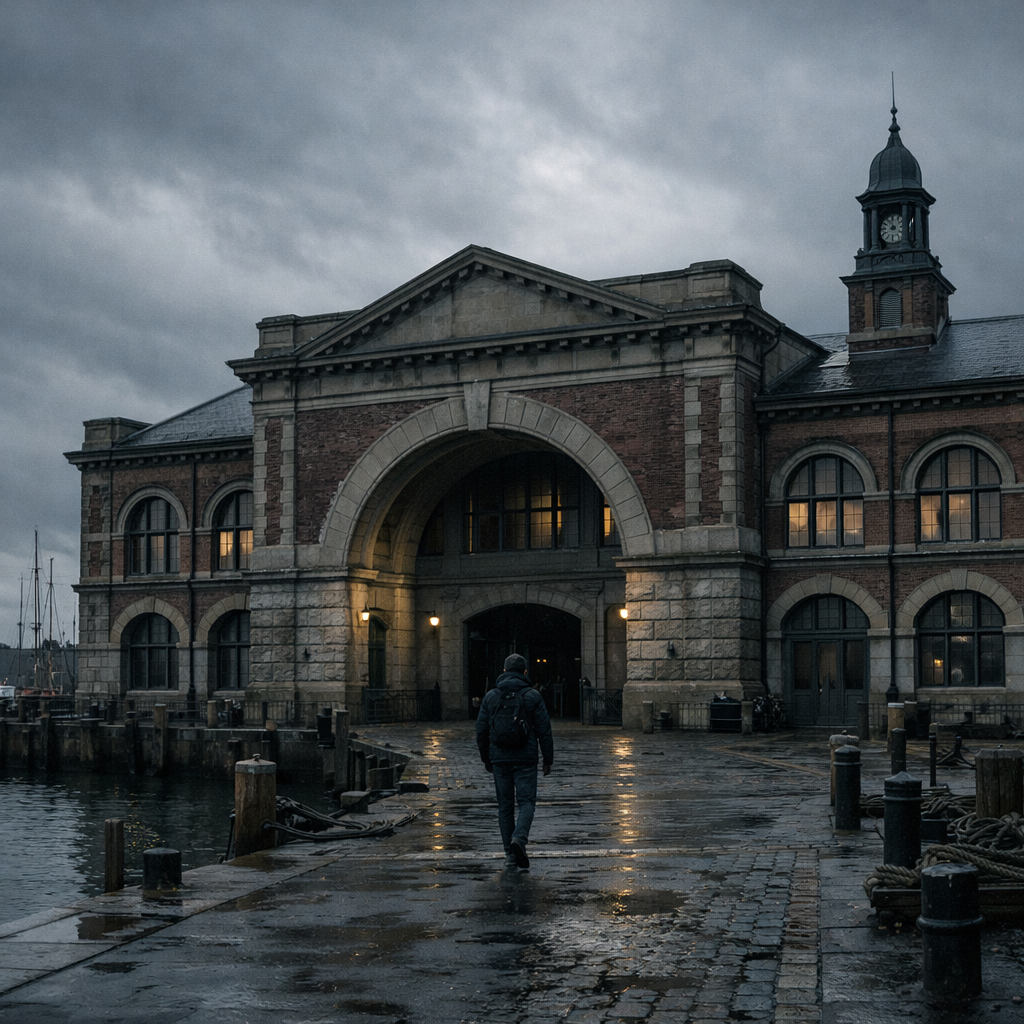
Walk along the Royal Albert Dock in Liverpool today and you'll see couples taking sunset photos, tourists eating fish and chips on the waterfront, and Ferris wheel lights reflecting off the Mersey. It's a beautiful, easy scene. It is also standing on top of one of the darkest chapters in British history — and Liverpool, to its credit, no longer lets you forget it.
Inside a converted 19th-century warehouse on that same dock sits the International Slavery Museum, the only national museum in the world solely dedicated to the history and legacy of transatlantic slavery. It does not soften the story. It does not let Liverpool off the hook. And it insists, gallery after gallery, that you leave knowing exactly how this city got rich.
Why This Museum Exists — And Why Here
The International Slavery Museum opened on August 23, 2007 — the 200th anniversary of Britain's Slave Trade Act, which formally abolished the trade in enslaved people across the British Empire. The date wasn't a coincidence. It was a statement. Liverpool, more than any other British city, owed the debt.
The museum is part of National Museums Liverpool and occupies the third floor of the Merseyside Maritime Museum building at the Royal Albert Dock — itself a UNESCO-recognized waterfront where slave ships once docked, unloaded sugar, tobacco, and cotton, and loaded up again with manufactured goods bound for West Africa. You are, quite literally, standing where the machinery of the trade once operated. Admission is free, with National Museums Liverpool venues open 10am–5pm, Tuesday through Sunday.
Inside the Museum: What You'll See
The museum is organized into a sequence that refuses to let visitors rush past the hard parts. The core galleries move through:
- Life in West Africa Before Enslavement — rich displays of the kingdoms, craftsmanship, spiritual traditions, and everyday life that existed across West Africa before European traders arrived, a deliberate corrective to the flattening of African history into only its trauma.
- Enslavement and the Middle Passage — the unflinching center of the museum, documenting the brutal conditions of the crossing, the economics of the trade, and Liverpool's direct role as its dominant British port. Shackles, ship diagrams, and first-person testimony make the scale of the atrocity impossible to abstract away.
- Legacy — The Continuing Fight for Freedom — resistance and rebellion by enslaved people themselves, abolition, and a direct line drawn from slavery to modern racism, inequality, and ongoing forms of exploitation and human trafficking today.
A standout feature is the museum's East Gallery, where roughly 400 annotated songs trace the musical inheritance of the African diaspora — from work songs and spirituals through blues, gospel, reggae, and hip-hop — a reminder that the culture born from this trauma became some of the most influential music in human history.
Liverpool's Slave-Trade Past, By the Numbers
The museum doesn't ask visitors to take Liverpool's guilt on faith. The historical record is documented and damning. By the mid-1740s, Liverpool had overtaken Bristol to become Britain's largest slave-trading port, and by 1750 it was pre-eminent in the trade nationally. Between 1793 and 1807 alone, Liverpool accounted for an estimated 84.7% of all British slave-trading voyages — dwarfing London (roughly 12%) and Bristol (roughly 3.3%).
Between 1740 and 1810, Liverpool traders are estimated to have forcibly transported over 400,000 people from the Bight of Biafra and close to 200,000 from West Central Africa, selling hundreds of thousands of enslaved people into Jamaica, Barbados, and other colonies. Liverpool's local government sank roughly £1 million into building six new docks during the 18th century to handle the volume, and by some estimates the city built or operated over 2,000 ships involved in the trade between 1701 and 1810 — more than a quarter of all British slaving vessels.
That money didn't disappear. It built Georgian townhouses, funded civic institutions, and put slave traders in the mayor's chair. Streets across Liverpool's city center still carry the names of merchants who grew wealthy trafficking human beings. The museum's unofficial thesis is simple: this city's Georgian elegance and Victorian grandeur were financed, in large part, by slavery — and pretending otherwise dishonors everyone who suffered for it.
Toxteth and the Living Story of Black Liverpool
You cannot tell Liverpool's slavery history and stop there. A few miles from the Royal Albert Dock is Toxteth — known locally as Liverpool 8 — home to one of Britain's oldest continuously settled Black communities, with roots stretching back to African and Caribbean sailors who settled near the docks in the 19th century, long before the large Windrush-era Commonwealth migrations of the mid-20th century swelled the neighborhood further.
Toxteth's history has not been easy. The area endured the 1981 Toxteth riots, a violent eruption born of poverty, chronic unemployment, and years of racialized policing under the "sus law" stop-and-search regime — a flashpoint that, alongside Brixton, forced a national reckoning with how Britain treated its Black citizens. But Toxteth's story is not only one of unrest. It is also one of extraordinary cultural output.
Liverpool 8 produced The Real Thing, widely regarded as the most successful Black British soul act of the 1970s. Formed in Toxteth in 1970, the group topped the UK singles chart in 1976 with "You to Me Are Everything" and racked up roughly a dozen chart hits, including "Can't Get By Without You" and "Can You Feel the Force?" — a run of success that helped restore Liverpool's musical reputation after the Beatles era and put a Black British band from Liverpool 8 at the very top of the national charts, years before most of Britain was ready to reckon with its Black communities' full humanity.
Today, Toxteth remains the cultural and spiritual heart of Black Liverpool — a neighborhood of Georgian terraces, Caribbean and West African eateries along Granby Street, community centers, churches, and a proud, deeply rooted Black British identity that predates almost every other Black community in England. Any visit built around the International Slavery Museum should make time to walk Granby Street, eat in Toxteth, and understand that Liverpool's Black history didn't end at abolition — it kept living, creating, and building right through to today.
Where to Stay
Luxury: 30 James Street, a boutique hotel inside the former White Star Line headquarters, puts you steps from the Royal Albert Dock with maritime history built into the walls. The Titanic Hotel, in a converted Stanley Dock warehouse, is Liverpool's most atmospheric high-end stay.
Mid-Range: Hotel Indigo Liverpool and the Hard Days Night Hotel both offer well-located, comfortable stays in the city center within easy reach of both the waterfront museums and Toxteth.
Budget: A cluster of well-reviewed guesthouses and budget chain hotels around Liverpool Lime Street station keep you connected to rail links and a short walk or bus ride from the Albert Dock.
🏨 Book Liverpool Hotels →Getting There
Liverpool John Lennon Airport handles mostly European routes, so most American travelers will fly into London Heathrow or Manchester Airport and connect onward. Manchester to Liverpool is about a 45-minute train or drive; London Euston to Liverpool Lime Street is a direct train of roughly two hours.
One planning detail that trips up first-time UK visitors: US citizens no longer travel to the UK visa-free in the old sense. You now need a UK Electronic Travel Authorisation (ETA) — currently £20, applied for online before you fly, and valid for up to six months of travel. It is not optional and it is not the same as a visa, but skipping it can mean being denied boarding. Apply well ahead of your trip directly through the UK government's official site and avoid third-party sites that charge more.
✈️ Find Liverpool Flights →Best Time to Visit
Liverpool is a year-round destination since its best attractions — including the museum itself — are indoors. That said, May through September brings the mildest, driest weather for walking the waterfront and exploring Toxteth on foot. Winters are damp and grey but far from miserable, and hotel rates drop noticeably outside the summer months.
Budget Guide
Budget: $90–140/day — guesthouse or budget hotel, pub meals and Toxteth eateries, public transport, free museum admission.
Mid-range: $140–250/day — well-located hotel, restaurant dining, the occasional black cab, and a day trip or two.
Luxury: $300+/day — boutique waterfront hotel, private guided history tours, and Liverpool's higher-end restaurant scene.
BTN Insider Tips
Give the museum real time. Two to three hours minimum. This is not a space to rush through, and the content deserves your full attention.
Book your UK ETA before you pack. Don't leave it for the airport — apply online well in advance of travel.
Pair the museum with Toxteth on the same trip. Understanding Liverpool's slave-trade history alongside its living Black British community — its food, its music history, its churches and community spaces — gives you the fuller, truer picture the museum itself is trying to teach.
Go in with an open emotional plan. This is heavy material. Give yourself space afterward — a walk along the dock, a quiet meal — before jumping back into sightseeing.
Check current hours before you go. National Museums Liverpool venues occasionally close galleries for redevelopment; confirm opening times on the official site before building your day around it.
Is Liverpool Safe for Black Travelers?
Liverpool is a welcoming, diverse city with one of Britain's oldest Black communities woven into its identity, and Black travelers generally report feeling comfortable and welcome throughout the city center, waterfront, and Toxteth. As with any large UK city, use standard precautions at night in unfamiliar areas, but Liverpool poses no unusual safety concerns for Black visitors and its Black British community is a genuine point of connection for diaspora travelers.
Mark Your Calendar
- August 23 — UNESCO International Day for the Remembrance of the Slave Trade and its Abolition, marked with programming at the museum
- October — Black History Month programming across National Museums Liverpool and community events in Toxteth
- Year-round — Liverpool Music Week and the city's deep calendar of soul, reggae, and live music events, carrying forward the tradition The Real Thing helped build
Book Your Liverpool Trip
Liverpool asks something most destinations don't: that you hold two truths about the same city at once. It grew rich trafficking human beings, and it is also home to one of Britain's oldest, proudest Black communities, still creating, still here. The International Slavery Museum makes sure you leave knowing both.
✈️ Book Your Liverpool Trip Now →*Affiliate links — BTN may earn a commission at no extra cost to you.