The River Doesn't Care How Far You Traveled
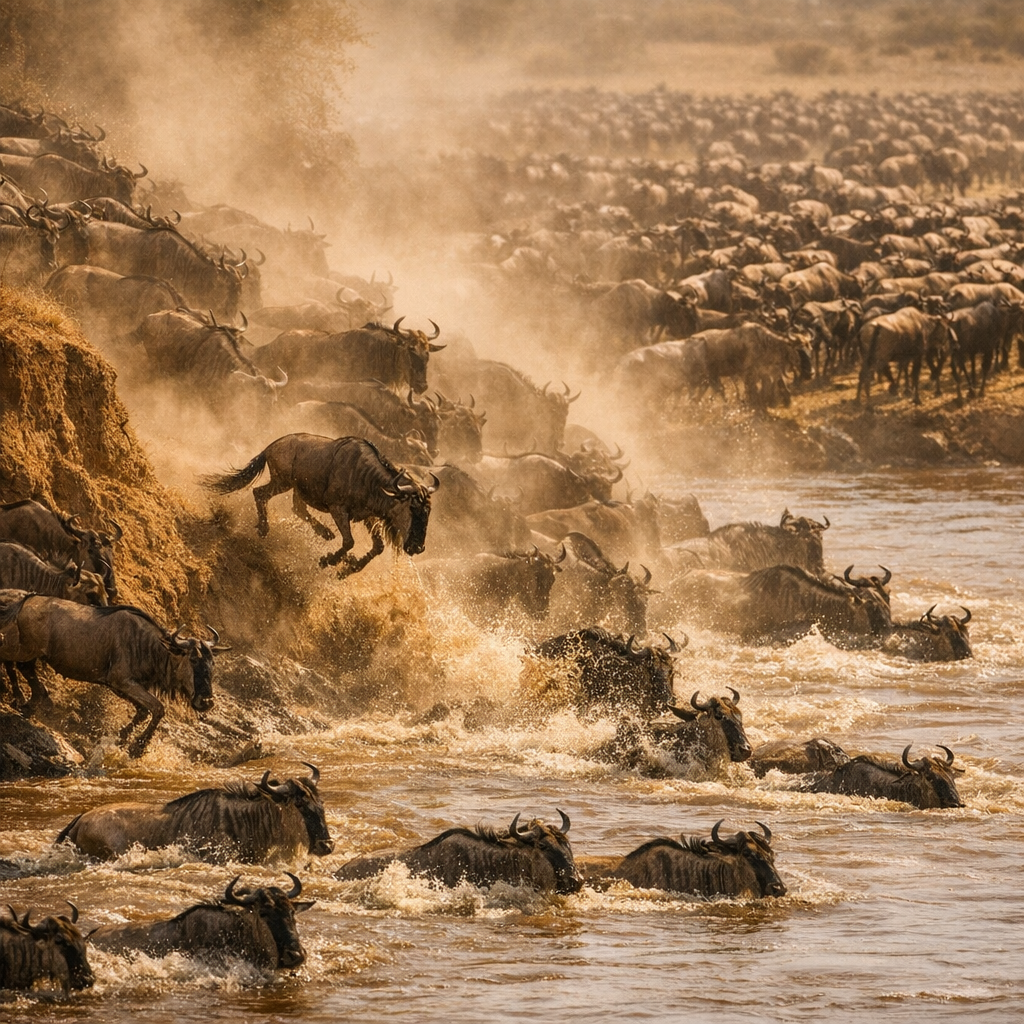
There is a moment on the banks of the Mara River that no photograph fully prepares you for. Thousands of wildebeest mass on the far bank, snorting, stamping, working themselves into a collective nerve that finally breaks — and then they go, all at once, plunging down the mud banks into brown water where Nile crocodiles the length of canoes are already waiting. Dust rises. Zebras bark. Somewhere downstream a calf is swept under and does not come back up. It is chaotic, loud, and completely uninterested in your itinerary. You do not schedule the Great Migration. You show up, you wait, and if the herd decides today is the day, you witness one of the last truly wild spectacles left on Earth.
That is the headline reason people come to Kenya's Maasai Mara. But the Mara gives you a second gift most first-time visitors don't expect: an evening around a fire with Maasai families who are not reenacting their culture for a stage show — they are living it, on their own land, on their own terms. Done right, a Maasai Mara trip is both the wildlife bucket-list moment and one of the more honest cultural exchanges available anywhere on the continent.
Why Black Travelers Choose the Maasai Mara
For a diaspora travel community whose journeys often center West Africa's ancestral homecoming story, East Africa offers something different but no less important: contact with an Indigenous African culture that has never been displaced from its land in the way the transatlantic slave trade displaced diaspora ancestors. The Maasai have herded cattle and moved with the seasons across these plains for centuries, and — where tourism is structured fairly — they are the landlords, guides, and decision-makers, not props. That distinction matters, and it's exactly why BTN pushes readers toward community-owned conservancies over purely extractive safari operations (more on that below).
The Great Migration and the Mara River Crossings
The Great Migration is the continuous, circular movement of an estimated 1.3 million wildebeest, along with hundreds of thousands of zebra and gazelle, between Tanzania's Serengeti and Kenya's Maasai Mara, driven entirely by rainfall and the search for fresh grazing. There is no single migration "event" — it's a year-round loop — but the reason the Mara becomes the epicenter of safari travel is timing: the herds typically push north out of the Serengeti and into the Maasai Mara between July and October, with the Mara River crossings standing as the most dramatic chapter of the entire journey. Exact dates shift year to year with rainfall patterns, so no operator can promise you a crossing on a specific day, but this July–October window remains the most reliable stretch for witnessing it, with the herds beginning their return south toward Tanzania around October.
A few honest expectations: crossings can happen at any hour, guides communicate by radio to reposition vehicles quickly, and patience is part of the experience. Multi-night stays (four nights minimum) meaningfully improve your odds versus a rushed one-night stop.
Getting In: Kenya's eTA
Kenya overhauled its entry system in 2024, abolishing the old visa-on-arrival and e-visa process in favor of an Electronic Travel Authorization (eTA). US citizens must now apply online in advance — the government's official portal quotes a processing fee in the neighborhood of $30 (roughly $32.50 USD at current rates). Apply between 90 and 3 days before departure; approval typically takes about three business days, though the rollout has had reported hiccups, so don't cut it close. You'll need a passport valid at least six months, proof of accommodation, and — if you're arriving from a yellow fever-endemic country — proof of vaccination. Only use Kenya's official eTA portal; third-party sites that charge inflated "service fees" are not required.
Choosing Your Camp: Community Conservancy vs. National Reserve
This is the single most important decision in planning a Maasai Mara trip, and it's one BTN wants readers to make with eyes open. The Maasai Mara National Reserve itself is government-managed, can get crowded with vehicles at popular crossing points, and historically has not always returned meaningful revenue to the Maasai communities whose ancestral land borders it.
Ringing the reserve are roughly two dozen private conservancies — Naboisho, Olare Motorogi, Mara North, and Ol Kinyei among them — organized under the Maasai Mara Wildlife Conservancies Association (MMWCA). These operate on a different model entirely: Maasai landowners lease their land directly to camp operators for guaranteed income, on top of which many conservancies fund bursaries, grazing programs, and community credit access. Vehicle numbers per sighting are capped, walking safaris and night drives (banned in the national reserve) are often permitted, and the tourism revenue visibly benefits the people who call this land home rather than flowing entirely to outside investors.
When you're comparing camps, ask directly: is this Maasai-owned, or is it leasing Maasai land with a transparent benefit-sharing agreement? Both are meaningfully better than fully foreign-owned operations with no local equity stake. BTN's recommendation is to prioritize conservancy stays over reserve-only itineraries whenever your budget allows.
Meeting the Maasai — On Their Terms
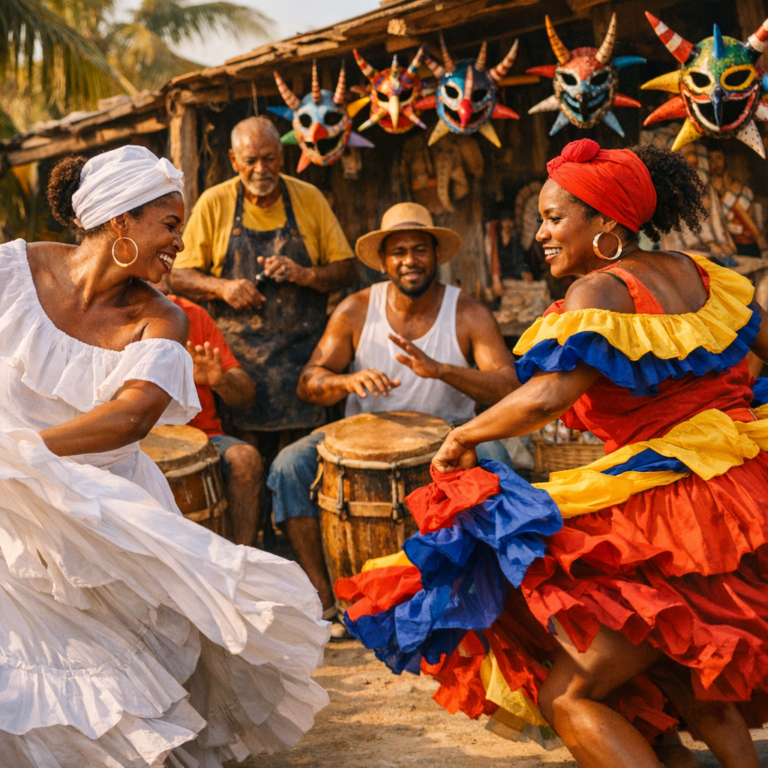
Skip any experience marketed as a quick photo-op "village visit" bolted onto a game drive schedule — that's the version that reduces a living culture to a performance. Look instead for conservancies and camps that build in unhurried time: a fireside evening hosted by a Maasai guide who is also a community member and can speak candidly about grazing rights, land pressure from tourism and development, and what conservation partnerships have and haven't delivered. Many conservancy-affiliated camps employ Maasai staff as guides, trackers, and camp managers, not only support staff — a meaningful difference in whether an interaction feels mutual or extractive. Buy beadwork and crafts directly from Maasai makers or verified community cooperatives, ask before photographing anyone, and treat the conversation as an exchange between equals rather than an anthropology exhibit.
Beyond the Crossing: Other Wildlife Worth the Trip
Even outside migration season, the Mara holds some of the highest lion densities in Africa, along with resident leopard, cheetah, elephant, and hippo populations in the Mara River itself. A dawn hot air balloon ride over the plains, followed by a champagne bush breakfast, is a splurge-worthy add-on many conservancy camps offer.
Where to Eat
Most Mara camps run full-board, with menus built around Kenyan staples elevated for the safari crowd — think slow-roasted nyama choma (grilled goat or beef), ugali, sukuma wiki (sautéed collard greens), and rich Kenyan chai spiced with cardamom and ginger. In camps with Maasai staff, ask about mursik, a traditional fermented milk drink, if it's on offer — it's a genuine taste of pastoralist life on these plains, not a tourist gimmick.
Where to Stay
Luxury Conservancy: Naboisho and Mara North Conservancy camps offer tented luxury with direct Maasai lease-and-benefit arrangements and low vehicle density at sightings.
Mid-Range: Several tented camps just outside the reserve gates in the Talek and Sekenani areas offer full safari experiences with more moderate nightly rates than the ultra-luxury conservancy properties.
Budget-Conscious: Public campsites near the reserve gates, paired with a shared-vehicle group safari, bring the Mara within reach of travelers who can't stretch to $400+/night lodges — though multi-night, all-inclusive conservancy stays remain the gold standard for both wildlife access and community impact.
🏨 Book Maasai Mara Stays →Getting There
International flights land at Jomo Kenyatta International Airport (NBO) in Nairobi. Kenya Airways operates a direct route between New York-JFK and Nairobi, making the US East Coast to Kenya connection more straightforward than it's ever been — always confirm current schedules and frequency when booking, as long-haul route timetables shift. From Nairobi, most safari travelers connect via a short chartered flight (about 45 minutes) directly into one of the Mara's airstrips — Keekorok, Ol Kiombo, or Musiara are common — rather than the 5-6 hour road transfer.
✈️ Find Kenya Flights →Best Time to Visit
For the Great Migration and Mara River crossings, plan for July through October, with peak crossing activity generally concentrated in August and September. Outside migration season, the Mara is a quieter, less expensive, still wildlife-rich destination year-round thanks to resident lion, leopard, and elephant populations. The short rains fall around November, and the long rains from March through May bring lush landscapes and lower rates but muddier roads and fewer crossing opportunities.
Budget Guide
Budget-Conscious: $150–250/day — shared group safari, public campsite or basic lodge, fewer game drives.
Mid-range: $300–450/day — tented camp near the reserve, full board, twice-daily game drives.
Luxury Conservancy: $500–1,200+/day — all-inclusive private conservancy camp, unlimited game drives, walking safaris, balloon safari add-ons.
BTN Insider Tips
Book your eTA well before you book your safari. Approval usually takes about three business days, but reported delays mean earlier is safer — apply only through Kenya's official eTA portal.
Stay at least four nights if migration season is the goal. River crossings don't run on a schedule, and a longer stay dramatically improves your odds.
Pack neutral-colored safari clothing — khaki, olive, and brown — and avoid bright white, black, or blue, which can attract tsetse flies in some areas.
Bring a lightweight fleece or jacket. Mara mornings and open-vehicle game drives get cold even though you're on the equator.
Ask your camp directly about its Maasai ownership or benefit-sharing structure before booking — the honest operators will answer this question readily and in detail.
Is the Maasai Mara Safe for Black Travelers?
Kenya is a well-established, safari-tourism-experienced country, and the Maasai Mara region itself is very safe for visitors of all backgrounds — the real risks on safari are wildlife-related (always follow your guide's instructions around camp and during drives), not crime. Black travelers frequently report a distinctly warm reception from Maasai hosts and Kenyan staff, with none of the "othering" that can surface in some international travel contexts. As always, standard big-city caution applies in Nairobi itself, particularly around transiting the airport at night.
Mark Your Calendar
- July–October — Great Migration season and peak Mara River crossings
- August–September — Statistically the strongest window for witnessing a crossing
- December–February — Calving season migration activity shifts to the Serengeti, but the Mara stays wildlife-rich and far less crowded
Book Your Maasai Mara Safari
The wildebeest don't wait for anyone, and neither should you. Whether it's your first African safari or your fifth trip back to the continent, the Maasai Mara delivers on both promises — the wild spectacle and the real human connection — if you choose your camp with intention.
✈️ Book Your Kenya Safari Now →*Affiliate links — BTN may earn a commission at no extra cost to you.