The Sound of a Steel Drum Meeting the Ocean
There is a version of Jamaica that exists behind resort gates — reggae piped through lobby speakers, jerk smoke drifting across a pool deck, a bartender flipping a bottle of overproof rum while a horn section warms up for the nightly show. It is polished. It is engineered for pleasure. And it is also, unmistakably, Jamaican — built, staffed, and in the case of the island's most famous resort brand, founded by a Jamaican who bet on his own country before the rest of the world caught on.
This is Montego Bay and Negril: the stretch of Jamaica's northwest and west coast that invented the modern all-inclusive vacation and never stopped perfecting it. If you've pictured a Caribbean honeymoon, a swim-up bar, or a sunset toast on a cliff's edge, there's a good chance the image in your head was shot here.
Not the Whole Story — and That's the Point
We've already covered Jamaica island-wide in our Jamaica: The Soul of the Caribbean guide, and gone deep into the island's interior freedom history in Jamaica's Maroon Country — the self-governing Accompong and Moore Town communities descended from Africans who won their freedom by treaty in 1739. This piece stays close to the coast on purpose. Montego Bay and Negril are Jamaica's resort economy at full scale, and that economy deserves its own honest look — not as a substitute for the island's deeper history, but as one real, valuable, and very Black-owned piece of it. Read all three and you get the full picture: the roots, the resistance, and the resorts.
Montego Bay: Where the All-Inclusive Industry Was Born
Montego Bay — "MoBay" to Jamaicans — is the commercial and hospitality capital of the island's north coast, anchored by Sangster International Airport, the busiest airport in the Anglophone Caribbean. The city's resort strip stretches along the coastline from the Hip Strip and Gloucester Avenue downtown out to Rose Hall, where sprawling all-inclusive properties sit on land that was once sugar plantation ground — a history the better resorts and tour operators now address directly rather than around.
International chains — Hyatt, Hilton, RIU, Royalton, Iberostar — all operate here, but the brand most identified with Montego Bay, and with the modern Caribbean all-inclusive concept itself, is Sandals.
Sandals and the Butch Stewart Story: A Black-Owned Hospitality Legacy
In 1981, Gordon "Butch" Stewart — a Jamaican businessman who, by his own account, had no hotel experience — bought a tired property called the Bay Roc Hotel on one of Montego Bay's best beaches. He relaunched it as Sandals Montego Bay, the first resort in what would become Sandals Resorts International. From that single property, Stewart built the largest all-inclusive resort chain in the Caribbean, with the company's headquarters remaining in Montego Bay to this day.
That matters for more than trivia. Sandals is, at its core, a Jamaican-founded, Jamaican-headquartered company that took a homegrown idea — the all-inclusive luxury vacation — and exported it to the entire hospitality world, competing directly with and often outpacing multinational hotel groups. Following Gordon Stewart's death in January 2021, his son Adam Stewart took over as Executive Chairman, keeping the company under family and Jamaican leadership. In a global resort industry where ownership is frequently foreign and profits frequently leave the island, Sandals stands as one of the most visible counterexamples — a flagship case of Black Caribbean entrepreneurship succeeding on its own terms, at global scale, without giving up the address.
You'll also find Sandals' sister brand Beaches (family-focused all-inclusives) and Couples Resorts, another long-running Jamaican-owned chain, along this same stretch of coast — reinforcing that the Montego Bay resort corridor isn't just built on the island, it's substantially built by it.
Negril and Seven Mile Beach: The Postcard That Isn't Photoshopped
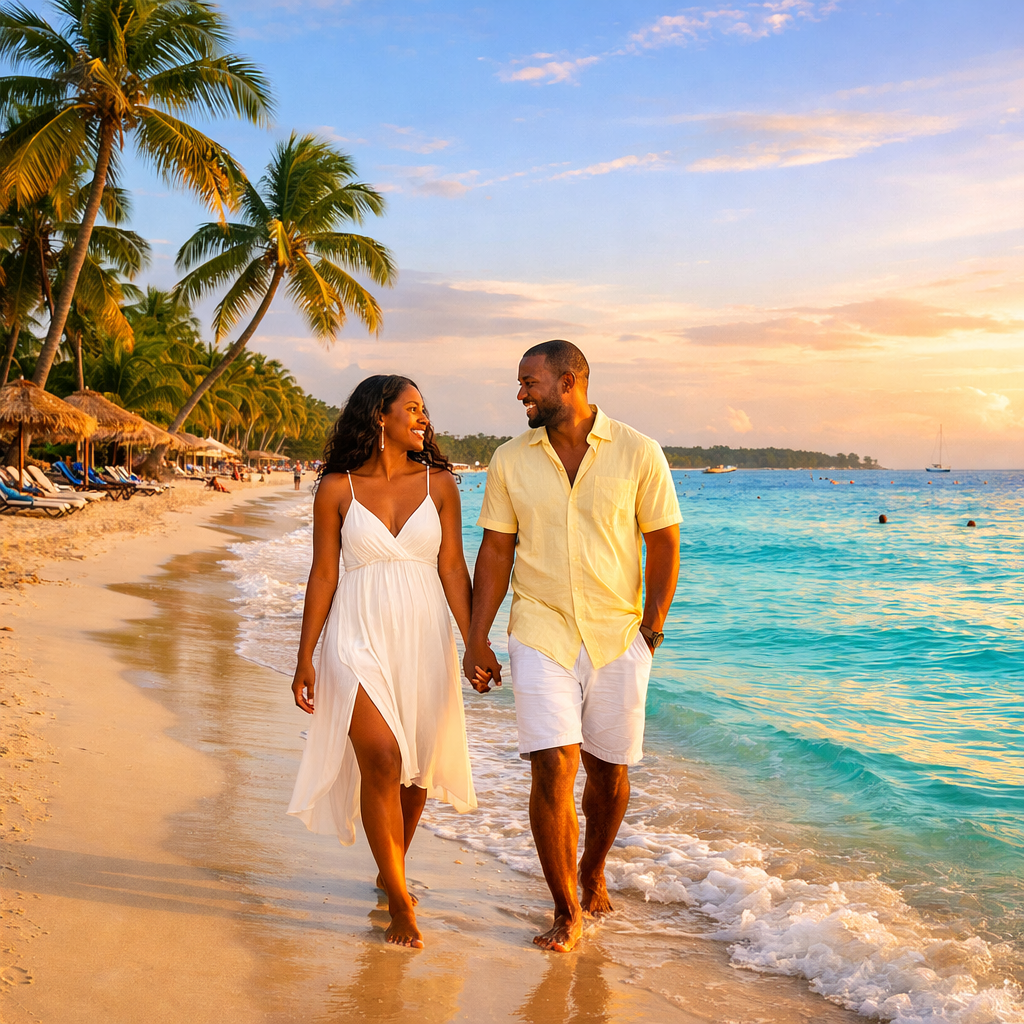
An hour to hour-and-a-half southwest of Montego Bay, Negril is where the coastline straightens out into one of the most photographed beaches on Earth. Seven Mile Beach is technically two connected bays — Bloody Bay to the north, home to the big all-inclusive footprint, and Long Bay to the south, a mix of all-inclusives and smaller, family-run hotels with more local character. The sand is pale and fine, the water is a genuinely unreal turquoise, and the sunset show at the end of the day draws a crowd every single evening, no exceptions.
Negril's resort story is younger and scrappier than Montego Bay's. Development only took off in the early 1970s, after visitors spent the 1950s and '60s simply renting rooms from local families or camping along the shore. Improved roads and the opening of Negril's small airfield in 1976 opened the floodgates, and today the beach carries Sandals, Beaches, Couples, and Margaritaville properties alongside independent guesthouses — a wider range of price points on one beach than almost anywhere else in the Caribbean.
Rick's Cafe and the West End Cliffs
South of downtown Negril, West End Road runs along a dramatic run of limestone cliffs with jumping points that reach more than 40 feet above the water — and at the center of it sits Rick's Cafe, the open-air cliffside bar that has become Negril's unofficial sunset headquarters. Every evening, a mix of professional divers and nerve-testing tourists leap from the rocks while a crowd with rum punches in hand counts down to the moment the sun drops into the Caribbean Sea. It is touristy. It is also completely earned — few places in the region deliver a sunset with this much theater, and it remains one of the most reliably spectacular free (well, one-drink-minimum) shows in Jamaica.
Where to Stay
Luxury All-Inclusive: Sandals Montego Bay and Sandals Royal Caribbean anchor the MoBay coast; Sandals Negril and Beaches Negril sit directly on Seven Mile Beach's Bloody Bay stretch. Couples Swept Away and Couples Negril offer an alternative Jamaican-owned all-inclusive experience with a more laid-back, wellness-forward feel.
Mid-Range: RIU Palace Jamaica and Royalton Negril deliver strong all-inclusive value without the premium Sandals price tag. On Long Bay, smaller family-run hotels offer garden-view rooms steps from the sand at a fraction of the cost.
Budget: West End Road guesthouses near Rick's Cafe put you closer to Negril's cliffside nightlife and sunset scene for $50-90/night, with easy access to the town's restaurants and beach shuttles.
🏨 Book Montego Bay & Negril Hotels →Getting There & Entry Requirements
US citizens do not need a visa for tourist stays in Jamaica of up to 90 days — a valid US passport plus proof of an onward or return ticket is all that's required at immigration. Passports should have at least one blank page and remain valid through your planned departure date. Sangster International Airport (MBJ) in Montego Bay is the main gateway for this corridor, with direct flights from Miami (about 70 minutes), New York, Atlanta, Charlotte, Toronto, and London. Most resorts arrange airport transfers directly; if you're headed to Negril, budget 60-90 minutes for the transfer west.
✈️ Find Flights to Montego Bay →Best Time to Visit
The dry season, running roughly November through April, offers the most reliable weather for beach days and sunset-watching at Rick's Cafe, and coincides with peak booking demand — book Sandals and Beaches properties several months out for the best rates. If reggae and dancehall are the draw, plan around mid-July for Reggae Sumfest in Montego Bay, one of the Caribbean's largest annual music festivals.
Budget Guide
Budget: $100-150/day — West End guesthouse, local jerk stands and beach-shack meals, shared taxis.
Mid-range: $200-350/day — RIU or Royalton all-inclusive rate, occasional off-resort dining, day tours.
Luxury: $400-700+/day — Sandals or Beaches all-inclusive, premium swim-up rooms, private excursions.
BTN Insider Tips
Get to Rick's Cafe by 4:30pm in high season. The best cliffside seats and viewing spots fill up well before sunset.
Ask which resorts hire and source locally. Sandals and Couples both employ almost entirely Jamaican staff and source produce from island farms — your all-inclusive dollar goes further into the local economy than you might assume.
Split your stay. Base a few nights in Montego Bay and a few in Negril — the vibe shift from MoBay's polish to Negril's laid-back cliffside energy is worth experiencing both.
Bring cash for the beach vendors and Rick's Cafe photographers. Small tips for the cliff divers are customary and appreciated.
Consider pairing this trip with the Maroon Country guide. A day trip inland to Accompong from Montego Bay adds real historical depth to a resort-based vacation.
Is It Safe for Black Travelers?
The resort corridors of Montego Bay and Negril are among the safest, most heavily visited tourist zones in the Caribbean, welcoming millions of visitors — a majority Black diaspora travelers among them — every year without incident. As with any resort destination, stick to registered taxis and resort-arranged transfers, keep valuables secured, and use standard travel awareness once you step outside resort grounds. Jamaica's tourism workforce and much of its ownership class in this region is Black Jamaican, which shapes a genuinely warm, unselfconscious welcome for Black travelers that's part of what keeps people coming back.
Mark Your Calendar
- Mid-July — Reggae Sumfest, Montego Bay
- November–April — Peak dry-season resort travel window
- Daily, year-round — Sunset cliff-jumping at Rick's Cafe, West End, Negril
Book Your Trip
Montego Bay and Negril aren't a shortcut past the "real" Jamaica — they're a Jamaican success story in their own right, built substantially by Jamaican hands and Jamaican capital. Enjoy the swim-up bar and the cliffside sunset. Then, when you're ready to go deeper, read up on the Maroon communities a few hours inland who made the whole island's freedom possible.
✈️ Book Your Jamaica Resort Trip Now →*Affiliate links — BTN may earn a commission at no extra cost to you.