Everyone Books Roatán for the Reef. Almost No One Knows What Else Happened Here.
Roatán shows up on every "best Caribbean diving" list ever written — and it earns the spot. The second-largest barrier reef system on Earth wraps this island, and dive boats leave West End and West Bay every morning stacked with travelers chasing whale sharks, eagle rays, and coral walls that drop hundreds of feet into blue. That reputation is well deserved. But it is also, in a real sense, the smaller story.
On the quieter, less-photographed east end of the same island sits Punta Gorda — a modest Garifuna fishing village that most reef-and-resort itineraries never touch. This is where, on April 12, 1797, roughly 2,500 survivors of a brutal British deportation from the island of St. Vincent were put ashore and left to build a life from nothing. They did not just survive — they became the origin point of an entire Afro-Indigenous nation, the Garinagu, whose language, music, and food culture now stretch along the Caribbean coast of four countries. Punta Gorda, Roatán, is where that nation was literally born on Honduran soil. No other country can make that specific claim.
This guide covers both halves of the story: Roatán's world-class reef tourism, and the living Garifuna culture — on the island at Punta Gorda and across the water in Trujillo, La Ceiba, and Sambo Creek — that most visitors fly right past. For the fuller story of how the Garifuna people came to exist in the first place — the shipwreck, the intermarriage with Carib and Arawak islanders on St. Vincent, the resistance war against the British — we cover that origin-before-the-origin in depth in our guide to Belize's Garifuna Coast. This piece picks up at the moment that story becomes Honduran history.
April 12, 1797: The Landing at Punta Gorda
After the British crushed Garifuna resistance on St. Vincent in the Second Carib War, they moved to erase the population entirely. More than 5,000 Garifuna men, women, and children were rounded up and deported; roughly half died in a holding camp on the island of Balliceaux or during the crossing. The roughly 2,500 who survived were transported first toward Jamaica, then put ashore on Roatán — deliberately chosen because it was remote and considered worthless by the Crown. They landed at Punta Gorda on April 12, 1797.
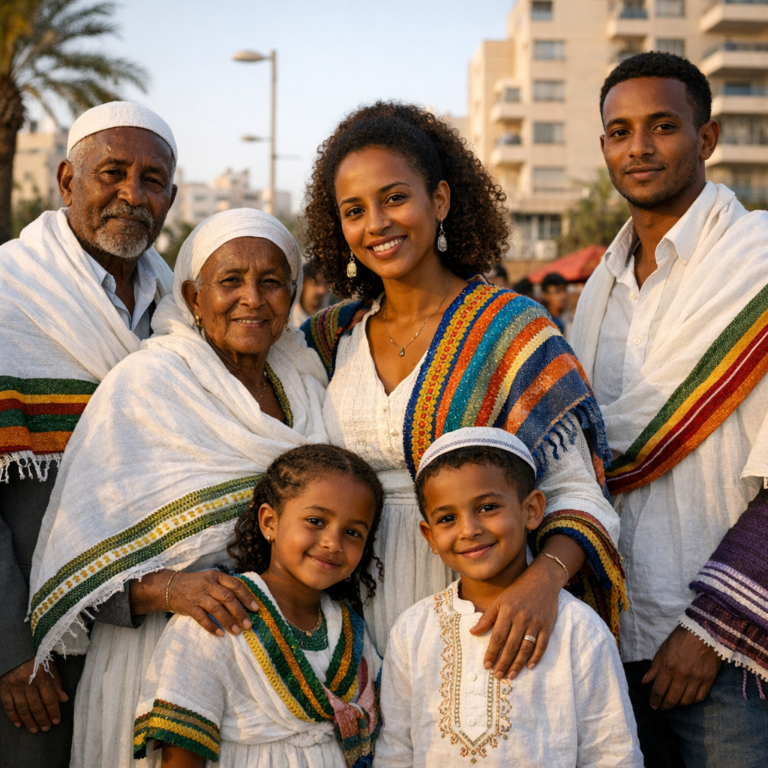
Honduras commemorates that date as the arrival of the Garifuna people to the country — often referred to as Día de la Etnia Negra Garífuna — with cultural events, music, and gatherings concentrated in Punta Gorda itself, where the community holds an annual celebration around the anniversary that draws Garifuna visitors home from across Honduras and the diaspora abroad. If you can time a trip around April 12, Punta Gorda is the place to be for it — a village celebration, not a staged tourist show, and one that welcomes respectful visitors who understand what they're witnessing.
From that landing point, Garifuna families didn't stay put. Within a few decades they had fanned out along the Central American coast — establishing communities on the Honduran mainland at Trujillo, La Ceiba, and Sambo Creek, and eventually as far as Belize, Guatemala, and Nicaragua. Roatán is the root. Everything else grew from it.
Roatán Today: Reef Tourism Meets Living History
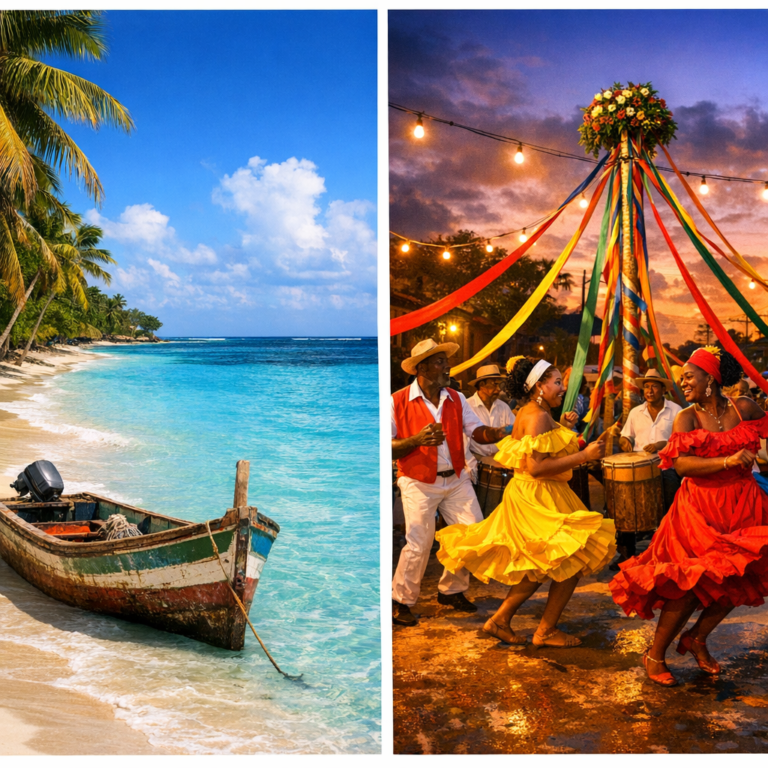
Most travelers who land at Roatán's Juan Manuel Gálvez International Airport (RTB) are headed straight to West End or West Bay for diving, snorkeling, and beach resort time — and that side of the island absolutely delivers. Roatán sits on the Mesoamerican Barrier Reef System, the second largest in the world, with visibility regularly exceeding 100 feet and dive sites suited to every level, from shallow coral gardens to dramatic wall dives dropping into the deep blue.
Punta Gorda sits on the island's north-central coast, a short taxi or rental-car ride from the main tourist zones, and could not feel more different. It's a working Garifuna village — simple homes, fishing boats pulled up on the sand, and a community that has held onto its language, food, and drumming traditions for over two centuries in the same spot their ancestors were exiled to. There's a small monument commemorating the 1797 landing, and local guides and community members can walk visitors through the history in a way no plaque ever could. Go with genuine curiosity and respect, support Garifuna-owned guesthouses and eateries when you're there, and treat it as heritage travel rather than a quick photo stop between dive trips.
Trujillo and La Ceiba: Where the Culture Lives On the Mainland
Cross the channel to the mainland and the Garifuna story keeps unfolding. Trujillo — Honduras's oldest colonial settlement and the site of Christopher Columbus's first mainland landing in the Americas — sits along the same stretch of Caribbean coast where Garifuna families resettled from Roatán in the years after 1797. Several Garifuna villages ring Trujillo, and the town itself has become a gateway for visitors wanting to pair colonial history with Garifuna cultural experiences: drumming demonstrations, punta dance, and home-cooked meals built around cassava.
Further west, La Ceiba — Honduras's self-styled tourism and eco-adventure capital — sits beside Sambo Creek, one of the most active and visitor-accessible Garifuna communities on the mainland. Sambo Creek's beach is lined with Garifuna-run comedores serving fresh seafood and cassava bread, and it's one of the easiest places in the country to hear live punta music performed by the people who grew up with it, not a resort cover band. Between Trujillo and La Ceiba, this stretch of coast is where Garifuna culture stops being history and becomes something you can sit down, eat, and dance to on any given afternoon.
Must-Try Garifuna Foods & Culture
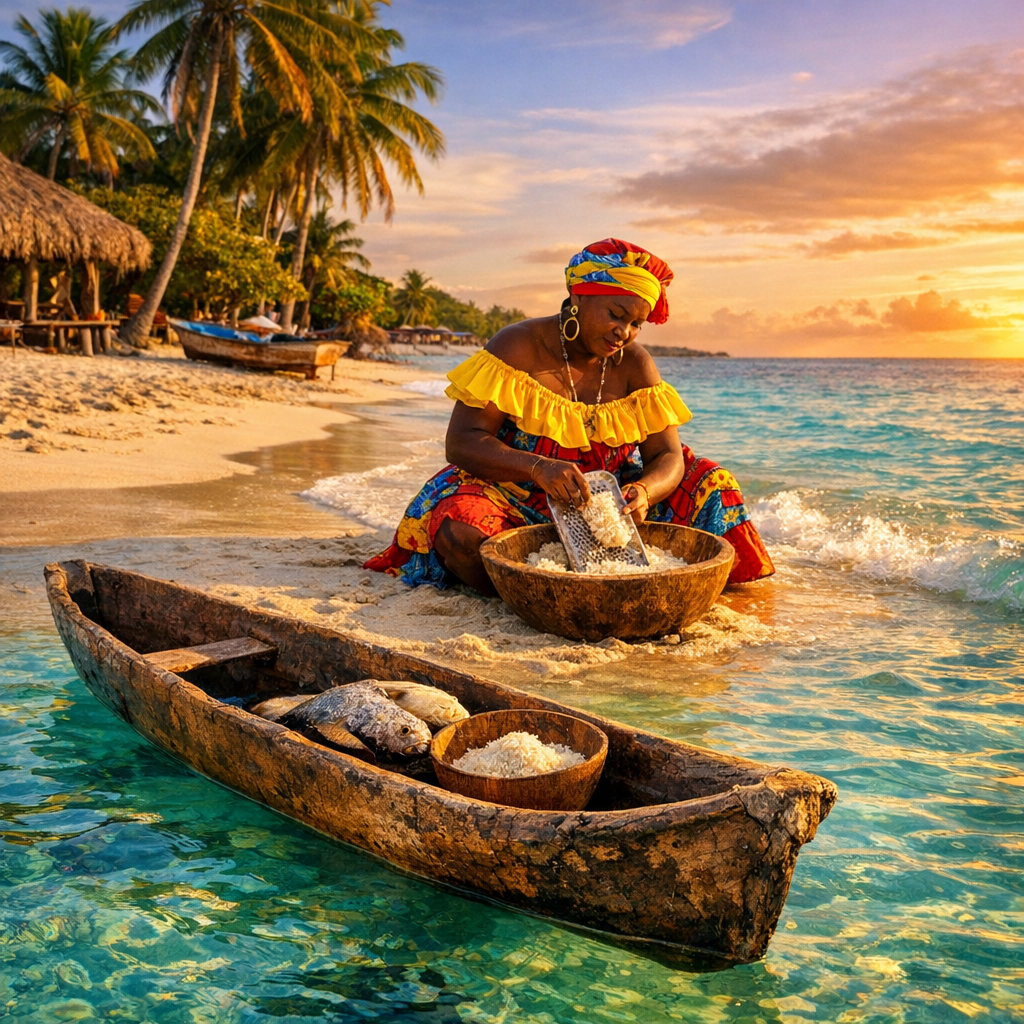
- Ereba (cassava bread) — the cornerstone of Garifuna food culture, made from grated, pressed, and griddle-baked yuca root using techniques passed down largely by Garifuna women for generations. Watching it made by hand in Punta Gorda or Sambo Creek is as much a cultural experience as a culinary one.
- Machuca — a mashed plantain and coconut-milk fish soup, the Honduran cousin of Belize's hudut, thick and deeply savory.
- Pan de coco — soft coconut bread sold across Garifuna coastal villages, often still warm from the oven.
- Punta music and dance — built on the primero and segunda drums, punta is the rhythmic heartbeat of Garifuna identity, performed at celebrations, drumming circles, and increasingly at community cultural centers that welcome visitors to learn rather than just watch.
- Sopa de caracol (conch soup) — a Bay Islands specialty blending Garifuna, Afro-Caribbean, and English-Caribbean culinary influences unique to Roatán's coastal communities.
Getting There
Roatán's Juan Manuel Gálvez International Airport (RTB) has direct flights from Miami, Houston, Atlanta, and Charlotte on American, United, and Delta, plus connections via San Pedro Sula. For the mainland, La Ceiba's Golosón International Airport (LCE) connects via San Pedro Sula (SAP), which itself has direct US service from Houston and Miami. A public ferry also runs between La Ceiba and Roatán in about 90 minutes, making it easy to combine both halves of this trip — reef time on the island, culture time on the mainland — in a single itinerary.
✈️ Find Flights to Honduras →Visa and Entry Requirements
US citizens do not need a visa for tourism stays in Honduras of up to 90 days — just a passport valid for the length of your stay and, typically, proof of onward travel. Honduras participates in the CA-4 Border Control Agreement alongside Guatemala, El Salvador, and Nicaragua, meaning that entry stamp is generally recognized across all four countries under a shared 90-day clock rather than resetting at each border. Practically, that means a land crossing between, say, Honduras and Guatemala doesn't automatically grant a fresh 90 days — keep track of your cumulative time in the CA-4 zone if you're combining countries on one trip.
Where to Stay
Roatán (West End/West Bay): Infinity Bay Spa & Beach Resort and Turquoise Bay Resort offer dive-focused luxury directly on the reef. Mid-range dive lodges and beachfront guesthouses line West End for travelers prioritizing proximity to dive shops over five-star polish.
Punta Gorda: Accommodation is limited and local — small guesthouses and homestays connected through community tourism initiatives are the way to experience the village properly, rather than day-tripping in from West End.
Trujillo & La Ceiba: Trujillo Bay Eco Resort and a handful of beachfront hotels serve Trujillo; La Ceiba has a wider range from budget guesthouses to the mid-range Grand Paradise La Ceiba, with Sambo Creek reachable as an easy day trip from either base.
Best Time to Visit
The dry season, roughly March through May, offers the calmest seas and best diving visibility around Roatán. November through February brings cooler, breezier weather and remains a popular window for both reef trips and mainland travel. If the Garifuna cultural experience is your priority, build your trip around April 12 — the anniversary of the Punta Gorda landing — even though it falls just ahead of the hotter, more humid months.
Budget Guide
Budget: $60–100/day — guesthouse or hostel, local comedores, public ferry and shared shuttles.
Mid-range: $150–250/day — beachfront hotel or dive lodge, restaurant dining, guided cultural and reef excursions.
Luxury: $350+/day — all-inclusive dive resort, private boat charters, premium guided experiences on both the island and mainland.
BTN Insider Tips
Pair the reef with the roots. Don't let Roatán be only a dive trip. A half-day in Punta Gorda adds context to everything else you'll see on the island, and it takes barely any extra planning.
Support Garifuna-owned businesses directly. Guesthouses, comedores, and drumming or cooking demonstrations run by Garifuna families put money directly into the communities whose history you're there to learn about.
Ask before you photograph. Garifuna cultural and religious practices are lived traditions, not performances staged for tourists — the same courtesy that applies in Belize and Guatemala applies here.
Bring cash for the mainland. Sambo Creek and smaller Trujillo-area villages are far more cash-based than resort-heavy Roatán.
Learn a Garifuna greeting. "Buiti binafi" (good morning) travels well across every Garifuna community from Roatán to Dangriga.
Is Honduras Safe for Black Travelers?
Safety in Honduras varies significantly by region, and it's worth being specific rather than treating the whole country as one data point. The US State Department's overall advisory for Honduras sits at Level 3, Reconsider Travel, with the remote Gracias a Dios department singled out at Level 4, Do Not Travel. That headline number, however, does not describe Roatán and the rest of the Bay Islands with much accuracy. The State Department's own guidance specifically notes that resort areas in the Bay Islands — Roatán, Utila, and Guanaja — have a concentration of security resources and are better policed than the mainland, reflecting their near-total dependence on dive tourism and the heavy year-round presence of foreign visitors.
Mainland cities, particularly San Pedro Sula and parts of Tegucigalpa, carry materially higher crime risk and warrant more caution; Trujillo and the La Ceiba/Sambo Creek corridor, while part of the mainland, are smaller, tourism-oriented communities that see regular, largely trouble-free visitor traffic, but standard precautions (arranged transport, avoiding travel after dark in unfamiliar areas, keeping valuables low-key) still apply there in a way they don't as urgently in West End. Bottom line: treat Roatán like the well-serviced island resort destination it is, treat Trujillo and La Ceiba with the ordinary care you'd use in any working Honduran coastal town, and skip Gracias a Dios entirely. Black travelers, including solo travelers, generally report warm receptions in Garifuna communities specifically, given the shared Afro-diasporic recognition that comes with the territory.
Mark Your Calendar
- April 12 — anniversary of the 1797 Garifuna landing at Punta Gorda, Roatán, commemorated as Día de la Etnia Negra Garífuna with community celebrations centered in Punta Gorda
- March–May — dry season, best diving visibility around Roatán
- Year-round — live punta drumming and cassava-bread demonstrations in Sambo Creek and Trujillo-area Garifuna villages
Book Your Honduras Trip
Roatán will always sell itself on the reef, and it should — the diving here is genuinely world-class. But Punta Gorda, a short drive from the dive shops, is the actual birthplace of an Afro-Indigenous nation, and Trujillo, La Ceiba, and Sambo Creek on the mainland keep that nation's language, music, and food alive every single day. See both halves of Honduras. The story is more complete that way.
✈️ Book Your Honduras Trip Now →*Affiliate links — BTN may earn a commission at no extra cost to you.