The Guatemalan Town You Cannot Drive To
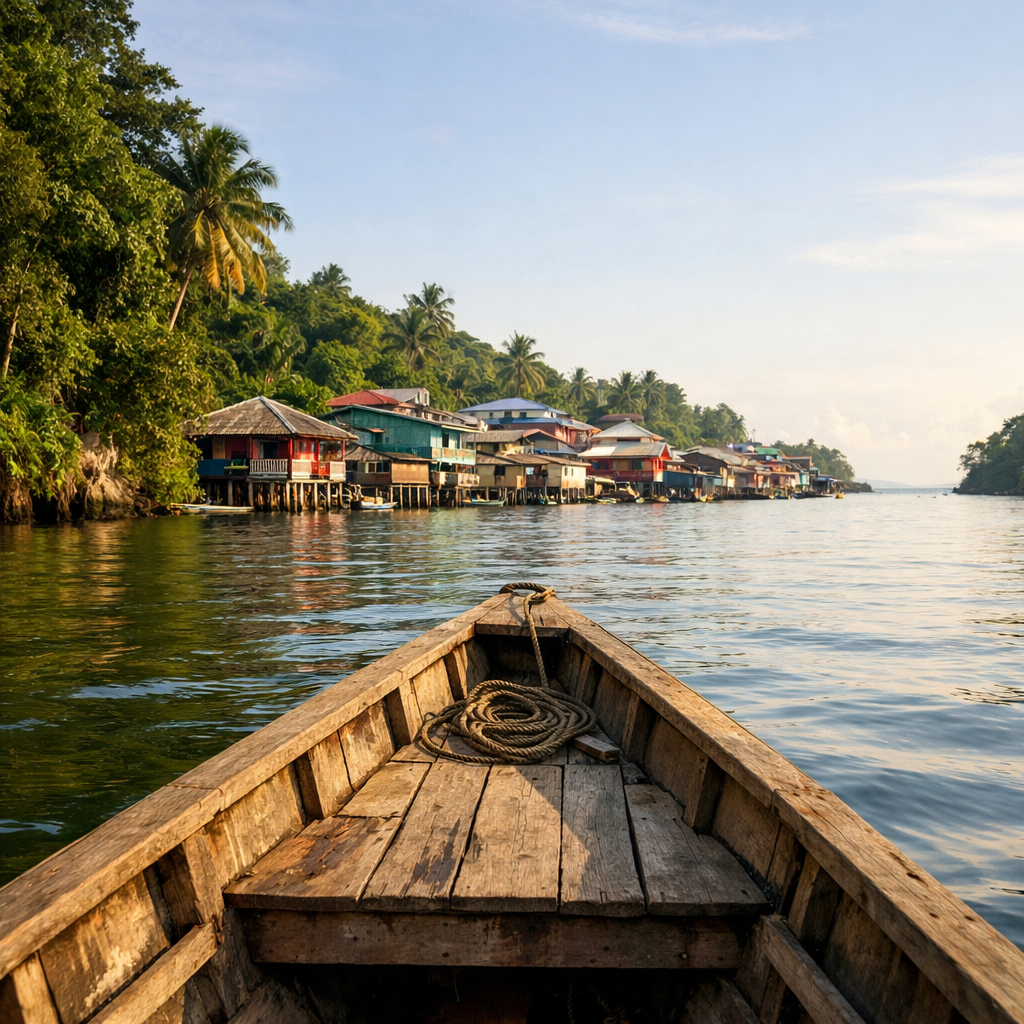
Look at a map of Guatemala and you'll see roads reaching almost everywhere — into the highlands, across the Peten jungle, along both coasts. Then you'll notice Livingston, sitting right at the mouth of the Rio Dulce on the Caribbean, with no road touching it at all. To get there, you have exactly one option: a boat. That single fact shapes everything about the place, from its unhurried pace to the fact that its most prominent culture — Garifuna — has stayed more intact here than almost anywhere else it exists.
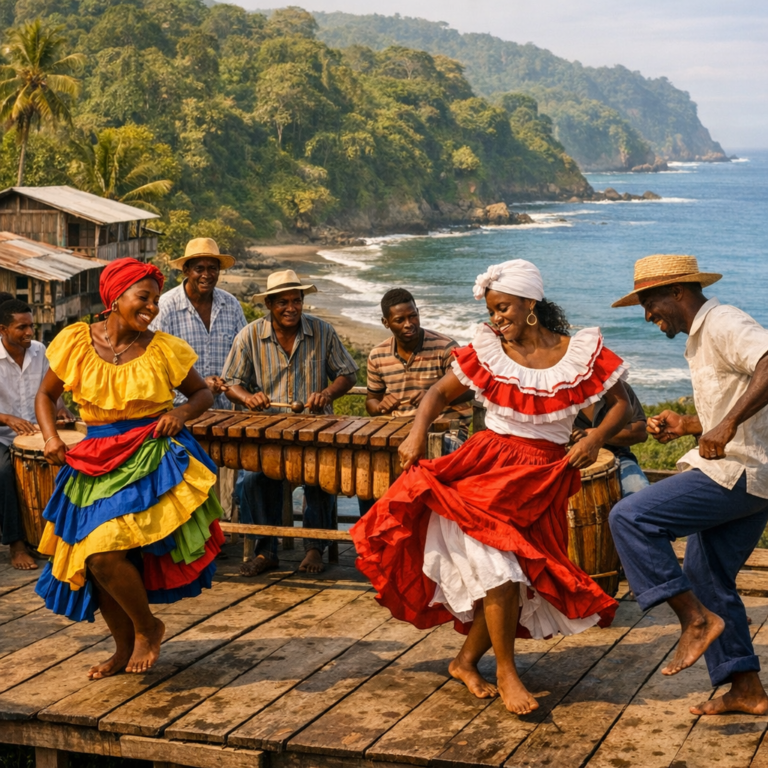
Locally, and among the Garifuna themselves, Livingston is known as Labuga. It sits in Izabal Department, across the water from the mainland highway system, and it feels less like a stop in Guatemala and more like a small piece of the Afro-Caribbean coast that happens to have Guatemalan citizenship. Reggae and punta rock drift from beachfront speakers, Garifuna is spoken in the street alongside Spanish and Q'eqchi' Maya, and the food leans on coconut and seafood rather than the tortillas and corn of the highlands two hours inland. Nowhere else in the country looks or sounds like this.
Garifuna Roots: The Short Version (See Our Belize and Honduras Guides for the Full Story)
The Garifuna people trace their origin to St. Vincent, where shipwrecked and escaped West Africans intermarried with Indigenous Carib and Arawak islanders starting in the 1600s, and to the British exile that followed the Second Carib War: in 1797, more than 5,000 Garifuna were deported from St. Vincent, roughly half dying before survivors were dropped on the island of Roatan, off Honduras. From that single, brutal starting point, Garifuna communities fanned out along the Central American coastline over the following decades — into Honduras, then into Belize, Guatemala, and Nicaragua.
Garifuna settlers reached the Livingston area in the early 1800s as part of that broader post-Roatan dispersal, arriving by dugout canoe and small craft much as later generations would keep arriving in Belize's Dangriga in 1832. If you want the complete ethnogenesis story — St. Vincent, the Second Carib War, the Roatan exile, and how the diaspora spread — read our guide to Belize's Garifuna Coast (Hopkins and Dangriga), and look for our companion piece on Garifuna Honduras, both of which cover that shared history in depth. This guide focuses on what makes Livingston different: it is a Garifuna town you can only reach by water, in a country where Garifuna culture is a minority within a minority, sharing space with Q'eqchi' Maya and Ladino neighbors in a way that gives Livingston its own distinct, layered identity.
Tapado: The Dish That Defines Livingston
If you eat one thing in Livingston, make it tapado. It's a coconut-milk seafood stew built on whatever the boats brought in that morning — usually a combination of fish, shrimp, crab, and sometimes conch — simmered with plantain, yuca, and cilantro in a rich, faintly sweet coconut broth. Almost every restaurant along the waterfront serves its own version, and the dish functions as a kind of edible identity card for the town: it shows up at family gatherings, tourist restaurants, and market stalls alike, and asking a local where they get their tapado is a reliable way to strike up a conversation. Pair it with pan de coco (coconut bread) or ereba (cassava bread, the same staple that anchors Garifuna tables in Belize and Honduras) and you've eaten about as authentically as Livingston gets.
Getting to Livingston: Three Ways In, All by Water
Because there's no road, planning your arrival matters more here than in almost any other destination in this guide. There are three realistic ways in:
- From Rio Dulce town (Fronteras): A daily tourist lancha runs down the Rio Dulce, through the dramatic jungle-walled canyon and the wide mouth of Lake Izabal, arriving in Livingston roughly one to two hours later. This is the scenic, bucket-list route — the boat ride is an attraction in its own right, with kingfishers, hot springs, and sheer limestone walls along the way.
- From Puerto Barrios: Passenger lanchas depart several times a day, making this the fastest and most reliable option if you're arriving from Guatemala City or the north coast and just need to get to Livingston directly.
- From Punta Gorda, Belize: Boats run twice weekly, typically Tuesdays and Fridays, from Punta Gorda into Livingston, with return service to Punta Gorda departing Livingston most mornings. This is the standard border crossing for travelers threading together Belize's Garifuna coast (Hopkins and Dangriga) with Livingston — a genuinely unique way to experience Garifuna culture in two countries on one trip.
A practical note: boat schedules and fares on all three routes shift with the season, fuel prices, and which operators are currently running, and printed schedules go stale fast. Confirm the next day's departure time and price in person — at your hotel, at the dock, or through Rio Dulce town's boatmen's association — rather than trusting anything you read online, including this guide, as gospel on timing.
Getting Around Once You're There
Livingston's town center is compact and entirely walkable — there's little need for anything else, and almost nothing drives in on a road anyway. For trips outside town, small boats function as local taxis: hotels and dock operators can arrange a lancha out to Siete Altares (a series of jungle waterfalls and swimming pools a short ride up the coast), Playa Quehueche, or further up the Rio Dulce canyon for a half-day trip.
Visa and Entry Requirements
US citizens do not need a visa for tourism in Guatemala. Under the CA-4 Border Control Agreement — shared by Guatemala, Honduras, El Salvador, and Nicaragua — US passport holders can enter and move freely among all four countries for a combined stay of up to 90 days. You'll need a passport valid on arrival (no minimum post-trip validity is required) with at least one blank page, and you'll complete Guatemala's electronic immigration and customs declaration before entry. Overstays are fined at a small daily rate, payable to Guatemalan immigration before departure.
Where to Stay
Accommodation in Livingston is small-scale and mostly locally owned — waterfront guesthouses and modest hotels dominate, many of them Garifuna-family-run, with a handful of nicer eco-lodges just outside town along the river. Don't expect international chains here; that's part of the point.
🏨 Book Livingston & Rio Dulce Hotels →Best Time to Visit
February through April brings the driest weather and the calmest water for the boat rides in and out, making it the most comfortable window for a first visit. This coast sees heavy rain and a real hurricane-season risk from roughly June through November, with September and October the peak of that risk — not a time to plan a trip that hinges on a single scheduled boat.
Budget Guide
Budget: $45–70/day — guesthouse, market and street-food meals, shared lanchas.
Mid-range: $100–160/day — nicer waterfront hotel or eco-lodge, restaurant dining, a private boat trip to Siete Altares or up the canyon.
Luxury: $190+/day — upscale river-mouth lodges, private guided boat charters, meals at Livingston's better seafood restaurants.
BTN Insider Tips
Do the Rio Dulce canyon boat ride at least once, even if you fly into Puerto Barrios. It's genuinely one of the best boat rides in Central America, not just a means of transport.
Eat tapado from more than one place. Every cook's version is a little different, and comparing them is half the fun.
Confirm your onward boat the day before, in person. Don't build a tight itinerary around a boat schedule you read on a blog — including this one.
If you're crossing to or from Belize, budget a full day. Between the twice-weekly Punta Gorda schedule and border formalities, this is not a same-day, last-minute crossing.
Approach this as heritage travel. Livingston's Garifuna community is a living Afro-Indigenous culture sharing a small town with Q'eqchi' Maya and Ladino neighbors, not a folkloric backdrop. Support Garifuna-owned guesthouses and restaurants directly, and ask before photographing drumming or ceremonies.
Is Livingston Safe for Black Travelers?
Livingston itself has a reputation as one of the more relaxed, welcoming towns on Guatemala's Caribbean coast, with a multicultural Garifuna, Afro-Caribbean, Maya, and Ladino population accustomed to visitors arriving by boat. Standard travel precautions that apply across Guatemala — being mindful after dark, avoiding displaying valuables, using known boat operators and hotels — apply here too, and the boat-only access itself naturally filters foot traffic compared to road-connected towns. Black travelers, including those connecting Livingston with Belize's Garifuna coast, consistently describe the Afro-Indigenous cultural welcome as a highlight rather than a concern.
Mark Your Calendar
- February–April — dry season, best conditions for the Rio Dulce boat ride and coastal excursions
- Year-round — live punta and Garifuna drumming at waterfront restaurants and bars most evenings
- June–November — rainy/hurricane season on this coast; plan boat-dependent travel with flexibility
Book Your Trip to Livingston
Livingston rewards travelers willing to let go of a fixed schedule and let the boat set the pace. It's a Garifuna town unlike its Belizean and Honduran cousins — boxed in by jungle and water rather than roads, sharing its small footprint with Maya and Ladino neighbors, and holding onto punta rhythms and a bowl of tapado as fiercely as anywhere in the diaspora.
✈️ Find Flights to Guatemala →*Affiliate links — BTN may earn a commission at no extra cost to you.