The Isle That Smells Like Nutmeg and Remembers Like It Was Yesterday
Land in Grenada and the first thing that hits you isn't the turquoise water or the green hills rolling down to the sea — it's the smell. Nutmeg, cinnamon, clove, and cocoa drift off the hillsides and through the market stalls of St. George's, thick enough to taste. Grenadians call their home the "Spice Isle," and they've earned the nickname over nearly two centuries of cultivating one of the world's most fought-over spices. But spend more than a few days here and you'll notice something else: this is an island that also remembers. Ask an older Grenadian about October 1983, and you'll get a different answer depending on who you ask — relief, grief, gratitude, resentment, sometimes all four in the same sentence. Grenada is a small country carrying a large, complicated history, and understanding both its fragrance and its memory is the real way to visit.
Why Black Travelers Choose Grenada
Grenada offers something increasingly rare in the Caribbean: a destination that hasn't been flattened into an all-inclusive resort strip. It's a nation of roughly 113,000 people, more than 90% of African descent, whose economy and identity were built — and nearly broken — by the plantation spice trade their enslaved ancestors were forced to work. That history is not tucked away in a museum; it's alive in the nutmeg groves, in the Creole food, in the steel pan and Soca rhythms of Spicemas carnival, and in the frank, ongoing conversations Grenadians have about their own 20th-century revolution. For travelers who want more than a beach chair — who want a place that will actually teach them something — Grenada delivers.
Spice Isle: How Nutmeg Built (and Nearly Broke) a Nation
Nutmeg arrived in Grenada almost by accident in 1843, when a merchant ship carrying seedlings from the East Indies stopped here en route to England. The trees took to Grenada's volcanic soil so well that the crop became the backbone of the national economy, and today nutmeg — split open to reveal its lacy red mace — sits proudly on the Grenadian flag. For generations, Grenada has ranked among the world's leading nutmeg producers, a remarkable feat for an island you can drive across in a few hours.
The industry hasn't had an easy run. Hurricane Ivan tore through in 2004 and flattened an estimated 90% of Grenada's nutmeg trees, gutting the export economy overnight. Farmers replanted, and new trees have slowly matured over the past two decades, but the scars are still visible in the hills above Gouyave and Grenville, where you'll find plantation-turned-tour estates like the Dougaldston Estate and the De La Grenade nutmeg processing station. Take a spice tour here and you'll see nutmeg sorted, dried, and processed by hand — the same crop, grown on land first cleared and worked by enslaved Africans, that still perfumes the island's food, rum, and even its skincare products today. It's worth sitting with that duality rather than rushing past it for the photo op.
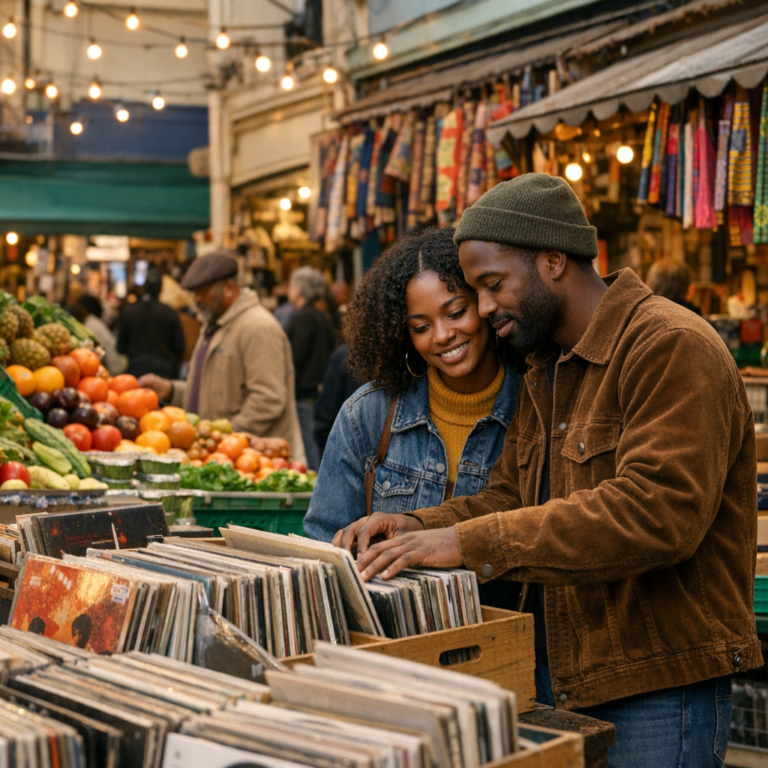
Must-try nutmeg foods: nutmeg ice cream, nutmeg syrup stirred into rum punch, and the ubiquitous grated nutmeg dusted over Grenada's national dish, oil down — a one-pot stew of breadfruit, salted meat, callaloo, and coconut milk simmered until the liquid cooks away. Pair it with a "Concorde" rum punch and you've eaten and drunk the island in one sitting.
Molinere Underwater Sculpture Park: A Reef That Remembers
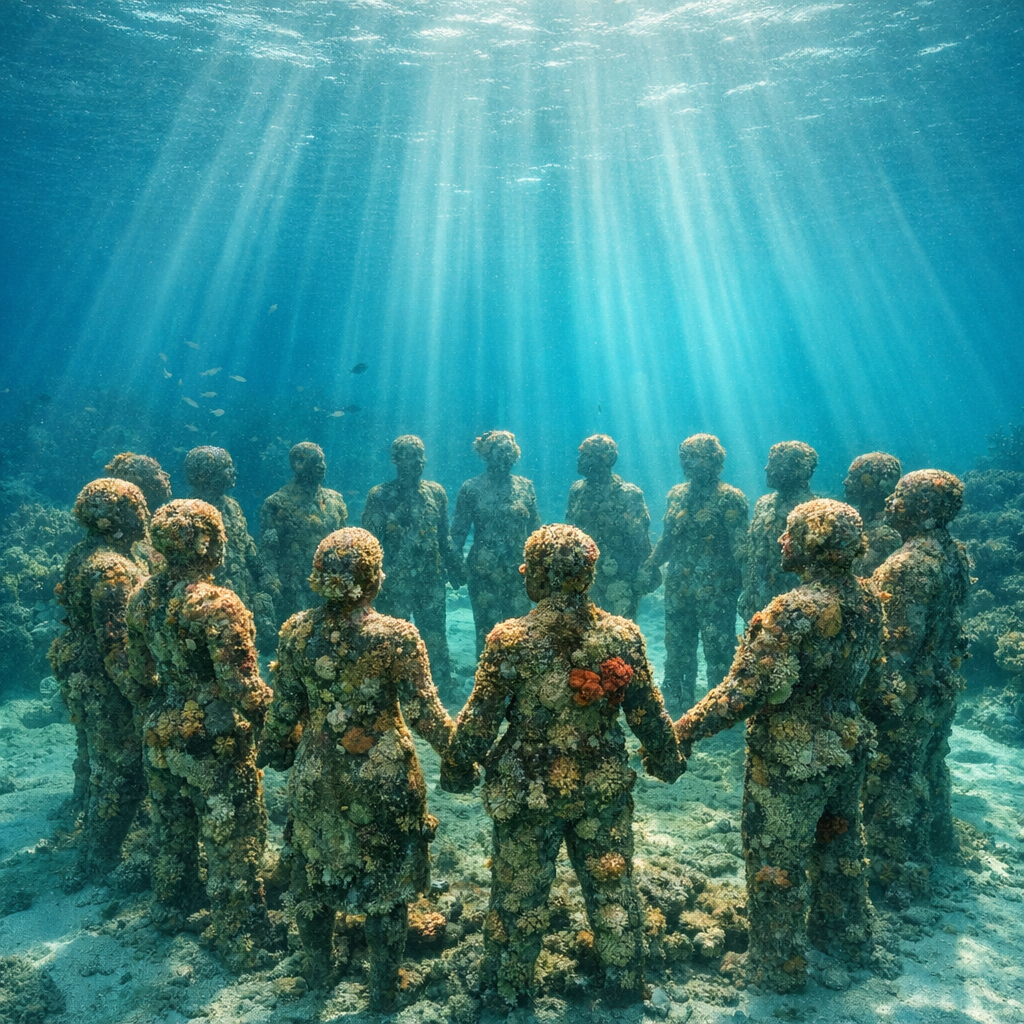
A short boat ride from St. George's, in the calm waters of Molinere Bay, sits one of the most quietly powerful sites in the entire Caribbean. In 2006, British sculptor Jason deCaires Taylor installed the world's first underwater sculpture park here — dozens of life-size concrete figures set on the seafloor, deliberately designed to become artificial reefs. Nearly two decades on, the sculptures are barely recognizable as human-made; they're wrapped in coral, sponges, and algae, patrolled by schools of fish that have made the site their home. In 2024, Taylor expanded the park with 27 new works titled Coral Carnival, extending a project originally built to help the reef recover after Hurricane Ivan devastated the coastline in 2004.
The park's most photographed piece is Vicissitudes — a ring of life-size children, cast from local Grenadian kids, standing hand in hand in a circle on the sand. Snorkeling tour guides, journalists, and generations of visitors have widely read the piece as something heavier than a simple environmental statement: a circle of figures, facing outward, submerged in the same Caribbean waters that slave ships once crossed on the Middle Passage. That interpretation sits alongside the artist's own stated intent, which centers on themes of unity, environmental resilience, and the next generation inheriting a changing sea and climate. Both readings are valid, and neither cancels the other out. This isn't a site to swim past for a quick photo — it rewards slowing down, reading a little history beforehand, and letting a snorkel or dive session here carry the weight it's asking to carry.
Most excursions depart from Grand Anse or the Carenage in St. George's and combine the sculpture park with a stop at nearby reef sites — book snorkel trips for a lighter, surface-level visit or a scuba excursion with a local dive operator to get close to the detail. Either way, go with a guide who can speak to both the marine biology and the history; it changes the experience entirely.
Living With 1983: A Still-Debated Chapter
No honest account of Grenada skips October 1983, and no honest account pretends there's a single, settled version of what happened. In 1979, the New Jewel Movement, led by charismatic lawyer Maurice Bishop, overthrew the government of Eric Gairy and installed a socialist People's Revolutionary Government aligned loosely with Cuba and the Soviet bloc. For four years, Bishop's government built schools, clinics, and literacy programs while also suspending elections and press freedoms — a record Grenadians themselves still debate.
The crisis came from within. In October 1983, a hardline faction led by Deputy Prime Minister Bernard Coard placed Bishop under house arrest. When a crowd freed him on October 19, Coard-loyalist soldiers confronted Bishop's supporters at Fort Rupert (now Fort George) overlooking St. George's harbor, and Bishop and several of his allies were executed by firing squad. A military council under General Hudson Austin then seized control of the island, imposing a shoot-on-sight curfew.
Six days later, on October 25, 1983, the United States led a multinational force — alongside troops from Jamaica and the Regional Security System of Eastern Caribbean states — in Operation Urgent Fury, invading Grenada. The Reagan administration cited the safety of roughly 600 American medical students at St. George's University, concern over Cuban and Soviet military buildup (including a newly lengthened runway at Point Salines), and a request for intervention from Grenada's Governor-General and neighboring OECS governments. Critics at the time and since have pointed out that some of that justification came together awkwardly after the fact, and international reaction was sharply divided: the UN General Assembly condemned the invasion 108 to 9 as a violation of international law, and even close US ally Margaret Thatcher privately objected. Inside the United States, the Congressional Black Caucus opposed the action and a handful of members of Congress attempted to impeach President Reagan over it.
And yet, polling taken among Grenadians in the invasion's aftermath found large majorities relieved by the intervention and fearful of what continued rule under Austin's military council would have meant. Today, October 25 is a national holiday — Thanksgiving Day — and the island's international airport carries Maurice Bishop's name. A truth and reconciliation process launched in the 2000s tried to resolve lingering questions, including the fate of Bishop's remains, which were never recovered. Ask five Grenadians about 1983 and you may get five different answers about whether it was a liberation, an occupation, or both at once — and that range of views is the honest way to hold this history, not a single tidy narrative in either direction. Fort George, the site of Bishop's execution, is open to visitors today and remains one of the most contemplative stops in St. George's.
Grand Anse Beach and Getting Around
When it's time to simply be on the beach, Grand Anse delivers one of the Caribbean's best two-mile stretches of soft white sand, lined with a manageable mix of resorts, beach bars, and vendors without ever feeling overrun. It's the easiest home base for first-time visitors — walkable to restaurants, a short drive from the Molinere boat launches, and a quick hop from the historic Carenage waterfront in St. George's, where colorful wooden fishing boats and hillside pastel houses make for the Caribbean's most underrated harbor view.
Grenada's small size (you can drive the whole island in a day) makes a rental car genuinely worthwhile if you're comfortable with narrow, winding roads and driving on the left. Otherwise, Grenada's privately run "reggae buses" (shared minivans, no reggae guaranteed) connect Grand Anse to St. George's and beyond for a couple of dollars, and licensed taxis and tour operators can be booked for day trips to Grand Etang rainforest, the Concord and Annandale waterfalls, and the nutmeg estates inland.
Practical Info: Passport, Visa & Safety
US citizens need only a passport valid at least six months beyond arrival — no visa is required, and entry is typically granted for up to three months, with proof of return or onward travel requested at the border. Grenada currently carries a Level 2 "Exercise Increased Caution" advisory from the US State Department, largely tied to street crime rather than any instability; the practical advice is the same as anywhere else in the region — use registered taxis, don't walk alone or flash valuables at night, and stay aware in unfamiliar areas. English is the official language, and the East Caribbean Dollar (XCD) is the currency, though US dollars are widely accepted.
When to Go and What to Budget
December through May is Grenada's dry season and the sweet spot for both weather and visibility at the sculpture park — calmer seas mean clearer water for snorkeling and diving. Budget roughly $1,000 per person for four nights covering a mid-range hotel, meals, and a couple of excursions; add more for boutique waterfront stays or private dive charters, and less if you're traveling in the shoulder months of June or November just before or after peak season.
The Bottom Line
Grenada rewards travelers willing to hold more than one truth at a time: a fragrant, laid-back island built on forced Black labor, a modern history that Grenadians themselves still debate, and a sunken sculpture garden that has become both a thriving reef and an unofficial memorial. Go for Grand Anse's sand and the nutmeg-spiced rum punch, but stay long enough to sit with Fort George's view and the quiet circle of figures at Molinere. That combination — beauty and gravity in the same afternoon — is what makes Grenada worth the trip.
🏨 Book Grenada Hotels → ✈️ Find Grenada Flights →*Affiliate links — BTN may earn a commission at no extra cost to you.