An Island That Asks You to Slow Down and Feel Something
Thirty minutes off the coast of Dakar, across a stretch of Atlantic that turns from gray-green to a startling turquoise as you approach, sits an island barely two kilometers long. There are no cars on Gorée Island. Bougainvillea spills over pastel pink and ochre walls, fishermen mend nets in the shade, and children kick a ball across cobblestone lanes that have barely changed in two hundred years. It is one of the most photogenic small islands in West Africa — and it is also home to the Maison des Esclaves, the House of Slaves, and its infamous Door of No Return, one of the most visited and most debated memorial sites anywhere in the African diaspora's world. Gorée does not let you have the postcard without the reckoning. That tension, held honestly, is exactly why this island belongs on any serious Black travel itinerary.
Why Gorée Island Matters to the Diaspora
Gorée was inscribed as a UNESCO World Heritage Site in 1978, one of the very first sites on the list, recognized as "an exceptional testimony to one of the greatest tragedies in the history of human societies: the slave trade." From the 15th to 19th centuries the island changed hands among the Portuguese, Dutch, English, and French, each leaving behind fortifications and trading posts that still line its shores. UNESCO calls it a "memory island" — a place meant to hold space for grief, remembrance, and reconciliation between Africa and the West.
For many diaspora travelers, standing on Gorée is less about facts and more about presence — about physically occupying a place so heavily freighted with ancestral history. The island draws roughly 200,000 visitors a year, including Nelson Mandela, Pope John Paul II, and Barack Obama, many of whom have described the experience in strikingly similar terms: quiet, heavy, and hard to put into words.
The House of Slaves and the Door of No Return
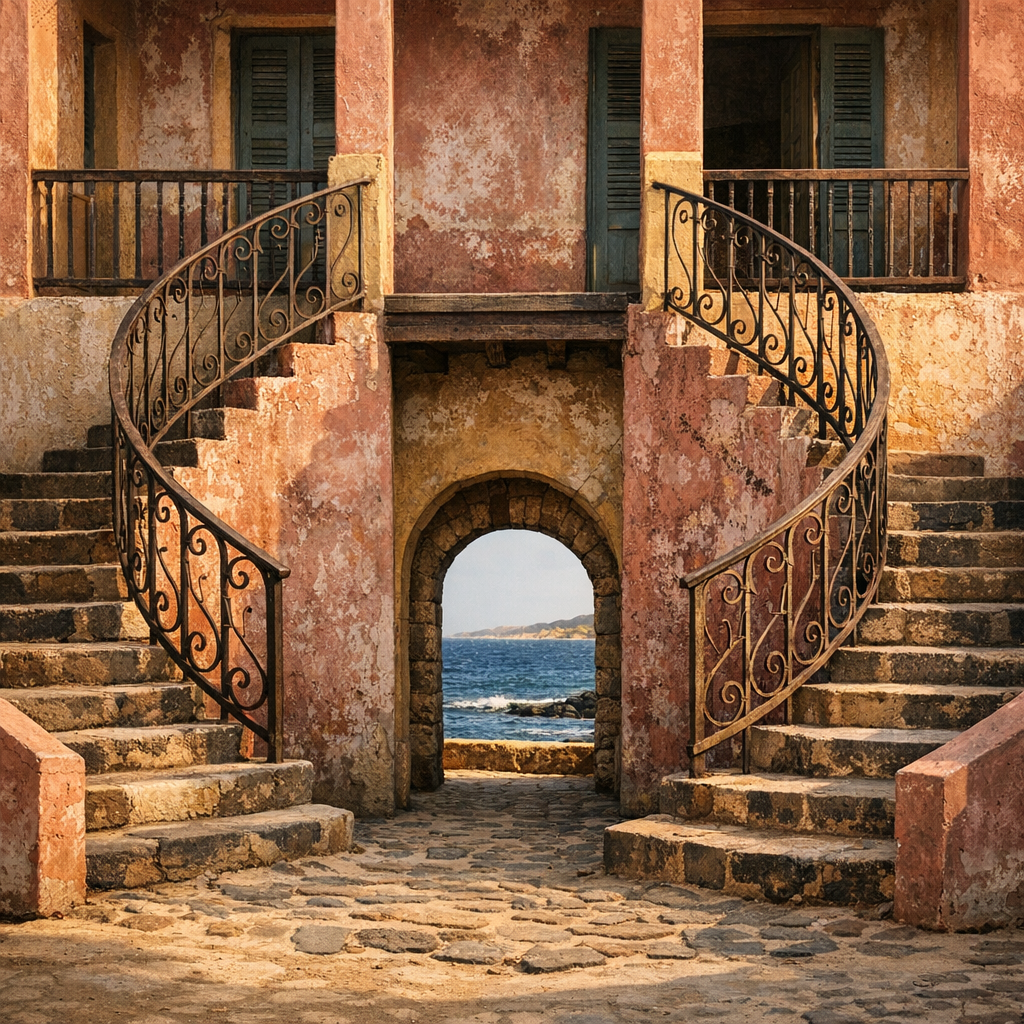
The Maison des Esclaves was built around 1776 by French colonial trader Nicolas Pépin and later closely associated with his daughter, the wealthy trader Anna Colas Pépin. Its ground floor held small, airless holding cells where enslaved men, women, and children were reportedly separated by sex and age and shackled while awaiting transport. At the back of the courtyard, a narrow stone doorway opens directly onto the ocean — the Door of No Return, said to be the final point of departure before enslaved Africans were forced onto ships bound for the Americas, the Caribbean, and Europe.
The building's modern fame owes enormously to Boubacar Joseph Ndiaye, the curator who restored and championed the museum from 1962 until his death in 2008. Ndiaye led tours in person for decades, holding up iron shackles for visitors and insisting that more than a million enslaved people — by some tellings, as many as 15 million — passed through this single door.
An Honest Look at the Historical Debate
This part of Gorée's story deserves care rather than a glossing-over. A significant body of research complicates Ndiaye's numbers, and honest travel coverage owes visitors that context. Historian Philip D. Curtin's influential statistical work on the Atlantic slave trade estimated that French trading posts across the entire Senegambia region transported roughly 180,000 enslaved Africans between 1711 and 1810 — a fraction of Ndiaye's claims for this one building. Historian Ana Lucia Araujo and others argue the Door of No Return itself, built comparatively late in the trade's history, likely saw far fewer departures than claimed, with total figures for the island running well below the millions who passed through larger hubs like Elmina and Cape Coast Castle in present-day Ghana.
Senegalese scholars and site defenders push back on treating this as a simple debunking, noting that French trading ledgers are incomplete, that unofficial trading went unrecorded, and that Anglophone historiography has often underweighted West African sources in favor of European shipping records. Even skeptics of the highest figures generally concede that Gorée's symbolic and memorial importance stands on its own — the island was a real node in a real system of trafficking, and the emotional truth it represents for diaspora descendants isn't diminished by an unresolved statistical argument. The most respectful way to visit is to hold both things at once: a sobering site with a genuinely contested exact history, and a legitimate place of pilgrimage. Go with a knowledgeable guide, ask questions, and give yourself room to feel whatever comes up.
Getting to Gorée Island: The Ferry
The only way to reach Gorée is by boat. Ferries depart from the port in Dakar's Plateau district, across from the main train station — bring your passport to enter the port. Weekday boats typically run at 7:00am, 10:00am, noon, 3:00pm, and 5:00pm; there's no advance booking, so it's first-come, first-served. The crossing takes about 30 minutes with striking views back at Dakar's skyline. Round-trip fare for non-African residents runs around 6,500 CFA francs (roughly $11 USD). Arrive early on weekends, catch the 7:00–7:30am boat to beat the crowds, and note the Maison des Esclaves is closed Mondays.
Beyond the House of Slaves: A Full Day on the Island
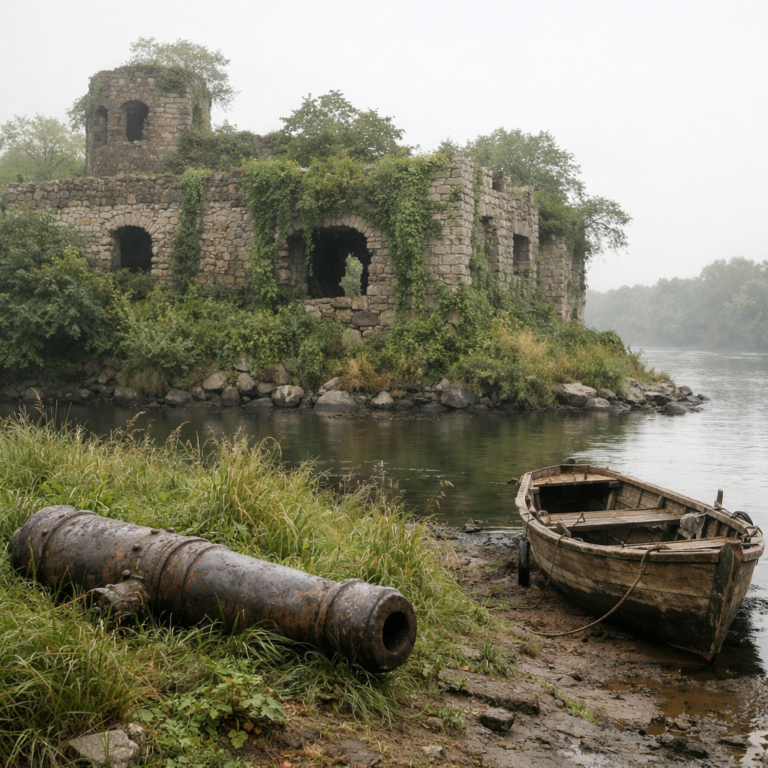
Gorée rewards a full day, not a rushed hour. Wander the car-free lanes past bougainvillea-draped colonial buildings in coral, ochre, and faded blue. The IFAN Historical Museum, near the quieter Plage des Amoureux (Lovers' Beach), houses West African art and is open daily except Monday. The Mémorial de Gorée-Almadies, at the southern tip, offers cliffside views, old cannon emplacements, and its own monument to victims of the slave trade. Local artisans sell paintings, masks, and jewelry along the main paths — bring cash, since cards are rarely accepted. For lunch, seafood shacks near the port serve grilled, spiced fresh fish (thiof, capitaine) that rivals anything in Dakar, often cheaper a few streets inland.
Pairing Gorée With Dakar's African Renaissance Monument
Most travelers base themselves in Dakar and treat Gorée as a day trip, pairing the island's heaviness with forward-looking Senegalese landmarks. The African Renaissance Monument, unveiled in 2010 on the Collines des Mamelles, is the tallest statue in Africa at 49 meters (161 feet) — a bronze family group rising together, arms outstretched skyward. Designed by Senegalese architect Pierre Goudiaby Atepa and built by a North Korean state construction firm, it remains genuinely controversial in Senegal: it cost an estimated $27 million, drew objections from religious leaders over its semi-nude figures, and became a flashpoint over then-President Abdoulaye Wade's claim to a personal royalty share of ticket revenue. Whatever you make of the politics, the symbolism — Africa rising, not frozen in the past — makes it a deliberate counterpoint to a morning at the House of Slaves. You can climb into the monument's crown for panoramic city views.
Pairing Gorée With Dakar's Lac Rose (Lake Retba)
About an hour outside central Dakar, Lac Rose — Lake Retba — is a shallow, intensely salty lake famous for water that turns a genuine shade of bubblegum pink, most vivid in the dry season from November through June. The color comes from Dunaliella salina, a salt-loving algae that produces a red pigment to absorb sunlight; the same extreme salinity, comparable to the Dead Sea, lets you float easily. Local salt harvesters still wade in daily, coating their skin in shea butter for protection, hand-scooping salt from the lakebed to sell for fish preservation. The lake was once the finish line of the original Paris–Dakar Rally. Most operators combine a Lac Rose morning with an afternoon Gorée ferry, though giving each site its own day lets you sit with the House of Slaves rather than rushing.
Getting to Dakar & Entry Requirements
Blaise Diagne International Airport (DSS), about 45 minutes outside the city, is Senegal's main international gateway. Delta Air Lines currently operates the only nonstop US route, flying JFK–Dakar three times weekly in around 8.5 hours; travelers from other US cities typically connect through Europe or hubs like Casablanca or Addis Ababa. US citizens do not need a visa in advance for tourist stays — American passport holders can currently enter visa-free, though you'll still want a passport valid well beyond your travel dates, evidence of onward travel, and travel insurance in case border officials ask. Requirements can change, so confirm current rules with the Senegalese embassy before you book.
Is Senegal Safe for Black Travelers?
As of this writing, the US State Department rates Senegal at Level 1 — Exercise Normal Precautions — its lowest risk category. The one exception is the Casamance region in the south, rated Level 2 for occasional armed robbery tied to a separatist conflict and lingering unexploded landmines in rural border areas; Casamance is nowhere near the typical Dakar–Gorée itinerary. Dakar and Gorée see heavy tourist and diaspora foot traffic and are generally comfortable for solo travelers, though standard big-city precautions apply — mind your belongings in crowded markets, use registered taxis at night, and keep copies of your documents separate from the originals.
Best Time to Visit
November through February is Senegal's sweet spot — dry, breezy, and comfortable, with daytime highs around 77–81°F and minimal rain, and it lines up with Lac Rose at its most vividly pink. The wet season runs roughly June through October, with August bringing the heaviest afternoon downpours; mornings often stay clear even then, and crowds thin out considerably if you don't mind planning around the rain.
Budget Guide
Budget: $50–90/day — guesthouse lodging in Dakar, local street food, shared taxis, and the modest ferry and museum fees for Gorée.
Mid-range: $120–220/day — boutique hotel, sit-down seafood dinners, and a private guide and driver for Gorée and Lac Rose.
Luxury: $300+/day — five-star Dakar waterfront property, private historian-led tours, and premium airport transfers.
BTN Insider Tips
Hire a guide for the House of Slaves. A knowledgeable guide will walk you through both the traditional narrative and the historiographical debate, rather than leaving you with only one version.
Go early and skip Monday. The museum is closed Mondays, and the first ferry beats the tour groups.
Bring cash in CFA francs. Cards are rarely accepted on Gorée or at the Lac Rose salt cooperatives.
Learn a little French and Wolof. "Nanga def" (how are you, in Wolof) goes a long way with locals.
🏨 Book Dakar Hotels →Book Your Senegal Trip
Gorée Island will not let you leave unchanged. It asks something a normal vacation doesn't — attention, humility, and a willingness to sit with a history that is both painfully real and, in its precise details, genuinely disputed by historians. Pair that morning with an afternoon at pink-hued Lac Rose, and an evening at the African Renaissance Monument looking over a coastline that has seen the worst and the best of what people can build. That is Senegal's case for itself.
✈️ Find Flights to Dakar →*Affiliate links — BTN may earn a commission at no extra cost to you.