The River Road to Kunta Kinte's Village
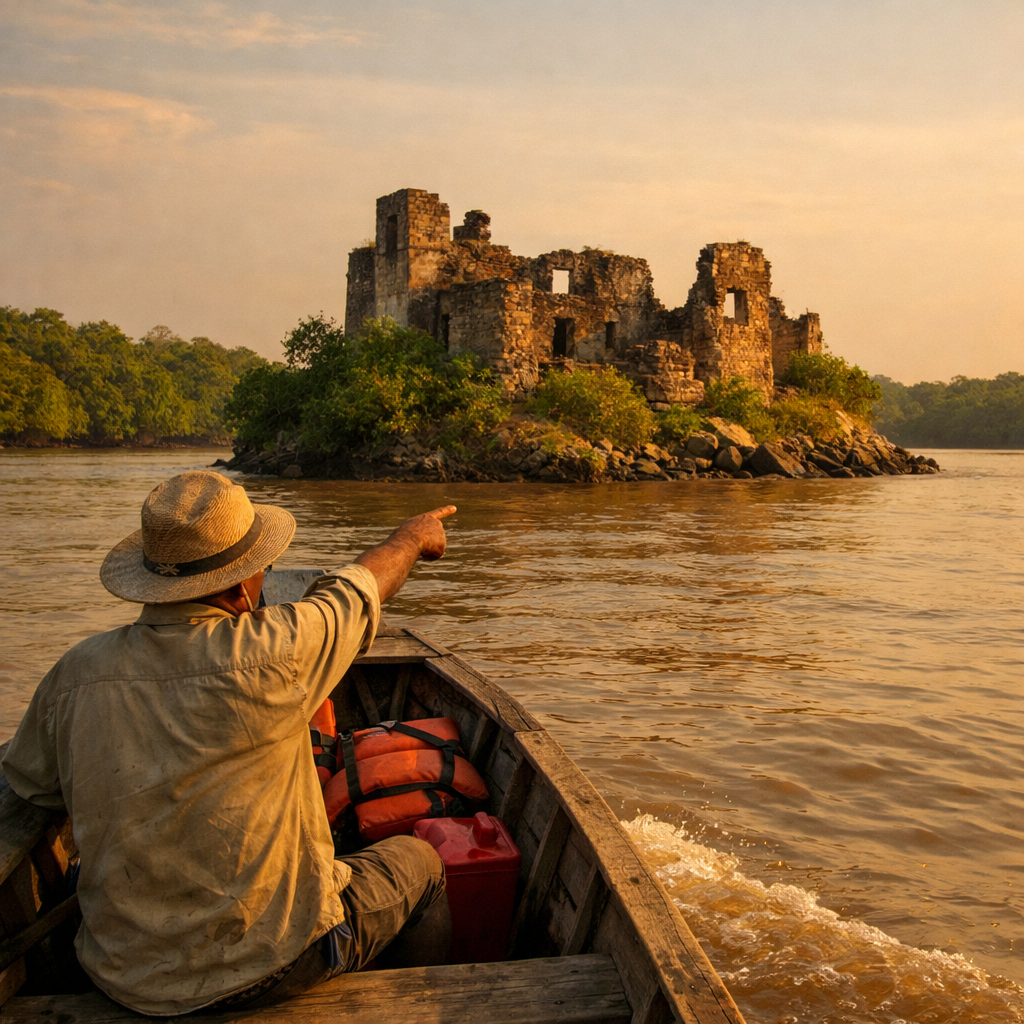
There is a moment on the Gambia River, somewhere between the mangrove creeks of Bakau and the North Bank, when the water goes flat and brown and the engine of your boat is the only sound for miles. You are retracing, as closely as any tourist ever can, the route enslaved people were carried down more than two centuries ago — in the other direction, toward the Atlantic, toward ships, toward everything that came after. Then the boat slows, a low green island rises out of the current, and a crumbling stone fort comes into view. This is Kunta Kinteh Island. And just across the water, on the riverbank, sits the village of Juffureh — the place Alex Haley told the world was home to his ancestor.
For the African diaspora, this stretch of river is one of the most emotionally loaded destinations on the continent. It is smaller, quieter, and far less visited than Ghana's Cape Coast or Elmina — there is no massive tour infrastructure here, no gift shop economy built around the pilgrimage. What there is instead is a modest fishing country that became, almost by accident of one man's research and one novel's success, a permanent fixture on the map of Black ancestral travel.
How a Novel Turned a River Village Into a Pilgrimage Site
In 1976, Alex Haley published Roots: The Saga of an American Family, tracing his maternal line back through six generations to a young man named Kunta Kinte, whom Haley identified as having been captured near the village of Juffureh in 1767 and transported in bondage to Annapolis, Maryland. The book and the television miniseries that followed a year later became a cultural phenomenon, watched by more than half of America and translated into dozens of languages. For millions of Black Americans who had no names, no records, and no village to point to, Haley's story did something unprecedented: it gave the search for African origins a face, a family, and a place on a map.
Juffureh became that place. Diaspora travelers began arriving within years of the book's publication, and the trickle has never fully stopped.
It is also, in fairness, a more complicated story than the miniseries suggested, and a responsible telling of it should say so plainly. Haley's own account of his research was challenged after publication — the griot in Juffureh who reportedly confirmed the Kunta Kinte story is widely believed to have repeated back details Haley himself had supplied through his interpreter, a pattern researchers call circular reporting, and genealogists have not been able to independently verify the specific lineage in colonial-era Virginia and North Carolina records. Haley separately settled a plagiarism lawsuit brought by author Harold Courlander over passages that resembled Courlander's earlier novel The African. None of that erases what Roots did culturally — it remains one of the most consequential works ever written about the search for Black ancestry, and Juffureh's status as a symbol of that search is real regardless of whether every genealogical detail holds up. Go with that fuller context in mind. It makes the visit more honest, not less meaningful.
Kunta Kinteh Island: From Fort James to UNESCO World Heritage Site
The island itself has its own long and violent history, independent of Haley's book. Built in the 1650s and known for more than 350 years as James Island, it changed hands repeatedly between the British, French, and Dutch, and was destroyed and rebuilt several times amid European rivalries and pirate raids before the garrison was finally abandoned in 1870. Positioned roughly 30 kilometers up the Gambia River from its mouth, the fort served as one of the earliest European trading posts in West Africa and, for a period, a holding point in the transatlantic slave trade — among the first such sites established by the English on the continent.
In 2003, UNESCO inscribed the island, together with six related sites along the river including Fort Bullen, the Six-Gun Battery, and colonial-era buildings in nearby settlements, as a World Heritage Site under the name "James Island and Related Sites," recognizing the ensemble as exceptional testimony to the African-European encounter from the 15th to the 20th century and to the river's role as both an entry point for the slave trade and, later, a route toward its abolition.
On February 6, 2011, the island was formally renamed Kunta Kinteh Island at the request of American artist Chaz Guest, who petitioned then-president Yahya Jammeh to give the site a Gambian name tied to its most famous cultural association rather than its colonial one. The renaming stuck, and it is the name used in all current UNESCO documentation and on the ground today.
What remains of the fort is modest and moving rather than monumental. Erosion has reduced the island to roughly a sixth of its original size, and much of what survives — a single surviving cell believed to have held the most difficult captives, sections of crumbling wall, a small jetty, and a few skeletal baobab trees — has been stabilized with protective capping rather than restored. There is no grand museum experience waiting on the island. There is a small, weathered fort on a shrinking spit of land in the middle of a wide brown river, and a guide who will walk you through what happened there. For many visitors, the plainness of it is the point.
The River Excursion, and Juffureh Itself
You cannot drive to Kunta Kinteh Island. It is reached only by boat, almost always as a guided day excursion departing from Banjul, Bakau, or the Kololi resort strip, motoring up the Gambia River past fishing villages, mangrove channels, and birdlife before reaching the island and, just across the water, Juffureh and its neighboring village of Albreda.
In Juffureh, a small museum and community of families — some who trace their own lineage to the Kinte name still common in the region — receive visitors, and local guides walk you through the village's version of the story. It is a working West African river village first and a heritage site second: modest homes, a mosque, children curious about visitors, elders who have spent years fielding the same questions from diaspora travelers arriving from across the Atlantic. Treat it accordingly — as a living community, not a museum exhibit. Most excursions run a half to full day and are best booked through a tour operator or hotel desk in advance, since infrastructure on the North Bank is limited and independent logistics are genuinely difficult to arrange on arrival.
Basing Yourself in Banjul and Kololi
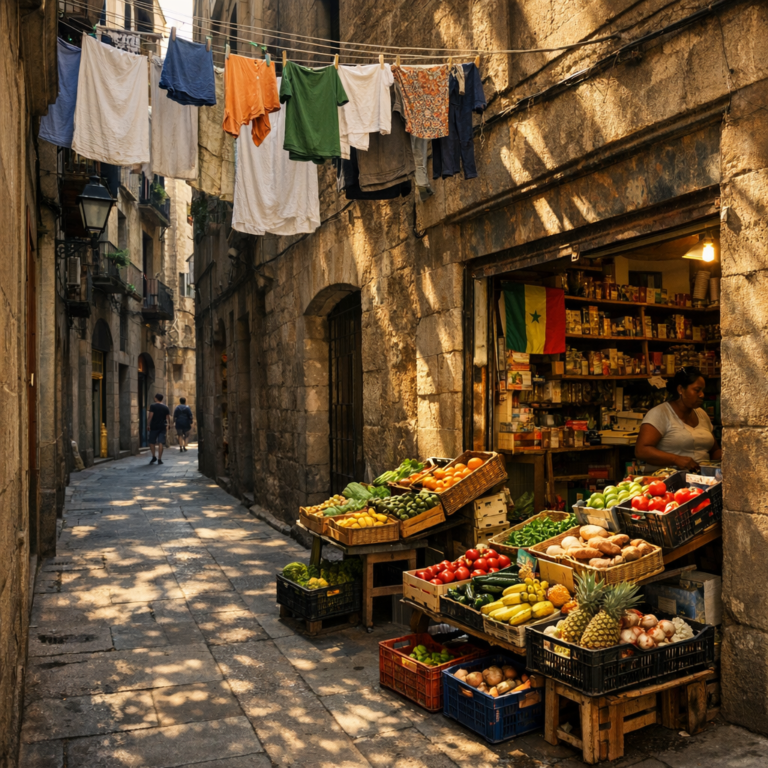
Almost no one stays overnight near Juffureh itself — the sensible plan is to base yourself on the coast and treat the river excursion as a day trip. Banjul, the compact capital, is worth a half-day on its own: Albert Market is the city's chaotic, colorful commercial heart, packed with fabric stalls, wood carvings, silver jewelry, and dried fish, and a good place to practice the friendly, expected art of negotiation. The nearby Arch 22 monument and the crumbling colonial-era streets around it give a quick sense of Gambia's Bathurst-era British history before independence in 1965.
Most travelers sleep about 20 minutes from the capital in Kololi, home to the Senegambia Strip — the country's main concentration of beach resorts, restaurants, and nightlife — or in the quieter, birding-friendly area of Kotu just next door. Both put you within easy reach of the Atlantic beaches, a manageable transfer from Banjul International Airport, and a straightforward launch point for river-excursion pickups.
The Gambia is one of Africa's smallest countries — you can cross most of it in a day — and its status as a former British colony means English is the sole official language, which makes it one of the most straightforward entry points into West Africa for first-time diaspora travelers who might otherwise be intimidated by a francophone or Portuguese-speaking itinerary.
Practical Planning: Visa, Access, and Setting Expectations
US citizens need a visa to enter The Gambia — this is not a visa-free destination. In practice, a visa can be arranged in advance or obtained on arrival at Banjul International Airport, with published fees generally running in the $100–$105 range plus a separate $20 cash security fee charged on both entry and exit. Reported allowable stay lengths vary by source and by visa category — some current guidance cites a standard 30-day entry, while The Gambia has also historically extended longer stays of up to 90 days to travelers under specific reciprocal or preferential arrangements. Because immigration pages are not always kept current and policy can shift with little notice, treat any specific day count here as a starting point, not a guarantee: confirm your exact allowable stay, documentation, and fees directly with the Gambian embassy or consulate nearest you, or through a reputable visa service, before booking flights. Onward travel proof and evidence of sufficient funds are commonly requested at the border, so keep a printed return itinerary and some cash on hand.
Set your expectations for infrastructure accordingly, too. This is one of the least-resourced tourist circuits covered on this site relative to Ghana, Senegal, or Benin's more built-out heritage routes — roads on the North Bank can be rough, English is spoken everywhere but service standards vary, ATMs are scarce outside the coastal resort area, and the river excursion itself is weather- and tide-dependent. None of that should stop you from going. It just means booking through an established operator, carrying cash, and building slack into your schedule rather than expecting a polished, Instagram-paced day trip.
The BTN Verdict
Kunta Kinteh Island will not overwhelm you with scale, and Juffureh will not hand you a tidy, fully verified genealogy. What both places offer instead is something rarer: a physical, standing connection to the story that first put the search for African roots into the American imagination, in a country small and English-friendly enough to be an easy first step into West Africa. Pair the river pilgrimage with Banjul's markets and a few unhurried days on the Kololi coast, go into it with clear eyes about both the history and the complicated origin of the story that made this place famous, and you'll come away with one of the most quietly powerful days available anywhere on this list.
🏨 Book Gambia Hotels →*Affiliate links — BTN may earn a commission at no extra cost to you.