A Shipwreck That Became a Free Nation Within a Nation
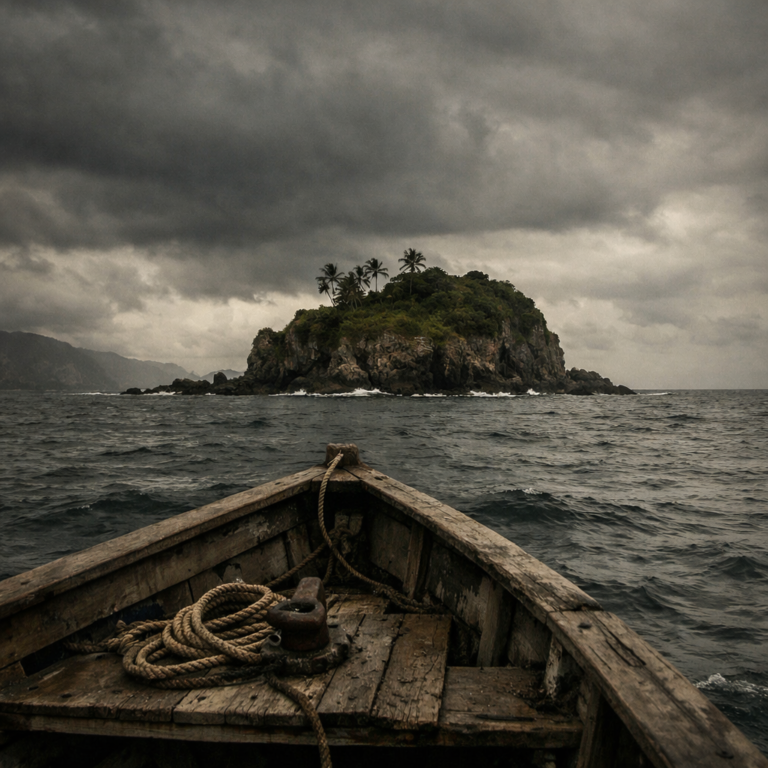
In 1553, a ship carrying twenty-three enslaved Africans ran aground in the bay near what is now Esmeraldas, on Ecuador's northern Pacific coast. Rather than being recaptured, the survivors — among them a young man named Alonso de Illescas, who had been enslaved as a child in Cape Verde and later educated in Seville — fled into the dense coastal forest and refused to go back into bondage. That single act of collective refusal is commonly cited by historians as a founding moment of Afro-Ecuadorian Esmeraldas.
Illescas built alliances with the region's Indigenous Nigua communities, and over the following decades a genuinely new society took shape: African, Indigenous, and eventually some European lineages intermarried, producing a population the Spanish colonial administration classified as "zambo." By 1600, Illescas's own son had negotiated formal recognition from the Spanish Crown as ruler of the territory — an almost unheard-of outcome for a maroon society anywhere in the Americas at that time. Later waves of enslaved Africans who escaped inland plantations and mining operations elsewhere in the Andes added to the population through the 1700s and 1800s, reinforcing what had already become a self-governing Black region generations before independence movements swept the rest of the continent.
Esmeraldas commemorates its own break from Spanish rule every August 5, marking the night of August 4–5, 1820, when local patriots forced out the Spanish lieutenant governor and proclaimed independence at Rioverde — nearly two months before Guayaquil's more famous declaration. It is a fitting date for a province whose identity has always been built around refusing to be governed on someone else's terms.
Marimba: A UNESCO-Recognized Sound of Freedom
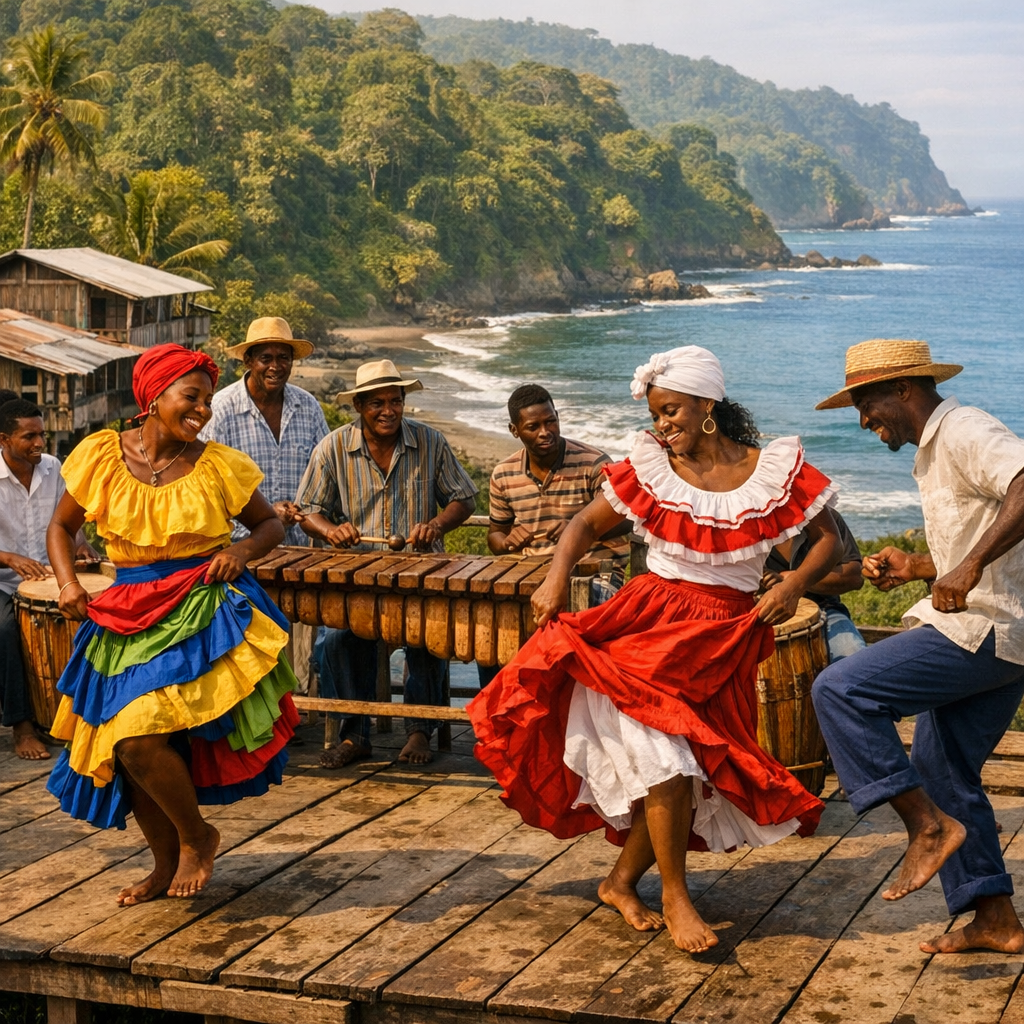
Walk into a traditional gathering in Afro-Esmeraldeño territory and you will likely hear the marimba before you see it — a wooden xylophone-like instrument built from chonta palm wood, played standing up by one or two musicians, layered over the deep pulse of the bombo drum, the higher cununo drums, and the guasá shaker. Around that instrumental core sits an entire vocal tradition: arrullos (lullabies and devotional songs), alabados (mourning chants), and chigualos (songs sung at wakes for children), many rooted in Catholic ritual but carried in call-and-response patterns that trace directly back to West and Central Africa.
On December 2, 2015, UNESCO's Intergovernmental Committee for the Safeguarding of Intangible Cultural Heritage formally inscribed "Marimba music, traditional chants and dances from the Colombia South Pacific region and Esmeraldas Province of Ecuador" onto the Representative List of the Intangible Cultural Heritage of Humanity. The joint inscription with Colombia was itself an acknowledgment of history: the Afro-descendant communities scattered along the Pacific coast from Esmeraldas up through Colombia's Chocó and Valle del Cauca departments share a single cultural lineage, shaped by the same slave trade, the same escape routes, and the same rainforest terrain that let maroon societies survive undetected for centuries.
This is not a heritage performance staged for tourists. Marimba is played at baptisms, wakes, patron saint festivals, and Christmas novenas across the province, and it is taught informally, generation to generation, inside families and community cultural centers rather than conservatories. That is precisely what UNESCO's "intangible" designation is meant to protect — a living tradition, still evolving, still at risk of fading as younger generations migrate to cities.
The Honest Safety Picture — Please Read This Before You Book Anything
BTN does not sugarcoat safety information, and Esmeraldas requires a direct conversation about it. As of the U.S. State Department's most recent Ecuador travel advisory (issued October 14, 2025), Ecuador overall sits at Level 2 – Exercise Increased Caution. Esmeraldas province, however, carries a considerably more serious designation than the country average:
- Esmeraldas city and all areas north of it within the province are rated Level 4 – Do Not Travel, the U.S. government's highest advisory level, citing terrorism and organized crime.
- All areas south of Esmeraldas city within the province are rated Level 3 – Reconsider Travel, again citing crime and terrorism-linked violence.
In plain terms: this is not a case of "avoid one risky neighborhood in an otherwise fine city." The advisory currently covers the entire province, driven by violence tied to drug-trafficking routes that pass through this stretch of coastline — the same geography and porous border with Colombia that helped a maroon society survive in the 1500s now also make it attractive to organized crime in the 2020s. The State Department also notes that the U.S. government's own ability to provide emergency consular services in these areas is limited, which matters a great deal if something goes wrong.
We are not going to pretend a handful of "safer neighboring towns" cancels out a Level 3–4 advisory covering an entire province, because that would not be honest. What we can say is this: conditions in this region change, advisories are updated regularly, and organized cultural travel with an established, security-briefed operator carries meaningfully different risk than independent backpacking. If Esmeraldas is on your list, treat it as a destination to watch rather than a destination to book independently right now.
How to Experience Esmeraldas Marimba Culture Right Now
None of this means the culture is inaccessible — it means the smartest way in isn't a solo trip to the port city.
- Book only with established Ecuadorian tour operators who specialize in Afro-Ecuadorian cultural travel, maintain current relationships with local marimba communities, and can speak specifically to present-day conditions on any given route before you commit.
- Look for marimba outside the province first. Afro-Ecuadorian cultural centers and folkloric groups regularly perform marimba music in Quito and Guayaquil, particularly around Afro-Ecuadorian heritage month (October) and national cultural festivals — a lower-risk way to encounter the tradition while advisories remain elevated.
- If you do travel with a vetted group tour, confirm your operator's current route explicitly avoids any Level 4 areas, ask about their security protocols, and register your trip with the U.S. Embassy in Quito (STEP program) before departure.
- Check the advisory again immediately before booking — not months in advance. Conditions in trafficking-affected border regions can shift quickly in either direction.
Getting There & Entry Requirements
US citizens do not need a visa for tourism stays of up to 90 days within any consecutive 12-month period in Ecuador — just a passport valid at least six months beyond your arrival date. Most international travelers fly into Quito (UIO) or Guayaquil (GYE), both well-served from major US hub cities, then connect onward domestically. General Rivadeneira Airport (ESM) serves Esmeraldas city itself, but given the current advisory, BTN recommends arranging any onward travel toward the province exclusively through a vetted tour operator rather than independent domestic flights, buses, or taxis.
Ecuador uses the US dollar as its official currency, which simplifies budgeting considerably — no currency exchange headaches, though smaller bills are more useful outside major cities. Spanish is the official language; English is limited outside tourist hubs, so a local guide or operator with bilingual staff is genuinely useful here, not just a comfort.
Best Time to Visit & What to Eat
Ecuador's Pacific coast runs a hot, rainy season roughly January through May and a cooler, drier season from June through November — the more comfortable window for any travel in the region, conditions permitting. Whenever and however you do encounter Esmeraldeño cuisine, expect coconut, plantain, and seafood to dominate the table: encocado de pescado (fish simmered in coconut sauce), tapao (plantain and fish stew), ceviche esmeraldeño, patacones (twice-fried plantain), and arroz con coco are the dishes locals point to first, all reflecting the same Afro-Pacific coastal palate found across the border in Colombia's Chocó region.
BTN Insider Tips
Read the advisory yourself before you plan anything. Do not rely on a single article, including this one — pull up the current State Department Ecuador page and read the specific Esmeraldas language before booking anything.
Lead with the culture, not the geography. If your goal is genuinely to experience Afro-Ecuadorian marimba tradition, a well-run cultural festival appearance or Quito-based folkloric performance may deliver more of what you're looking for, with far less risk, than an independent trip to the province itself.
Travel insurance with evacuation coverage is not optional for any trip into or near an area with an active State Department advisory, regardless of what your operator tells you.
Support the culture from a distance if you can't visit safely. Afro-Ecuadorian musicians and cultural preservation groups sell recordings and accept support online — a legitimate way to engage with this heritage without setting foot in a Level 3 or 4 zone.
Mark Your Calendar
- August 5 — Esmeraldas Independence Day, commemorating the 1820 proclamation at Rioverde
- September 21 — Founding Day, commemorating the region's 1526 founding as San Mateo de las Esmeraldas
- December 2 — Anniversary of the 2015 UNESCO inscription of marimba music, chants, and dances as Intangible Cultural Heritage of Humanity
- October — Afro-Ecuadorian Heritage Month, marked with cultural events nationwide, including in Quito and Guayaquil
Book Smart
Esmeraldas holds one of the most remarkable Black freedom stories in the Americas and a musical tradition the world's cultural authorities have formally recognized as irreplaceable. It also currently carries one of the more serious travel advisories on BTN's map. Both things are true at once, and we'd rather tell you that plainly than send you somewhere without the full picture.
✈️ Search Ecuador Flights →*Affiliate links — BTN may earn a commission at no extra cost to you. This article reflects safety information verified at time of publication (July 2026); always confirm current conditions directly with the U.S. State Department before booking travel to Esmeraldas province.