Dubai Doesn't Fit the Story You've Been Told About It
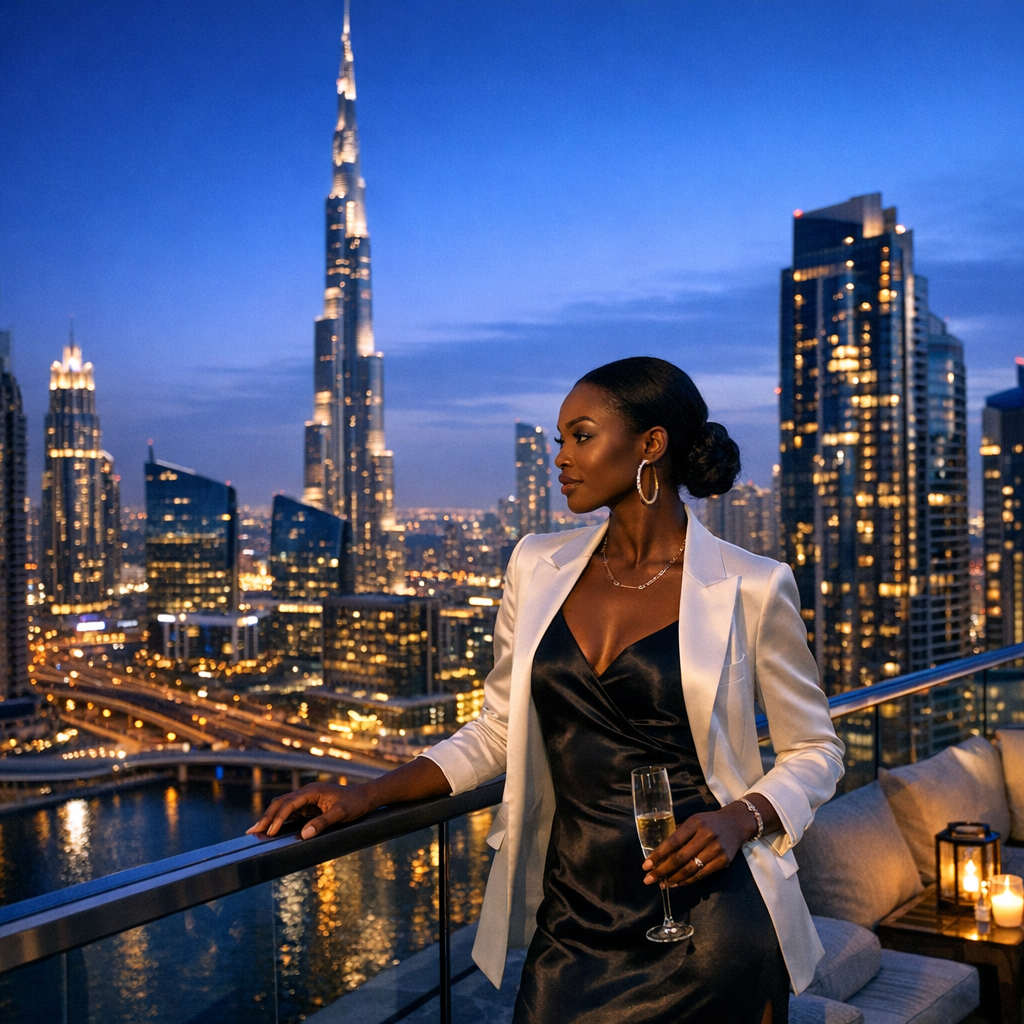
Say "Dubai" to most people and they picture the same three things: the Burj Khalifa, indoor skiing, and duty-free shopping. What they don't picture is a Sunday afternoon at a rooftop lounge in Business Bay where Nigerian Afrobeats blends into Jamaican dancehall, where Kenyan entrepreneurs are trading business cards with African American consultants who relocated from Atlanta, where a Trinidadian chef is plating jerk chicken twenty minutes from a mosque call to prayer. That Dubai exists. It has existed for years. Most travelers just never got the invitation.
Dubai has quietly become one of the most significant hub cities for the global Black diaspora — not a "roots" destination like Accra or Dakar, but something different and increasingly important: a modern crossroads where African, Caribbean, and African American professionals, entrepreneurs, and creatives are building lives, businesses, and community in one of the world's most connected cities. For Black travelers, that changes what a trip to Dubai can be. This is not just a luxury stopover between continents. It's a genuine destination with a community waiting on the other side of customs.
Why Black Travelers Are Discovering Dubai
The pull is practical as much as it is cultural. Dubai sits at the crossroads of Africa, Asia, and Europe — precisely why so many Africans and Caribbean nationals built lives here in the first place, drawn by proximity to home, tax-friendly policy, and an economy built on the international trade, hospitality, and finance industries that attract ambitious people from every diaspora community. That geography makes Dubai easy to reach from the US, and once you land the city delivers world-class infrastructure: a spotless metro, an enormous restaurant scene, five-star hospitality at every price point, and a level of safety-by-design (heavy policing, extensive surveillance, strict laws) that many solo travelers — including Black women traveling alone — find reassuring rather than restrictive.
Add to that a genuinely global population — UAE nationals are a minority in their own city, outnumbered by expatriates from South Asia, Africa, the Philippines, and the West — and a Black traveler becomes simply one more face in an extraordinarily international crowd, not a novelty.
Dubai's Black Expat & Diaspora Community
Unlike Accra or Cape Town, Dubai doesn't have a single historic "Black neighborhood" you can point to on a map — the city's diaspora community is dispersed across residential pockets like Jumeirah Village Circle (JVC), Dubai Marina, Business Bay, Al Barsha, and International City, where large populations of African and Caribbean professionals live alongside South Asian, European, and Emirati residents. What Dubai does have is a dense, active network of informal community: WhatsApp groups and Instagram pages built around Afrobeats nights, Caribbean carnival meetups, "Black in Dubai" social mixers, majlis-style networking gatherings, and professional associations for African and Caribbean entrepreneurs operating out of Dubai's free zones.
The restaurant scene is one of the clearest windows into this community. Kiza Restaurant & Lounge has built a loyal following around African and Caribbean-inspired fine dining paired with live entertainment. Tribes brings a pan-African steakhouse concept — complete with tribal-inspired décor and a menu built around West and East African flavors — to the heart of the city's dining district. Ting Irie, one of the first dedicated Jamaican restaurants in Dubai, has become a gathering point for Caribbean expats craving jerk chicken and Red Stripe far from home. Beyond these anchor spots, look for Ethiopian, Nigerian, Ghanaian, and Kenyan restaurants scattered through Deira and Al Barsha, run by and for the diaspora community that calls Dubai home.
If you're visiting rather than relocating, search Instagram and Facebook for Dubai-based Black expat and travel groups before you land — you'll typically find an event or gathering happening within days of arrival.
Entry Requirements: What US Citizens Actually Need in 2026
Here's the good news, verified directly against current UAE government sources: US passport holders receive a free, multiple-entry visa stamped on arrival in the UAE, valid for stays of up to 90 days within any rolling 180-day period. This is a meaningful expansion from the 30-day allowance many guides still reference — the UAE extended the on-arrival stay for US citizens, and as of 2026 the 90-day figure is what's reflected on official UAE government and embassy channels. The visa is non-renewable within that 180-day window, so plan your total time in-country accordingly if you're combining a Dubai stay with side trips elsewhere in the Gulf.
Your passport needs at least six months of validity remaining. No advance application, no fee, no pre-arranged e-visa — you present your passport at immigration and receive your stamp. Because visa rules can shift, confirm current requirements on the official UAE government portal or the UAE Embassy in Washington, DC before you book.
Is Dubai Safe for Black Travelers Right Now?
This is the part of the guide we're not going to soften: as of mid-2026, the US State Department has the United Arab Emirates under a Level 3 "Reconsider Travel" advisory, issued after hostilities between the US and Iran broke out in early 2026. The advisory cites the ongoing threat of drone and missile activity in the region, disruption to commercial flights, and elevated terrorism risk at tourist areas, transportation hubs, and shopping districts. This is a real, current designation — not boilerplate caution — and it represents a change from Dubai's historical reputation as one of the safest cities in the world for visitors.
What hasn't changed: day-to-day street crime in Dubai remains very low by global standards, the city's policing and surveillance infrastructure is extensive, and there's no indication Black travelers face elevated risk from local crime or discrimination compared to any other visitor. The advisory is about regional geopolitical volatility, not safety on an ordinary day in Downtown Dubai. Still, the situation can shift quickly. Before you book or travel, check the current advisory yourself at travel.state.gov and enroll in the State Department's STEP program. Also worth knowing regardless of geopolitics: the UAE enforces strict laws around drugs, public behavior, and speech that can result in arrest — err conservative in word and action.
Must-See Attractions
Burj Khalifa — The world's tallest building, and worth the ticket for the observation deck views alone. Book sunset slots in advance; they sell out.
Dubai Mall & The Dubai Fountain — Beyond the shopping, the fountain shows set to music every evening are genuinely spectacular and free to watch.
Al Fahidi Historic District & Dubai Museum — Old Dubai, preserved: wind-tower architecture, narrow lanes, and the Dubai Creek abra (water taxi) crossing that shows you the city before the skyscrapers.
Jumeirah Mosque — One of the few mosques in Dubai open to non-Muslim visitors, offering guided tours that explain Islamic culture and practice with genuine warmth. Modest dress required.
Desert Safari — Dune bashing, camel rides, and a Bedouin-style camp dinner under the stars is the classic Dubai excursion for a reason — book through a reputable operator with strong reviews.
Where to Eat
Al Machboos — The Emirati national dish: spiced rice with meat or fish, similar in spirit to West African jollof or Caribbean pelau. Find it at any traditional Emirati restaurant.
Shawarma & Karak Chai — Late-night shawarma from a corner stall paired with a cup of strong, sweet karak tea is the most authentic $3 meal in the city.
Luqaimat — Sweet, deep-fried dumplings drizzled with date syrup, sold everywhere from five-star hotels to street carts.
Ting Irie — For a taste of home away from home, Dubai's Jamaican restaurant scene anchor delivers jerk chicken, festival, and rum punch.
Tribes — Pan-African fine dining with live entertainment, popular with the diaspora community for celebrations and networking dinners alike.
Where to Stay
Luxury: Atlantis The Palm and Burj Al Arab remain the iconic splurges, but Address Downtown (steps from the Burj Khalifa and fountain) offers a more central luxury base.
Mid-Range: Dubai Marina and Business Bay are packed with well-reviewed four-star hotels offering skyline or waterfront views at a fraction of Palm Jumeirah pricing.
Budget: Al Barsha and Deira offer clean, well-located three-star and serviced-apartment options — both neighborhoods are also where you'll find a strong concentration of African and South Asian diaspora restaurants and shops.
🏨 Book Dubai Hotels →Getting There
Dubai International Airport (DXB) is one of the world's busiest and best-connected hubs. Emirates operates direct or one-stop flights from multiple major US gateway cities, historically including New York (JFK), Newark, Washington DC (Dulles), Boston, Chicago, Houston, Los Angeles, San Francisco, Seattle, and Miami — confirm current routes and any schedule changes tied to regional flight disruptions before booking. Flight time from the US East Coast typically runs 12-14 hours nonstop.
✈️ Find Dubai Flights →Best Time to Visit
November through March is Dubai's sweet spot — daytime temperatures hover in the comfortable 70s-80s°F, outdoor dining and desert excursions are pleasant, and the city's festival calendar is in full swing. Avoid June through September if you can; summer heat regularly exceeds 110°F, making outdoor activity genuinely dangerous for extended periods.
Budget Guide
Budget: $120-180/day — budget hotel or serviced apartment, metro transport, street food and casual dining, free attractions like the Dubai Fountain and Al Fahidi.
Mid-range: $250-400/day — four-star hotel, restaurant dining, a desert safari or two, Burj Khalifa tickets.
Luxury: $500+/day — five-star or ultra-luxury property, fine dining, private tours, premium experiences.
Cultural Etiquette & Dress Norms
Dubai is cosmopolitan, but it remains a Muslim-majority city with real, enforced expectations around modesty in public. In malls, restaurants, government buildings, and most public spaces, shoulders and knees should be covered — this applies to everyone, not just women. Beachwear is appropriate at beaches, beach clubs, and pools, but not beyond them. Keep public displays of affection minimal. Alcohol is available at licensed hotels, bars, and restaurants but not in public spaces, and public intoxication is taken seriously. None of this should feel oppressive if you dress and behave the way you would at a conservative professional event back home — Dubai rewards travelers who read the room.
BTN Insider Tips
Get a local eSIM or SIM before you need data. Du and Etisalat both offer tourist SIMs at the airport; an eSIM purchased in advance saves you the arrivals-hall line.
The Dubai Metro is excellent and cheap. A Nol card gets you across the city for a fraction of taxi costs, and the Marina and Downtown lines cover most tourist areas directly.
Careem (the regional ride-hailing app) is more reliable than Uber in parts of the city. Download both before you land.
Fridays are the start of the weekend rhythm shift. Some businesses close or run reduced hours around Friday prayer time — plan accordingly.
Search social media for diaspora events before you land. Afrobeats nights, Caribbean carnival meetups, and Black expat mixers are frequently organized on short notice via Instagram and WhatsApp groups rather than public event listings.
Mark Your Calendar
- January–February — Dubai Shopping Festival, citywide sales and entertainment
- March — Dubai Food Festival, spotlighting the city's global (and diaspora) culinary scene
- November — Formula 1 season buildup draws a major international crowd to the city's nightlife scene
- Year-round — Afrobeats and Caribbean-themed nights rotate through the city's lounges; check diaspora social media groups for current listings
Book Your Dubai Trip
Dubai isn't asking you to choose between luxury and community. For the diaspora, it's quietly offering both — a five-star skyline and a network of people who look like you already living inside it. Do your homework on the current advisory, pack for a conservative dress code, and go find out for yourself.
✈️ Book Your Dubai Trip Now →*Affiliate links — BTN may earn a commission at no extra cost to you.