The Islands Where West Africa Meets the Caribbean
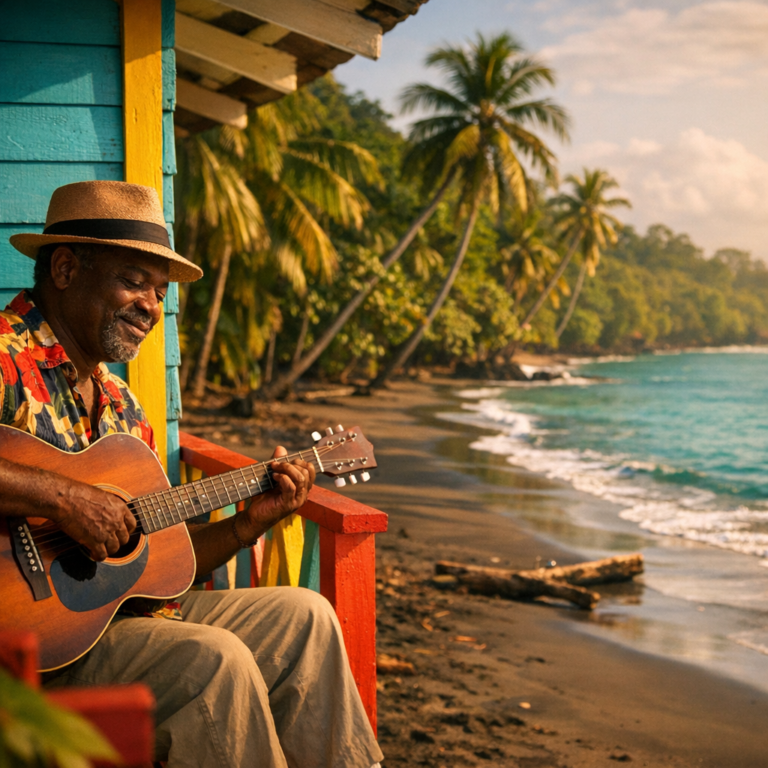
There is a moment that happens on your first evening in Cape Verde — sitting at a beachfront table as the sun drops into the Atlantic, a glass of grogue in hand, a guitar and a violin somewhere nearby working through a slow, aching melody — when the geography of your own imagination starts to reorganize itself. This is Africa. You can feel it in the rhythm, in the warmth of the people, in the faces around you. But it also sounds like Havana. It looks a little like Bahia. It carries the same salt-worn, colorful, hard-won melancholy as a fishing village in the Azores.
That's because Cape Verde — Cabo Verde, in Portuguese and in Kriolu — is genuinely all of those things at once. Ten volcanic islands scattered off the coast of Senegal, uninhabited until Portuguese sailors arrived in the 1460s and began bringing enslaved Africans from the nearby coast to work the land, Cape Verde became the first true Creole society in the Atlantic world — centuries before New Orleans, before Havana, before Salvador de Bahia. Everything about Cape Verdean identity, from its language to its food to its music, is the product of that collision. For Black travelers looking for a destination that sits at the literal crossroads of the African and Caribbean diasporas, there may be no more compelling one-stop lesson anywhere in the Atlantic.
Why Black Travelers Are Discovering Cape Verde
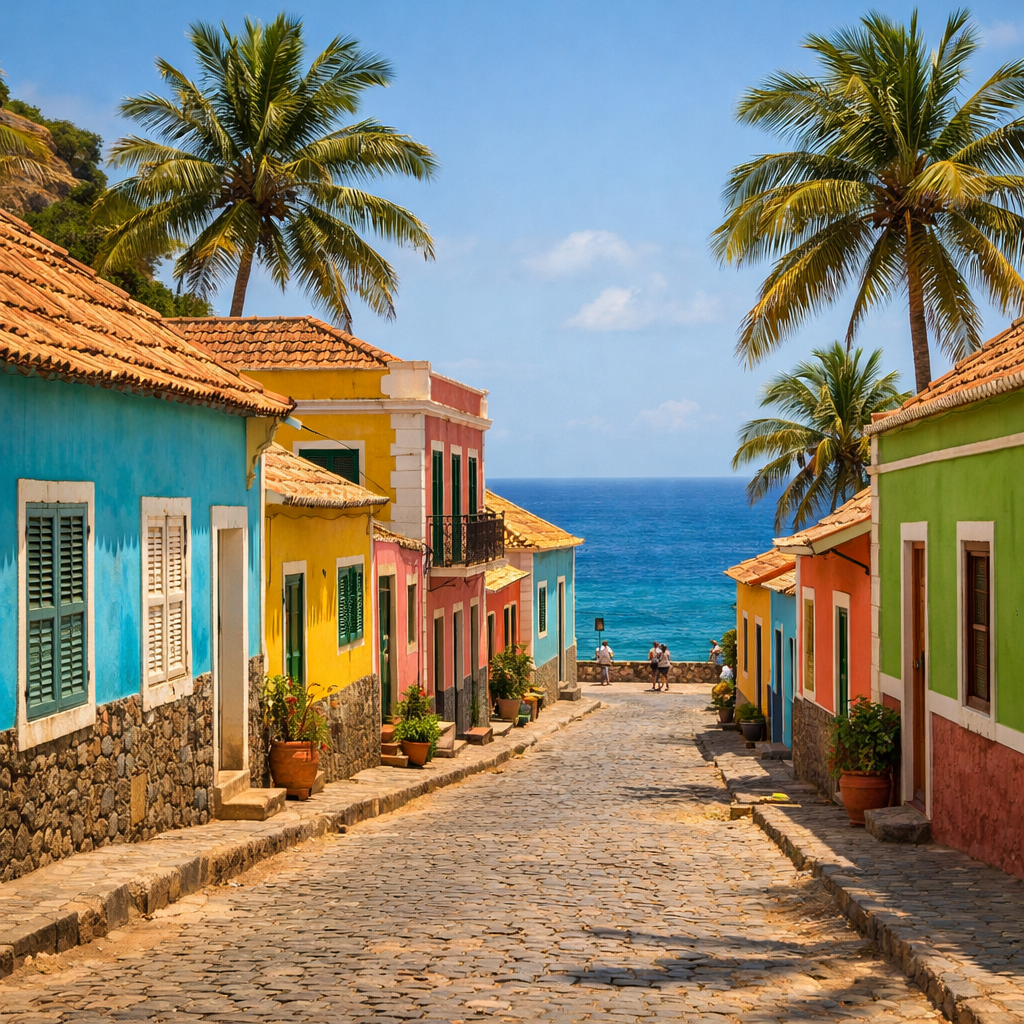
Cape Verde has spent the last decade quietly building the infrastructure of an easy, welcoming destination while holding onto something that beach destinations often lose: a real, unhurried, unmistakably African-Atlantic identity. Sal Island's resort strip gives travelers the turquoise water and all-inclusive convenience of the Caribbean. Santiago Island, an hour's flight away, gives them cobblestone colonial streets, mountain villages, and some of the most important early Atlantic history anywhere in the world. Both are wrapped in a culture — Kriolu — that feels like a missing link between the West Africa most diaspora travelers already know and the Caribbean and Creole America many trace their own roots back to.
It also happens to be remarkably easy to get to and move through, which matters. Cape Verde does not require the visa gymnastics of some African destinations, has direct European gateway connections, and — as you'll see below — a real and current New England connection worth understanding clearly before you book.
Cidade Velha: The First Colonial Town in the Tropics
Twenty minutes outside Praia, the capital of Santiago Island, sits a small town that rarely makes anyone's Africa bucket list and absolutely should. Cidade Velha was founded in 1462 by Portuguese traders led by António da Noli, making it — by the consensus of historians and by UNESCO's own designation — the first European colonial settlement built anywhere in the tropics, predating similar towns in the Americas by decades. UNESCO inscribed Cidade Velha as a World Heritage Site in 2009, citing its remarkably preserved original layout: a royal fortress (Fortaleza Real de São Filipe) looming on the hillside above, two of the oldest churches built by Europeans outside Europe, and a 16th-century town square, the Pelourinho, anchored by a stone whipping post that stands as one of the most sobering physical monuments to the transatlantic slave trade still standing anywhere.
This is not a polished, curated historical site. It is a living fishing town where children play football in the same square where enslaved Africans were once processed and sold before continuing on to Brazil and the Americas. Walking Cidade Velha's streets is walking through the actual hinge point of the Atlantic world — the place where West African, Portuguese, and eventually American and Caribbean history all first began to braid together. For diaspora travelers who have visited Ghana's Cape Coast or Elmina, Cidade Velha offers something different but equally essential: not a departure point, but a foundation point — the earliest proof of what the Atlantic slave trade would become.
Kriolu Culture and the Sound of Morna
Everything distinctive about Cape Verde flows from one fact: it had no Indigenous population before Portuguese colonization. Every Cape Verdean is descended from some mixture of Portuguese settlers and enslaved West Africans, mostly brought from the nearby Senegambia and Guinea coasts starting in the late 1400s. Out of that forced mixing came Kriolu — both a language (a Portuguese-based creole with deep West African grammatical bones) and an entire cultural identity that is neither fully European nor fully West African, but something singular.
The clearest expression of Kriolu soul is morna, Cape Verde's national music — a slow, deeply melancholic genre built on themes of longing, distance, and sodade (a word close to but deeper than the Portuguese saudade, roughly "the ache of separation and longing for home"). Morna's exact origins are debated, but oral tradition places its earliest form on Boa Vista Island in the 1700s, evolving from Brazilian-influenced lundum rhythms merged with plaintive local songs. The earliest documented morna, "Brada Maria," dates to around 1870. The genre found its poetic voice through Brava Island composer Eugénio Tavares in the early 1900s and its harmonic richness through São Vicente composer Francisco Xavier da Cruz (known as B.Léza) in the 1930s and '40s.
But morna's global ambassador — and the reason most of the world has heard it at all — was Cesária Évora. Born in the port city of Mindelo in 1941, Évora sang in local bars from age sixteen, endured a decades-long "dark years" retirement from poverty, and returned to performing in 1985, famously always barefoot, earning her the nickname "the Barefoot Diva." Her 1992 album Miss Perfumado and 1995 follow-up Cesária made her an international sensation; she won a Grammy in 2004 for Voz d'Amor, received France's Legion of Honour, and toured the world until her death in 2011. In December 2019, UNESCO formally recognized morna as an Intangible Cultural Heritage of Humanity — official global confirmation of what Évora had already proven on stages from Paris to New York: that this small island nation's music belongs to the world.
Sal vs. Santiago: Which Island Is Right for You
Sal Island is Cape Verde's resort engine — flat, dry, and built almost entirely around the beach town of Santa Maria, where European package tourists have vacationed for two decades. Expect all-inclusive resorts, kitesurfing schools, powder-white beaches, and a very easy, low-effort holiday. It's the right choice if you want turquoise water and zero logistical friction.
Santiago Island is the cultural and historical heart of the country — home to Praia (the capital), Cidade Velha, and the mountainous interior villages where Kriolu culture, morna, and Cape Verdean cuisine feel least filtered for tourists. It's the right choice if you want the version of Cape Verde that explains where the country actually came from. Many travelers do both: a few beach days on Sal, a short domestic flight to Santiago for history and culture, splitting the trip roughly 60/40.
Getting There: The Real 2026 Flight Situation
Because of the deep, generations-old Cape Verdean diaspora community in Massachusetts and Rhode Island — Cape Verdeans have been migrating to New England since the whaling era of the 1840s — there's a persistent assumption that you can fly nonstop from Boston to Cape Verde. Here's the verified, current picture: Cabo Verde Airlines (formerly TACV) did fly Boston Logan Airport directly for roughly thirty years, from 1985 until 2015. In June 2015, that route was discontinued and replaced with service to T.F. Green International Airport in Providence, Rhode Island — still very much the New England / Greater Boston diaspora gateway, just from a different regional airport about an hour south of downtown Boston. That Providence route has seen its own interruptions, and as of 2026 Cabo Verde Airlines' published schedule confirms Providence service is active, making it the airline's primary US gateway alongside seasonal routes to Brazil.
For most Black travelers coming from outside New England, the realistic routing to Sal or Santiago is a one-stop connection through a European hub — Lisbon on TAP Air Portugal is the most common and reliable option, with additional seasonal charter and low-cost connections (easyJet, TUI, Neos) into Sal from other European cities. Bottom line: don't book a trip assuming a Boston nonstop exists today — check Cabo Verde Airlines' current Providence schedule if you're New England-based, and otherwise plan on a Lisbon connection.
Visa Requirements for US Travelers
The good news: Cape Verde is genuinely easy on paperwork. Since a broad visa-waiver expansion that took effect in 2019 and 2020, U.S. passport holders can enter Cape Verde for tourism without a visa for stays of up to 30 days, provided your passport is valid at least six months beyond your travel dates. If you plan to stay longer, Cape Verde offers a single-entry visa valid for up to 90 days or a five-year multiple-entry visa, both obtainable in advance or, in many cases, on arrival. All visitors are required to complete a simple online pre-arrival registration (best done a few days ahead) and pay a small airport security fee. No separate tourist visa application is needed for a standard one-to-three-week trip — genuinely one of the lowest-friction entry processes anywhere on the continent.
Getting Around
Inter-island travel runs on a small network of domestic flights (Sal to Santiago is under an hour) and slower, cheaper ferries between the closer islands. On Sal, most visitors rely on resort transfers, taxis, and rental cars for day trips beyond Santa Maria. On Santiago, rental cars give the most freedom for reaching Cidade Velha and the mountain villages of the interior, though shared minivans (aluguers) connect Praia to most towns cheaply if you're comfortable with a little unpredictability.
Where to Eat — Must Try
Cachupa — Cape Verde's national dish, a slow-cooked stew of hominy corn, beans, and whatever meat or fish is on hand. Order it "rica" (the fuller version with more meat) for dinner, or ask for leftover cachupa fried with an egg on top for breakfast — a local ritual worth adopting.
Pastel com Diabo Dentro — "Pastry with the devil inside," Sal's signature fried pastry stuffed with spiced tuna, tomato, and onion. Sold at beach kiosks across Santa Maria.
Lagosta (Cape Verdean lobster) — Simply grilled and inexpensive by international standards, best eaten dockside in Santa Maria or Praia's fishing harbor.
Grogue — Cape Verde's fiery sugarcane spirit, distilled locally on Santiago and Santo Antão. Try it mixed into a ponche with honey and lime before dismissing it as too strong.
Xerém — A cornmeal porridge similar to polenta, usually served with fish or sausage, and one of the clearest culinary echoes of both West African and Brazilian cooking traditions.
Where to Stay
Sal (Santa Maria): Large European-operated all-inclusive resorts dominate the beachfront — expect polished, reliable, low-effort stays aimed at package tourists, with rates ranging widely by season.
Santiago (Praia): Smaller boutique hotels and guesthouses cluster around the Plateau, the historic colonial center, putting you walking distance from museums, restaurants, and the ferry/flight connections to Cidade Velha.
Budget option: Guesthouses (residencials) in both Santa Maria and Praia offer clean, simple rooms from roughly $30–50 a night — a strong option for travelers splitting time between islands.
🏨 Book Cape Verde Hotels →Best Time to Visit
November through June is Cape Verde's dry season and the best overall window — sunny, breezy, and comfortable, with temperatures typically in the 75–85°F range. July through October brings more heat and the small chance of tropical weather systems tracking nearby in the Atlantic. Kitesurfers specifically target the windier months of late spring through summer on Sal, so check conditions if that's your focus.
Budget Guide
Budget: $60–90/day — guesthouse, local cachupa and grilled-fish meals, shared minivan transport.
Mid-range: $120–200/day — boutique hotel or 3-star resort, restaurant dining, rental car or organized day trips.
Luxury: $250–400+/day — all-inclusive beach resort on Sal, private tours, premium dining.
BTN Insider Tips
Learn a handful of Kriolu phrases before you go. "Obrigadu" (thank you) and "Tudu dretu?" (everything good?) will earn you genuine warmth — Kriolu, not Portuguese, is the language of daily life.
Complete your online pre-arrival registration before you fly. It's quick, but doing it at the airport under time pressure is avoidable stress.
Bring cash in small denominations. Cape Verdean escudos are needed for grogue stalls, aluguer rides, and small guesthouses that don't take cards.
If you can only do one island pairing, do Sal and Santiago. It's the clearest way to experience both the resort ease and the cultural depth in a single trip.
Seek out live morna before you leave. Mindelo (São Vicente) is the genre's spiritual home, but small bars in Praia and Santa Maria regularly host live performances — ask your guesthouse host rather than relying on posted schedules.
Is Cape Verde Safe for Black Travelers?
Cape Verde is consistently ranked among the most politically stable and lowest-crime nations in Africa, with a long, uninterrupted democratic history since independence from Portugal in 1975. Petty theft targeting tourists exists in busier areas of Sal and Praia, as it does anywhere with a resort economy, but violent crime against visitors is rare. Black travelers — including the many Cape Verdean-Americans who return each year to visit family — consistently describe the islands as warm, welcoming, and free of the racialized friction sometimes reported at destinations with less diaspora familiarity.
Book Your Cape Verde Trip
Cape Verde doesn't ask you to choose between Africa and the Caribbean — it insists they were never really separate. Between Cidade Velha's five-hundred-year-old streets and the ache of a morna melody drifting across a Sal beach bar, this is a destination built entirely out of the same Atlantic story that shaped the diaspora itself.
✈️ Book Your Cape Verde Trip Now →*Affiliate links — BTN may earn a commission at no extra cost to you.