A Ferry Ride Away From One of the Heaviest Places on Earth
Cape Town will try to seduce you the moment you land. Table Mountain rises flat-topped and impossible over the city bowl. The Atlantic throws itself against beaches the color of bone. Vineyards climb the hills forty-five minutes inland. It is, by any measure, one of the most beautiful cities on the planet.
And then you take the ferry.
Thirty minutes off the V&A Waterfront sits Robben Island, a flat, windswept slab of limestone where South Africa imprisoned the men it feared most. Nelson Mandela spent 18 of his 27 years in prison here, entering in 1964 as prisoner number 466/64 — the 466th prisoner admitted to the island that year. For 13 of those years he broke limestone in a quarry under a glare so brutal it permanently damaged his eyes. He was released in February 1990 and became South Africa's first democratically elected president four years later. Robben Island was inscribed as a UNESCO World Heritage Site in 1999, recognized as a place that testifies to "the triumph of the human spirit over enormous hardship."
That is the pairing that makes Cape Town singular for Black travelers: a city where you can watch the sunset from a wine estate on Friday and stand inside Nelson Mandela's cell on Saturday morning. Neither cancels the other out. Both are true at once, and BTN thinks you should experience both — with the gravity the second one deserves.
Robben Island — The Ferry, the Cell, the Guides Who Lived It
The Robben Island Museum tour begins at the Nelson Mandela Gateway at the V&A Waterfront, where ferries typically depart at 9:00am, 11:00am, 1:00pm, and 3:00pm. The crossing takes about 30 minutes each way, and the full experience — ferry plus guided tour — runs roughly 3.5 to 4 hours. Tickets sell out, especially in peak season, so book several weeks ahead through the official Robben Island Museum channels rather than showing up at the dock.
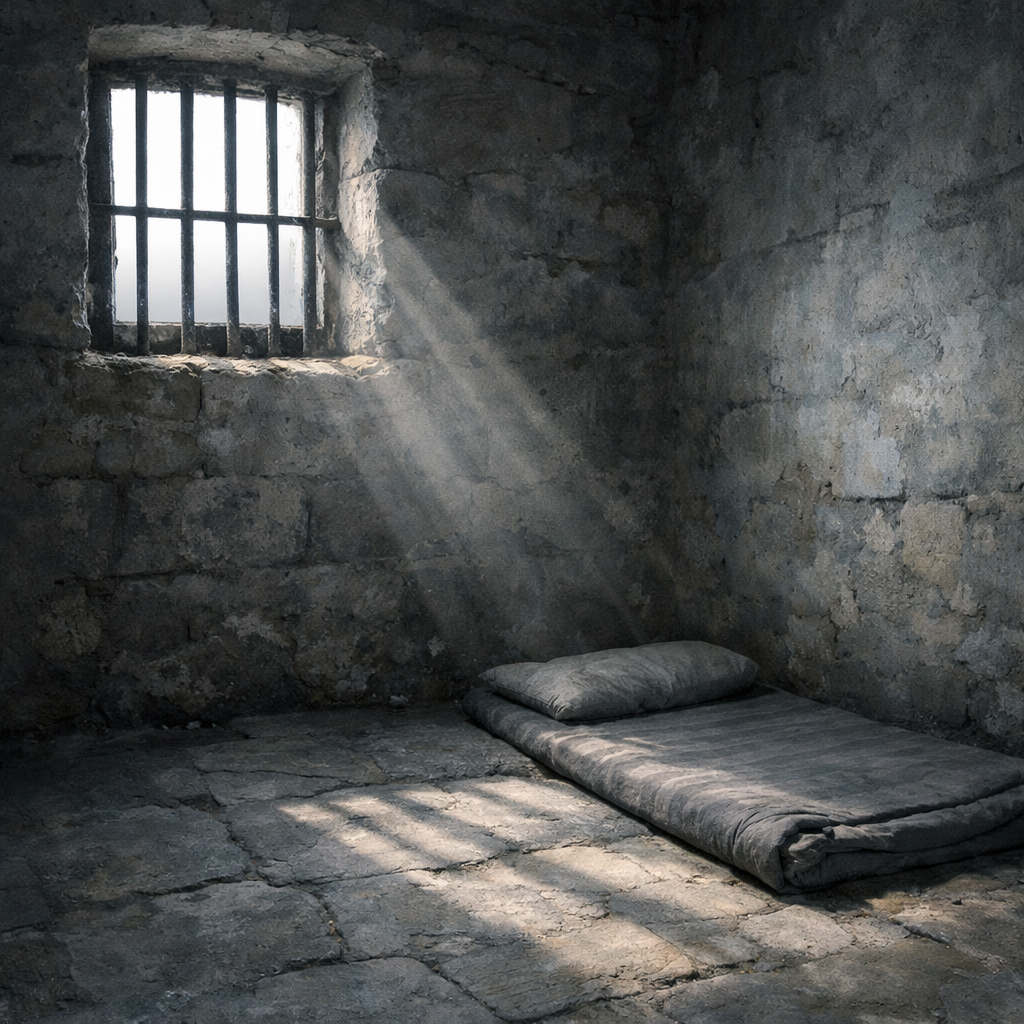
On the island, a bus tour circles the wider site — the lime quarry, the leper graveyard, the village where prison staff once lived — before a walking tour takes you into the maximum-security prison itself. The most powerful detail of the entire experience is who leads you through it: many of the guides are former political prisoners themselves, men who were incarcerated on the very grounds they now narrate. Standing in front of Mandela's cell — a stone room barely large enough to lie down in, lit by one small barred window — while someone who served time there describes it firsthand is not a typical museum experience. It is oral history delivered at the source.
Go in with the right posture: this is not a photo-op destination, it's a memorial. Dress respectfully, keep phones down during the parts of the tour focused on personal testimony, and give yourself the full afternoon rather than squeezing it between other plans.
South Africa's New ETA — What It Actually Means for US Travelers Right Now
South Africa has been rolling out a new Electronic Travel Authorisation (ETA) system, and it's understandably causing confusion for travelers planning 2026 trips. Here's the state of it as of this writing: the ETA launched in phases starting in late 2025, first for delegates and then general travelers from China, India, Indonesia, and Mexico. The government has said it intends to eventually expand the ETA to all nationalities and all entry points, but as of now it has not confirmed an exact date for that broader rollout — and US citizens are not yet included.
Practically, that means American passport holders can currently still enter South Africa visa-free for stays of up to 90 days, the same as before, provided your passport has at least 30 days of validity remaining beyond your departure date and at least two consecutive blank visa pages. That said, this is a genuinely moving target — South Africa has explicitly signaled the ETA is headed toward universal application. BTN's advice: check the official portal (eta.dha.gov.za) and the South African embassy site 30-60 days before you fly, every single time, even if you've traveled to Cape Town before. If and when the ETA does expand to US travelers, expect an online application, a biometric selfie, a processing window of about 24 hours, and a non-refundable fee — budget the time and the paperwork into your trip planning rather than assuming visa-free entry will always apply.
District Six Museum — Remembering a Neighborhood That Was Erased
Before you leave the CBD, go to the District Six Museum. District Six was a densely packed, multiracial, working-class neighborhood near the city center — musicians, dockworkers, traders, families who'd lived there for generations. Under apartheid's forced-removal policies, roughly 60,000 residents were displaced starting in the 1970s, their homes bulldozed, the land left largely vacant for decades as a scar in the middle of the city.
The museum, founded in 1994, is built around memory as resistance: a massive floor map of the old streets where former residents have hand-written notes marking exactly where their houses stood, alongside recovered street signs, family photographs, and oral histories. It's a quieter, more intimate grief than Robben Island's — the loss of an entire community's geography — and it rounds out the Robben Island visit by showing that apartheid's damage wasn't confined to political prisoners. It reached into ordinary neighborhoods and ordinary lives.
Bo-Kaap — Color, Cape Malay Heritage, and a Neighborhood Still Fighting to Stay Itself
Walk fifteen minutes from the CBD and you'll hit Bo-Kaap, the cobblestoned hillside neighborhood of brightly painted houses that ends up on every Cape Town postcard. The color is real, but so is the history underneath it: Bo-Kaap was settled by the Cape Malay community, descendants of enslaved and exiled people brought from Southeast Asia and elsewhere by Dutch colonizers, and it remains one of the most historically significant Muslim communities in South Africa. The Bo-Kaap Museum preserves a 18th-century home showing how a working-class Cape Malay family actually lived. Visit respectfully — this is a residential neighborhood, not a theme park, and locals have pushed back hard against tourists treating their homes as a backdrop.
Township Tourism, Done the Right Way
Cape Town's townships — Langa, Gugulethu, Khayelitsha — were built by apartheid-era segregation and remain home to millions of Black South Africans today. Township tours exist, and they can be meaningful, but BTN's guidance is specific: skip the big generic bus tours that drive through, snap photos, and leave. Book with Black-owned, community-run operators — often founded and guided by people who grew up in the townships themselves — that visit local shebeens, artist studios, and family-run spaza shops, and that put your tourism dollars directly into the community rather than into a third-party tour conglomerate. Langa, South Africa's oldest township, has several resident-led walking tour operations that do this well. Ask who owns the tour company before you book, not just who's driving the van.
The Counterpoint — Beaches and Wine Country
Cape Town's beauty isn't a distraction from its history; it's the other half of the story. Camps Bay and Clifton's beaches sit beneath the Twelve Apostles mountain range and are as scenic as any coastline in the world. Forty-five minutes inland, the Cape Winelands around Stellenbosch and Franschhoek produce some of the Southern Hemisphere's best wine — and increasingly, Black-owned estates are part of that story. House of Mandela, founded by Nelson Mandela's daughter and granddaughter, M'hudi Family Wines (the first fully Black-owned wine tourism farm in South Africa), Aslina (founded by Ntsiki Biyela, the country's first Black female winemaker), and Seven Sisters (founded by seven sisters from a Paternoster fishing family) are all worth seeking out for a tasting itinerary that puts Black excellence at the center of the Winelands experience.
Safety Guidance
The US State Department currently rates South Africa a Level 2 advisory — exercise increased caution — citing crime as the primary concern. In Cape Town specifically: don't walk alone after dark, even short distances; take Uber or Bolt instead. Stay alert in the CBD, especially after sunset. Watch for smash-and-grab theft at intersections — keep doors locked and valuables out of sight. Never accept "help" at ATMs. Only visit townships with a reputable, established guide, not independently. None of this should scare you off — it should simply sharpen the same situational awareness any Black traveler already brings to unfamiliar cities, applied consistently.
Best Time to Visit
Cape Town's summer runs November through February, with long sunny days and temperatures from the high 60s into the 80s°F — this is peak season, busiest and priciest, especially over the New Year. March–April and September–October are BTN's sweet spot: fewer crowds, better rates, and (September–October especially) whale-watching season along the coast. Winter (May–August) is cooler and wetter but dramatically cheaper, with July–August doubling as prime whale season if you don't mind packing a jacket.
Getting There & Where to Stay
Most US travelers reach Cape Town International Airport (CPT) via a connection through Johannesburg, Doha, Amsterdam, or London; total travel time typically runs 18-22 hours. United Airlines has previously operated the only nonstop US route (Newark–Cape Town), though schedules shift, so check current routing when you book. Budget travelers can find solid guesthouses in Sea Point and Observatory from $50-90/night; mid-range travelers should look at boutique hotels in the City Bowl or Waterfront from $150-250/night; luxury travelers have their pick of properties overlooking Camps Bay or the Winelands from $400+/night.
🏨 Book Cape Town Hotels →BTN Insider Tips
Book Robben Island ferry tickets the moment your dates are set. This is the single most likely thing to sell out on your entire trip.
Get an eSIM before you land. Reliable data makes Uber, maps, and load-shedding schedule apps work seamlessly.
Check ETA requirements again right before you fly, even if you checked months earlier — this system is actively expanding.
Choose your township tour operator as carefully as you'd choose a history teacher. Ask who owns it. Community-run beats corporate every time.
Pack a light jacket even in summer. Cape Town's wind and evening temperature drops surprise a lot of first-time visitors.
Book Your Cape Town Trip
Cape Town asks more of you than most beach destinations — it asks you to hold beauty and history in the same hand. Do both. Ferry out to Robben Island and let the history land fully. Then go taste the Winelands, walk Bo-Kaap, and watch the sun drop behind the Atlantic. That's the whole trip.
✈️ Find Cape Town Flights →*Affiliate links — BTN may earn a commission at no extra cost to you, including on Robben Island ferry ticket bookings and South Africa ETA registration services referenced above.