A Carnival Born From a Community That Refused to Be Invisible
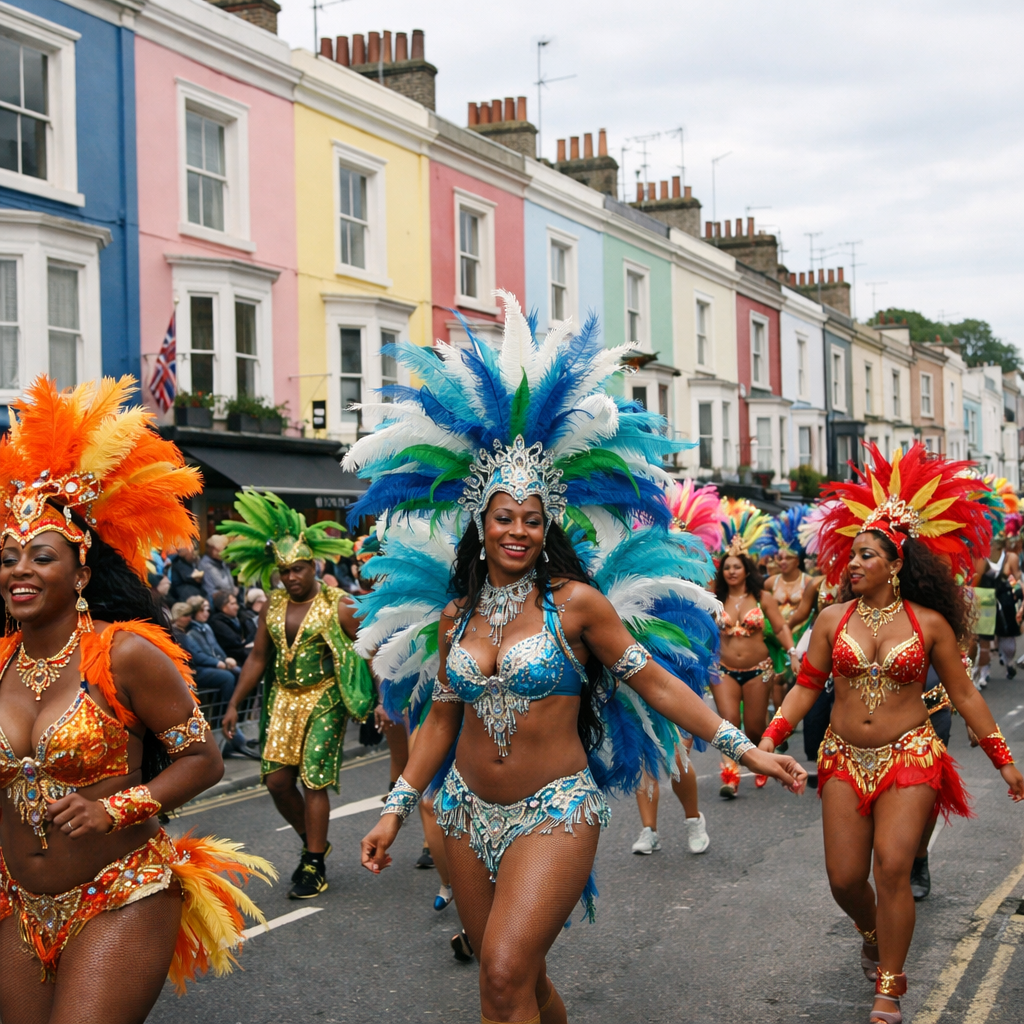
Bristol is not the first city Americans think of when they picture a Caribbean carnival in Britain — that's usually Notting Hill, with its two-million-strong August bank holiday takeover of West London. But nearly 120 miles west, in the St Pauls neighborhood of Bristol, a smaller and in many ways more intimate carnival tradition has been telling its own version of the same story since 1968: that Black Britain's Caribbean communities built joy, culture, and visibility in cities that often didn't want them there, and carnival was — and is — the proof of it.
This piece covers that story: St Pauls Carnival's Windrush-generation roots, its place in a city now openly wrestling with its slave-trading history, and an honest, up-to-date look at what the carnival actually looks like right now — because the picture on the ground in 2026 is more complicated than a typical festival guide lets on. If it's the sheer scale of a UK Caribbean carnival weekend you're after, BTN's Notting Hill Carnival guide covers Europe's biggest version of this celebration. St Pauls is a different, smaller, more neighborhood-rooted animal — and worth understanding on its own terms.
1968: A Neighborhood Carnival With Windrush Roots
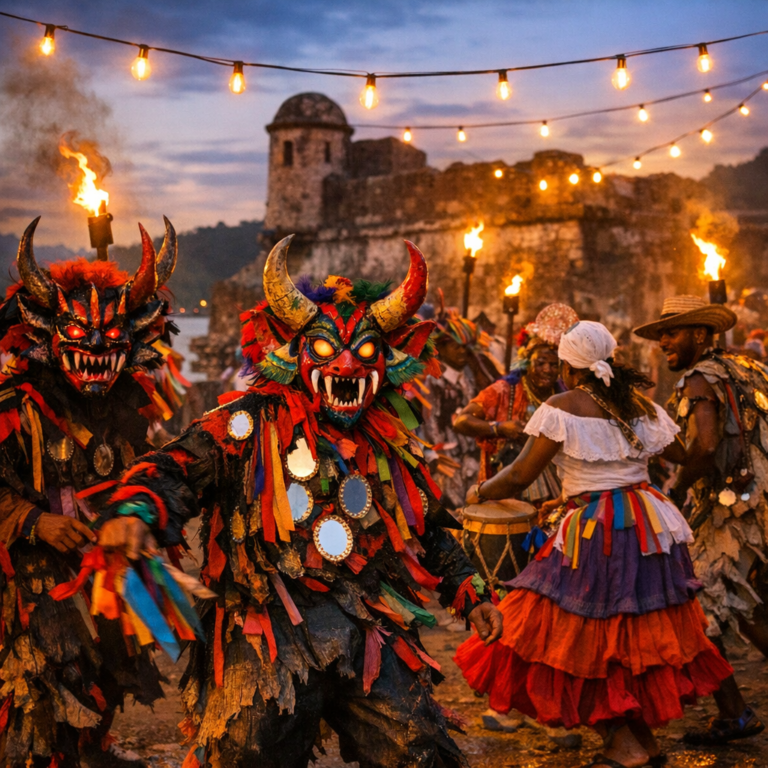
St Pauls Carnival traces its founding to 1968, when Bristol's growing African-Caribbean community — many of them part of the Windrush generation who had emigrated from Jamaica, Trinidad, Barbados, and elsewhere in the Caribbean from the late 1940s onward to help rebuild postwar Britain — organized a celebration of their culture in the St Pauls neighborhood where many had settled. Like Notting Hill's carnival tradition up in London, St Pauls Carnival grew out of a community that had been recruited to Britain, given some of the country's worst housing and least welcoming reception, and responded not with retreat but with culture: music, costume, food, and a street procession that said, unmistakably, we are here.
Over the decades that followed, St Pauls Carnival grew into one of Europe's longest-running African-Caribbean carnivals, built around a parade of mas bands and sound systems moving through the St Pauls streets, alongside reggae, soca, and dub soundsystems, Caribbean food stalls, and a strong community arts and education programme that runs year-round, not just on carnival day. Bristol's St Pauls neighborhood itself — a compact inner-city district just north of the city centre — has been the heart of Bristol's Black British community for generations, and the carnival has long functioned as both a celebration and a form of neighborhood self-determination: a day the community shaped and owned entirely on its own terms.
Why It Matters: Culture, Visibility, and a City's Reckoning
St Pauls Carnival isn't simply an annual party — it's one of the clearest public expressions of Bristol's African-Caribbean heritage, in a city whose relationship with that heritage is genuinely fraught. Bristol grew rich in the 17th and 18th centuries substantially on the back of the transatlantic slave trade; its merchants and shipowners built the city's grand Georgian architecture on profits from human trafficking, and that history sat largely unacknowledged in the city's civic self-image for a very long time. St Pauls Carnival, and the Caribbean-British community that built it, represent something like a counter-narrative running through the same streets — proof that the descendants of people the transatlantic slave trade and later colonial exploitation displaced built vibrant, self-organized cultural institutions in the very city that profited from that displacement.
That tension between Bristol's slave-trade wealth and its Black British communities came to a head in a way the whole world watched, just a few miles from St Pauls.
Edward Colston: The Statue That Went Into the Harbour
In June 2020, during the global wave of Black Lives Matter protests following the murder of George Floyd, Bristol protesters pulled down the bronze statue of Edward Colston — a 17th-century Bristol merchant and slave trader whose Royal African Company transported an estimated 84,000 enslaved African people, of whom roughly 19,000 died during the Middle Passage. Colston had spent much of his fortune on Bristol charities and civic buildings, and for more than a century afterward the city had honored him with statues, street names, and buildings, largely omitting the human cost of that fortune from the story it told about him. On June 7, 2020, protesters toppled his statue from its plinth, rolled it through the streets, and threw it into Bristol Harbour, the same water that once carried ships in the slave trade Colston profited from.
The statue was retrieved from the harbour days later by Bristol City Council and, after conservation work, went on public display at M Shed, Bristol's museum of the city's history on the harbourside, starting in June 2021. Crucially, M Shed displays the statue exactly as it came out of the harbour — still splashed with protest paint, still dented from its fall — rather than restored to its original condition. The museum has been explicit that this is meant as "the start of a conversation, not a complete exhibition," pairing the statue with the toppled placard signage from the protest itself and material examining Bristol's slave-trade history and the debate the toppling reignited about how — and whether — Britain memorializes people like Colston. As of the most recent confirmable reporting, a new plaque was installed on Colston's now-empty city-centre plinth in 2025, notably dropping the old inscription's description of Colston as a civic benefactor and adding language acknowledging his role in the slave trade — an update that shows this reckoning is still actively unfolding rather than settled.
For visitors coming to Bristol around carnival time, M Shed is a genuinely essential stop — free entry, walkable from the harbourside, and a far more honest starting point for understanding the city than its Georgian streetscapes alone.
Be Honest With Yourself About Carnival's Current Scale — Here's What We Could Confirm
Here's the part a lot of travel guides gloss over, and we're not going to: St Pauls Carnival's on-street celebration has been significantly reduced in recent years, and as of when this was written, there is no confirmed large-scale, organized street carnival for 2026. St Pauls Carnival CIC, the organization behind the event, stated plainly that it was unable to produce on-street activities in 2025, and instead worked to support community members organizing their own smaller, independent celebrations (including guidance on Temporary Event Notice applications for local traders and artists who wanted to mark carnival day themselves). Public communications from the organization in 2026 have focused on rebuilding — including language about "building towards Carnival 2027 and beyond" — alongside community programming like a basketball tournament, rather than announcing a full parade for this year.
What has continued uninterrupted is St Pauls Carnival's year-round education and community arts programme, which keeps African-Caribbean arts and culture visible in Bristol even in years without a full street carnival.
Our honest recommendation: if a full-scale St Pauls Carnival street parade is the reason you're planning a trip to Bristol, check the official St Pauls Carnival website and social channels directly before booking flights or hotels. Do not assume a specific date or format based on past years or on this article — the organization's own public statements make clear the event is in a rebuilding phase, and the shape of any given year's celebration (or absence of one) can change close to the date. If you're set on experiencing a full-scale UK Caribbean carnival weekend with certainty, Notting Hill Carnival in London (late August bank holiday weekend) is currently running at full scale — see BTN's Notting Hill guide for that trip. Bristol is still absolutely worth visiting for its Black British history, food, and community — just go in with accurate expectations about carnival day itself.
What's Worth Your Time in St Pauls and Bristol Year-Round
Even outside carnival season, St Pauls and central Bristol reward a visit grounded in Black British history and culture:
- M Shed Museum — the Colston statue display and Bristol's broader slave-trade and maritime history exhibits, free entry, harbourside location.
- St Pauls neighborhood itself — walk Grosvenor Road and the surrounding streets to get a feel for the community that built the carnival; look out for murals and community arts spaces tied to the carnival's education programme.
- Bristol Harbourside — the historic docks tied directly to the transatlantic slave trade, now a mix of museums, restaurants, and public art, including works addressing the city's history head-on.
- Caribbean and soul food spots around St Pauls and Easton — jerk chicken, patties, rice and peas, and Caribbean bakeries reflecting the neighborhood's decades-deep Caribbean-British food culture.
Getting There and Around
Bristol doesn't have direct flights from the US — fly into London Heathrow (LHR) or Gatwick (LGW), then connect via a short domestic flight to Bristol Airport (BRS), or take the train from London Paddington to Bristol Temple Meads (roughly 1 hour 45 minutes by direct rail). The train is often the more convenient option given Bristol Airport's limited connections and the reliability of GWR's London-Bristol rail line. Once in Bristol, the city centre and St Pauls are compact enough to navigate on foot or by local bus; St Pauls itself sits just a 15–20 minute walk north of the city centre and harbourside.
✈️ Find Flights to Bristol/London →Visa & Entry: What US Citizens Need to Know
US citizens do not need a visa for UK tourism stays of up to six months, but as of 2026 you do need a UK Electronic Travel Authorisation (ETA) before you travel — this applies to Bristol exactly as it does to London or anywhere else in the UK, and it's checked at boarding, not just at the border. Apply online through the official gov.uk ETA page or the UK ETA app; it costs £20, is typically approved within minutes (though the Home Office recommends applying at least three working days ahead), and once granted is valid for two years or until your passport expires, covering unlimited trips of up to six months each. Only apply through the official gov.uk site or app — third-party sites frequently charge inflated fees for the same government form.
Where to Stay
Boutique/Mid-Range: Bristol's harbourside and Clifton neighborhoods offer well-reviewed boutique hotels within easy reach of both St Pauls and M Shed — look for properties around the Harbourside or Old City for the best balance of walkability and comfort.
Budget: Chain hotels and serviced apartments around Temple Meads station offer good value and put you a short walk or bus ride from both the harbourside and St Pauls.
🏨 Book Bristol Hotels →Budget Guide
Starting from: roughly $750 for round-trip flights into London plus rail to Bristol and 2 nights' accommodation — a workable long-weekend budget outside of any major event surge pricing.
Budget: $100–140/day — budget hotel or serviced apartment, casual Caribbean and pub food, rail and bus travel, mostly free museums.
Mid-range: $150–230/day — boutique hotel, sit-down dining, day trips around the Southwest of England.
Luxury: $300+/day — upscale harbourside hotel, private transport, fine dining.
BTN Insider Tips
Confirm the current year's carnival status directly with organizers before booking. Do not rely on past-year dates or general festival calendars — check St Pauls Carnival's official website and social channels for the latest word on format and scheduling.
Get travel insurance that covers event cancellation or rescheduling. Given the carnival's current rebuilding phase, a policy that protects your trip cost if plans on the ground change is a smart add for this particular trip.
Visit M Shed regardless of carnival timing. The Colston statue exhibit and Bristol's slave-trade history galleries are worth the trip on their own, any time of year.
Sort your UK ETA well before you fly — it's mandatory for US citizens and checked at boarding, not something you can sort out on arrival.
Bristol pairs naturally with a London trip — the direct rail connection makes it an easy add-on to a longer UK itinerary, especially if Notting Hill Carnival is also on your radar for late August.
Is Bristol Safe for Black Travelers?
Bristol is generally a safe, walkable city with a large, established Black British community, particularly in and around St Pauls and Easton. As with any UK city, use standard precautions with belongings in crowds and at night. Bristol's public reckoning with its slave-trade history — imperfect and ongoing as it is — reflects a city more willing than many to confront that past directly, which many Black travelers find makes for a more honest visit than cities that haven't done that work.
Mark Your Calendar
- Early July (historically) — St Pauls Carnival's traditional slot on the calendar in fuller years; confirm current-year status before planning around this date
- Year-round — St Pauls Carnival's community education and arts programme
- Year-round — M Shed's Colston statue and Bristol slave-trade history exhibits
Book Your Bristol Trip
St Pauls Carnival's story — a Windrush-generation community that built its own celebration in a city built partly on their ancestors' exploitation — matters whether or not a full parade happens this year. Come for the history, the food, and the neighborhood; check the official channels for exactly what carnival day looks like when you land.
✈️ Book Your Bristol Trip Now →*Affiliate links — BTN may earn a commission at no extra cost to you.