A Church Built From Faith, Preserved as a Museum of Memory
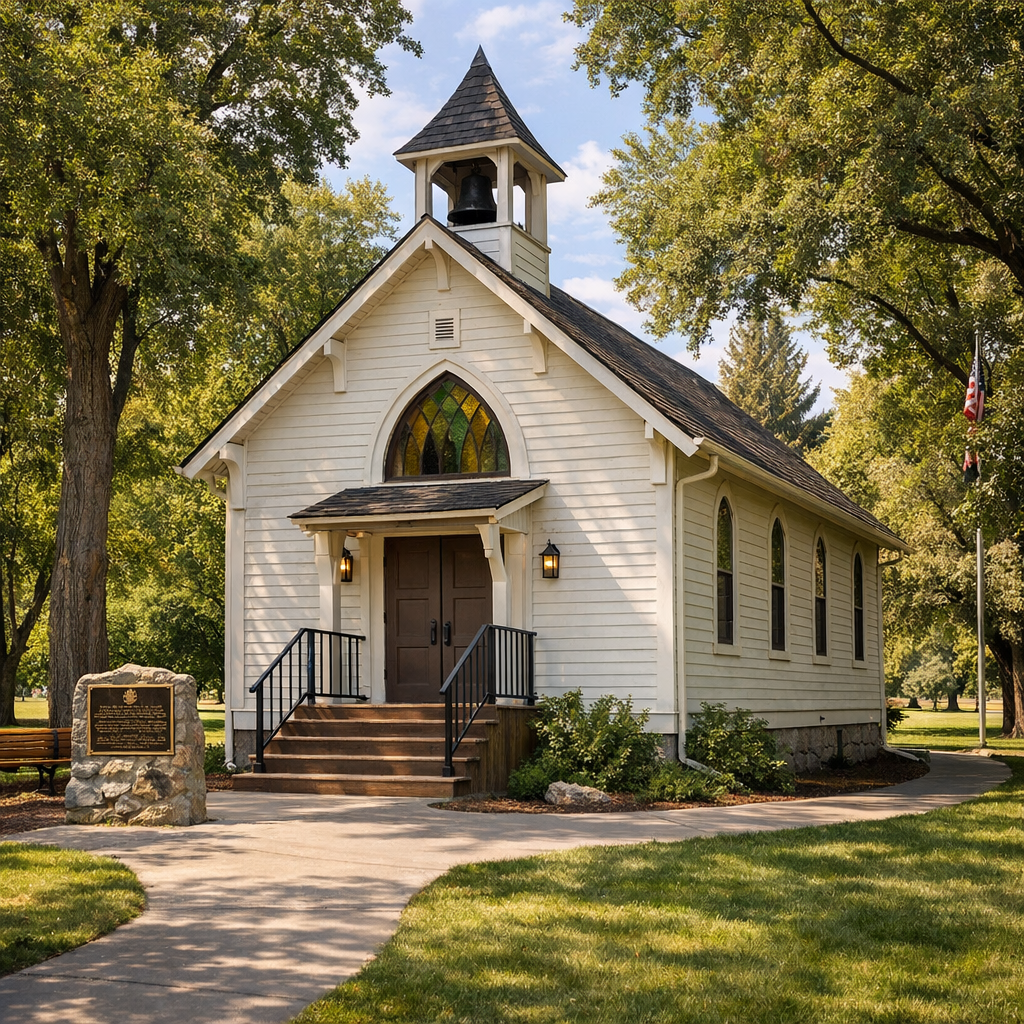
Tucked at the edge of Julia Davis Park in downtown Boise sits a small, white wood-frame building with an arched stained-glass window and a modest bell tower. It looks, at a glance, like exactly what it once was: a neighborhood church. Look closer, and you'll find a stone marker near the entrance and a story that stretches back more than a century — one that makes this unassuming building one of the rarest historical sites in the entire Mountain West.
This is the Idaho Black History Museum, and it is believed to be the country's only Black history museum housed inside a former church building that was itself the first Black congregation in its state. For Black travelers charting a heritage trip through the Pacific Northwest and Mountain West — a region rarely associated with Black American history at all — Boise's little church-turned-museum is a quietly profound stop.
From Warm Springs Avenue to Julia Davis Park: The Church's Journey
The story starts in 1909, when Rev. William Riley Hardy founded St. Paul Baptist Church — Idaho's first Black church. At the time, Boise's Black community was small, having grown out of Idaho's mining-era migration and the arrival of Black railroad workers, cooks, and laborers in the decades after the Civil War. For years, the congregation met in members' homes, gathering wherever there was space and welcome.
In 1921, Rev. Hardy and his father-in-law built a permanent home for the congregation at the corner of Warm Springs Avenue and Broadway Avenue. The building they raised — modest, wood-framed, unmistakably a church — became the spiritual center of Black Boise for decades, a place for worship, organizing, and community life in a city and state where Black residents were often a visible minority navigating a largely white social landscape.
By the 1990s, the church building faced an uncertain future. Rather than let it be lost, a preservation effort took shape to save the structure and give it new purpose. In 1998, the church was carefully relocated from its original Warm Springs Avenue site to the outskirts of Julia Davis Park, Boise's central urban park along the Boise River — the site where it stands today as a museum rather than a working church. The relocation preserved not just a building, but a physical, walkable link to a chapter of Idaho history that has too often gone untold.
Cherie Buckner-Webb and a Daughter's Promise
The museum exists because of one woman's determination to honor her mother's vision. Cherie Buckner-Webb — who would go on to become Idaho's first Black state senator — established the preservation foundation in 1996, inspired directly by her mother, Mary Hardy Buckner, a descendant of the Hardy family that founded the church. Mary Hardy Buckner had long dreamed of seeing the church preserved as a place where Idaho's Black history could be taught rather than forgotten; Buckner-Webb turned that dream into an organized campaign.
The foundation Buckner-Webb built raised roughly $120,000 to fund the church's relocation and its conversion into a museum — a serious sum for a small community-driven nonprofit effort, and a testament to how many people, Black and white, Idahoan and beyond, believed the story deserved a permanent home. It is a distinctly grassroots preservation story: no large institutional backer, no state monument budget — just a family's memory, a community's fundraising, and a shared conviction that this history mattered enough to save brick by brick, pew by pew.
Today the Idaho Black History Museum operates as a small nonprofit, staffed largely by volunteers and sustained by donations, grants, and the kind of community goodwill that got the building moved in the first place.
Inside "The Invisible Idahoan: 200 Years of Blacks in Idaho"
The museum's permanent exhibit, "The Invisible Idahoan: 200 Years of Blacks in Idaho," was developed with the assistance of Dr. Mamie Oliver, the first African American professor at Boise State University. The exhibit's title is its thesis: Black Idahoans have been present, working, building, and organizing in the state for two centuries, even though their story rarely appears in the mainstream telling of Idaho history.
Inside, the exhibit traces the arc of that presence — from early Black pioneers, miners, and settlers who came west during Idaho's territorial and mining eras, through the Black cowboys, homesteaders, and railroad workers who helped build the state's infrastructure and economy, up through the twentieth century. It documents the civil rights era in Idaho specifically, including efforts by the Ku Klux Klan to intimidate and suppress the state's small Black population — a difficult but essential piece of the record, since Idaho's Klan activity is not widely taught even within the state itself. The exhibit also honors community builders like the Hardy family and the generations of Black Idahoans who kept churches, businesses, and social organizations running in a state where their numbers were always small but their contributions were not.
What makes the exhibit resonate is its setting: you are not reading these stories in a glass-and-steel institutional museum, but inside the actual sanctuary where a Black congregation worshiped for most of the twentieth century. The pews, the light through the stained glass, the intimate scale of the room — all of it makes "invisible" history feel suddenly, physically present.
Planning Your Visit
Because the Idaho Black History Museum is a small, volunteer-run nonprofit, its open hours are seasonal, limited, and subject to change — this is not a large museum with daily staffed hours, and travelers should confirm before making the trip. As of our latest check directly with the museum, individual visitors are welcomed on a limited weekly schedule, with additional group and school visits available by appointment on other weekdays. Hours are seasonal and volunteer-run — call, email, or check the museum's own website (ibhm.org) for the current open day and time before you visit, since volunteer availability can shift these hours with little notice.
The museum is located at 508 E Julia Davis Drive, Boise, ID 83702, directly on the edge of Julia Davis Park. You can reach the museum by phone at (208) 789-2164 or by email at request.information@ibhm.org to confirm hours or arrange a group visit — a good idea if you're building a specific day around the stop.
Admission runs on a suggested-donation model typical of small community museums, generally in the modest $5–$10 range per visitor — confirm the current suggested amount when you call, since a nonprofit this size may adjust it seasonally. Whatever you're asked to give, consider giving a bit more; donations are what keep a museum like this open at all.
🏨 Book Boise Hotels →Pair It With Julia Davis Park
Because the museum sits right on the edge of Julia Davis Park, it pairs naturally into a half-day (or full-day) Boise itinerary. Julia Davis Park is home to Zoo Boise, the Boise Art Museum, the Idaho State Historical Museum, a rose garden, and paddleboat rentals on the park's small lagoon — plenty to fill out a visit before or after the museum, especially if you're traveling with family. The Boise River Greenbelt, a paved multi-use path that runs along the river through the park, makes it easy to walk or bike between attractions without needing a car once you've parked downtown.
Spring through fall is the ideal window for this pairing: the park is at its greenest, outdoor seating and paddleboats are available, and Boise's mild high-desert climate makes walking the Greenbelt genuinely pleasant. Winter visits are possible, but check both the museum's seasonal hours and the park's amenity schedule before planning a cold-weather trip.
Downtown Boise — with its Basque Block (home to one of the largest Basque communities outside Europe), farm-to-table restaurants, and walkable core — is a five-minute drive or a twenty-minute walk from the museum, making it easy to build out a full day of Boise history and culture around this one small building.
Getting There and Getting Around
Boise Airport (BOI) is served by direct flights from most major West Coast and Mountain West hub cities, and it sits just a ten-minute drive from the museum and Julia Davis Park. A rental car is the most practical way to see Boise if you're planning to combine this stop with a broader Idaho or Pacific Northwest heritage loop — Boise works well as an anchor city for exploring the wider Mountain West by car. Within the city itself, downtown Boise and Julia Davis Park are walkable and bikeable via the Greenbelt, so you won't need the car once you've arrived.
🚗 Find a Rental Car in Boise →Why This Stop Matters
It would be easy to drive past this small white church on the edge of Julia Davis Park and never know what it holds. That's exactly the point the museum's signature exhibit makes — Black Idahoans have always been here, building churches, raising families, and shaping the state, even when the wider narrative rendered them invisible. A single congregation's 1921 church building, saved by one family's determination and a community's fundraising, now stands as physical proof that this history survived.
For Black travelers building an off-the-beaten-path itinerary through places rarely featured in Black travel media — Idaho chief among them — the Idaho Black History Museum is a small stop with an outsized story. Bring a few dollars for the donation box, call ahead to confirm hours, and give yourself time to sit in the pews where Idaho's first Black church once gathered.
✈️ Plan Your Boise Trip Now →*Affiliate links — BTN may earn a commission at no extra cost to you.