A Community Older Than Most Nations
In the highlands of northern Ethiopia, for well over a thousand years, a community of Black Jews maintained a form of Judaism so isolated from the rest of the Jewish world that, for centuries, most other Jewish communities didn't know they existed. They called themselves Beta Israel — the House of Israel. Ethiopians who did not share their faith called them Falasha, a word meaning "exile" or "stranger," a label the community itself never chose and largely rejects today. Their own oral tradition traces their lineage to the Tribe of Dan, carried into Ethiopia in the era before the destruction of the First Temple. Archaeological evidence places a Jewish presence in the region as early as 600 BCE, with inscriptions referencing Hebrew-speaking populations living among the Ethiopian highlands.
What makes Beta Israel remarkable is not just the antiquity of their presence in Ethiopia, but the isolation in which they preserved it. Cut off from Jerusalem, from the Babylonian and Jerusalem Talmuds, and from the rabbinic developments that shaped Judaism everywhere else in the world, Beta Israel practiced a form of the faith called Haymanot — a non-Talmudic Judaism built entirely on the Written Torah, observed with a discipline and devotion that outsiders, once they finally encountered it, found deeply moving. Their priests were called kessim rather than rabbis. Their calendar, their fasts, their dietary laws, and their monastic communities all developed independently, in parallel to the Judaism practiced everywhere else in the world, for well over a millennium.
Centuries of Persecution
That isolation was rarely peaceful. From the fifteenth through the seventeenth centuries, Ethiopian emperors waged repeated campaigns against Beta Israel. Emperor Yeshaq I decreed that any Ethiopian Jew who refused conversion to Christianity would lose the right to own land — a policy that pushed the community into poverty and, some historians argue, is the origin of the term Falasha itself. In the following century, General Markos conducted brutal military campaigns specifically targeting Beta Israel religious leaders. By the 1620s, Emperor Susenyos I had crushed the community's remaining political autonomy, confiscating their land and banning Jewish religious practice outright.
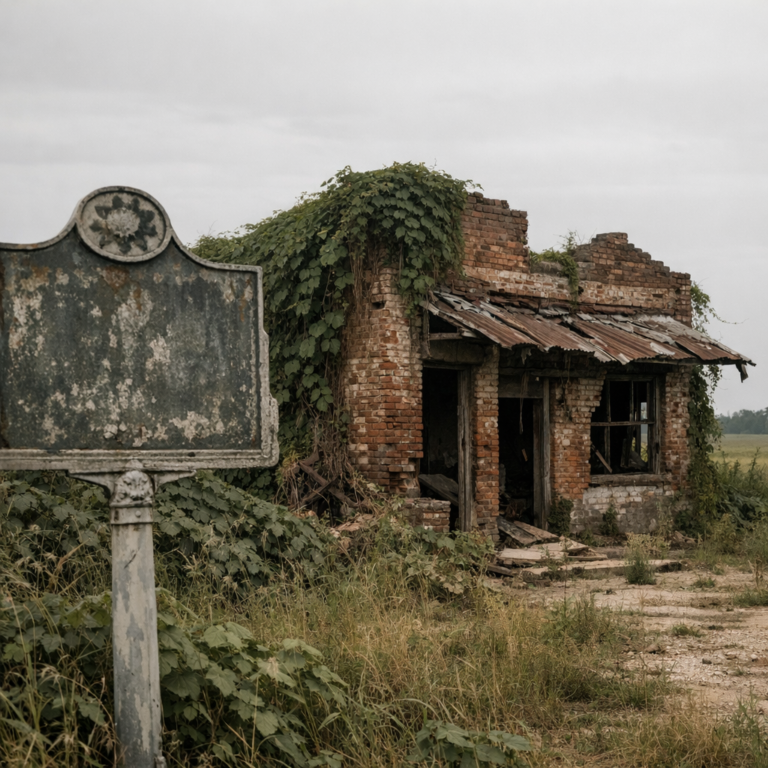
The suffering deepened in the late nineteenth century. Between 1888 and 1892, a catastrophic famine combined with raids tied to the Mahdist War in Sudan devastated Beta Israel communities. Ethiopians still refer to this period as Kefu-qän — "the Bad Days." Historians estimate that somewhere between half and two-thirds of the entire Beta Israel population perished. It is against this backdrop of a thousand years of survival through persecution, famine, and forced isolation that the story of Beta Israel's twentieth-century migration to Israel has to be understood. This was never simply a relocation. It was the rescue of a community that had already nearly been erased more than once.
Recognition and the Path to Aliyah
For centuries, mainstream Jewish authorities outside Ethiopia were only dimly aware that Beta Israel existed, and debate over whether they were "fully" Jewish according to Halakha persisted well into the twentieth century. That changed in 1973, when Israel's Sephardic Chief Rabbi, Ovadia Yosef, issued a landmark ruling declaring Beta Israel to be authentically Jewish, tracing their lineage through the Tribe of Dan and citing earlier rabbinic opinions that had reached similar conclusions. Israel's Ashkenazi Chief Rabbinate followed with its own affirming ruling a few years later. In 1975, the Israeli government formally recognized Beta Israel's right to immigrate under the Law of Return — the law that grants Jews worldwide the right to Israeli citizenship. The recognition set the stage for what would become one of the most dramatic rescue operations of the twentieth century.
Operation Moses: Airlift Through Sudan
By the early 1980s, Ethiopia was gripped by civil war between the Marxist Derg government and rebel factions, compounded by a devastating famine that would eventually kill hundreds of thousands of Ethiopians of all backgrounds. Beta Israel communities, already marginalized and living largely in poverty in the Gondar and Tigray regions, began fleeing on foot toward Sudan, hoping for passage to Israel. The journey was brutal — walking for weeks across hostile terrain, with credible estimates that thousands died along the way from starvation, disease, and violence before ever reaching a refugee camp.
Those who survived the trek gathered in official and unofficial refugee camps inside Sudan, a country with no diplomatic relations with Israel, which made any rescue operation extraordinarily delicate. Working through secret diplomatic channels with Sudanese officials, Israel, with quiet cooperation from the United States, organized a covert airlift. Between November 1984 and January 1985, Operation Moses evacuated roughly 6,500 Ethiopian Jewish refugees from Sudan to Israel aboard a series of secret flights. The operation was so sensitive that it had to be halted abruptly in January 1985 after news of it leaked to the press, stranding several hundred refugees who had reached Sudan but not yet been airlifted.
Operation Joshua: Finishing What Moses Started
The leak that ended Operation Moses left an urgent problem: hundreds of Beta Israel refugees remained stuck in Sudanese camps, their presence now more widely known and their situation more dangerous. In March 1985, U.S. Vice President George H.W. Bush personally intervened, and in a follow-up operation — Operation Joshua — the U.S. Air Force airlifted the roughly 494 remaining refugees out of Sudan to Israel, closing the chapter that Operation Moses had been forced to leave open. Together, Moses and Joshua brought roughly 7,000 Ethiopian Jews to Israel across a few harrowing months, but thousands more remained in Ethiopia itself, still hoping for a way out.
Operation Solomon: 14,325 People in 36 Hours
By May 1991, Ethiopia's civil war had reached its climax. The Derg regime under Mengistu Haile Mariam was collapsing as Eritrean and Tigrayan rebel forces closed in on Addis Ababa, and the resulting chaos put the remaining Beta Israel community — many of whom had already relocated to the capital anticipating an eventual airlift — at acute risk. Israeli officials, working with American diplomatic support that reportedly included a personal letter from President George H.W. Bush to the Ethiopian government and negotiations led by U.S. Senator Rudy Boschwitz, secured last-minute permission to evacuate the community before the regime fell.
What followed, on May 24 and 25, 1991, was one of the largest airlifts in aviation history relative to its timeframe. Over 36 uninterrupted hours, 34 aircraft — Israeli Air Force C-130 transports and El Al Boeing 747 jumbo jets, seats stripped out to maximize capacity — carried 14,325 Ethiopian Jews from Addis Ababa to Israel. One El Al 747 set an unofficial world record, carrying an estimated 1,088 passengers on a single flight, including babies born mid-flight. Eight children were born during the operation altogether. By the time the last plane landed, Mengistu's government had already fallen. Operation Solomon remains one of the most extraordinary examples in modern history of a mass rescue completed in the narrow window before a government's collapse made it impossible.
The Community Today: Netanya, Beersheba, Jerusalem
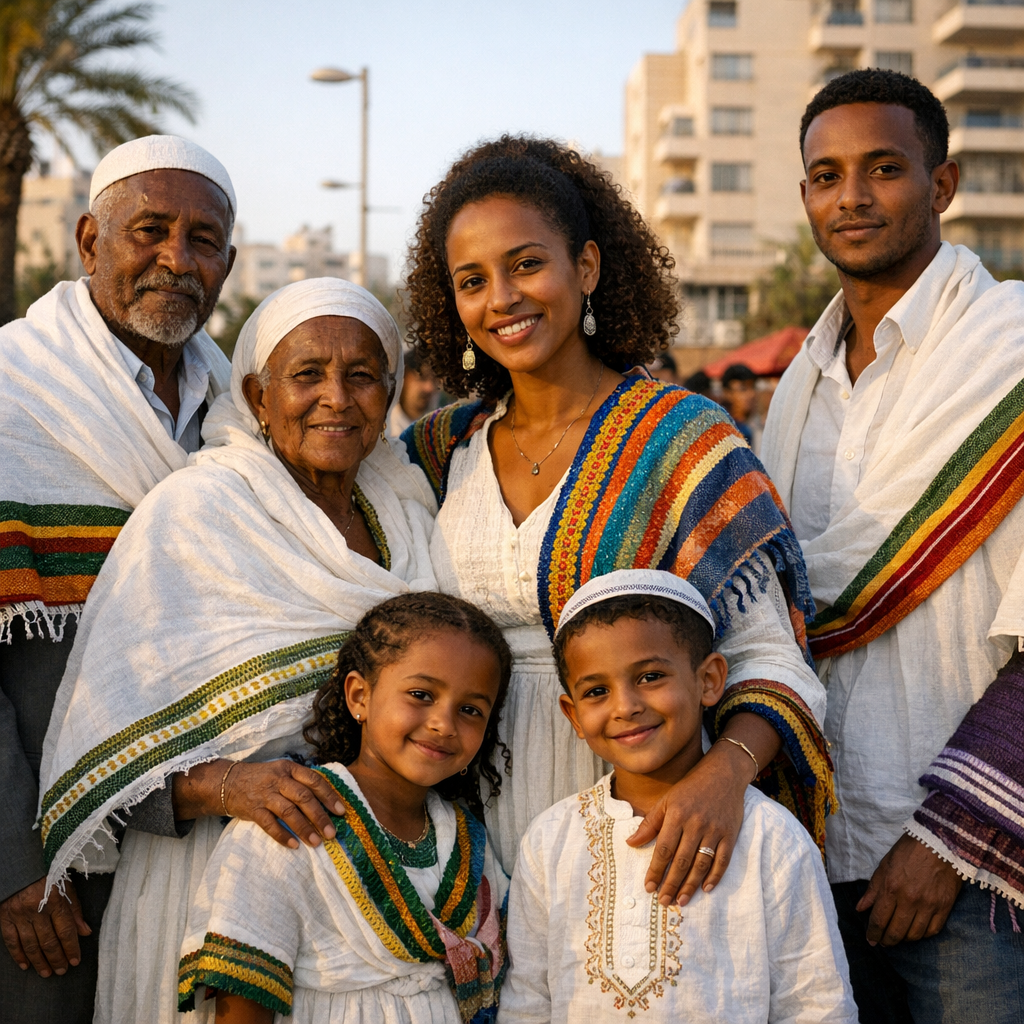
More than three decades after Operation Solomon, Ethiopian Israelis number roughly 160,000 to 170,000 people, close to two percent of Israel's Jewish population. They are concentrated most heavily in Israel's central and southern districts, with especially visible communities in Netanya, Beersheba, Ashkelon, Rehovot, and parts of Jerusalem. In Netanya, Ethiopian-Israeli community centers, synagogues following Beta Israel liturgical traditions, and Amharic-language services exist alongside the city's broader Israeli life. Beersheba, as the largest city in Israel's south, has similarly become a hub for Ethiopian-Israeli community organizations, cultural associations, and multi-generational family networks.
Community life today blends Beta Israel heritage with several generations of Israeli identity. The community observes Sigd, a Beta Israel holiday unique to Ethiopian Jewish tradition, now officially recognized as an Israeli national holiday — communities gather to renew their covenant with God and reaffirm their connection to Jerusalem, a tradition once observed from Ethiopian hilltops facing toward a Jerusalem most had never seen, and now observed in person in the city itself. Amharic and Tigrinya remain spoken at home even as Hebrew dominates public and professional life, and Ethiopian cuisine — injera, doro wat, and shiro — has become a fixture of Israeli food culture well beyond the Ethiopian-Israeli community itself.
The integration story is not without real friction. Ethiopian-Israeli households have historically reported lower average incomes than the broader Jewish Israeli population, and educational attainment gaps, while narrowing substantially in recent years, have taken decades to close. The community has also endured painful and well-documented incidents of discrimination and police violence, including the 2015 police beating of IDF soldier Damas Pakada, captured on video and sparking nationwide protests, and the 2019 police shooting death of 19-year-old Solomon Teka, which set off some of the largest Ethiopian-Israeli protests in the country's history. These events forced a national reckoning over how Israeli institutions treat a community that had been rescued as refugees but has not always been treated as full equals since arrival.
Alongside that friction sits real political and cultural progress. Addisu Massala became the first Ethiopian-Israeli elected to the Knesset in 1996. In 2020, Pnina Tamano-Shata, who arrived in Israel as a child during Operation Moses, was appointed Israel's Minister of Aliyah and Integration — the first Ethiopian-born government minister in the country's history, overseeing the very immigration system that once brought her own family to Israel. Ethiopian-Israeli soldiers, athletes, musicians, and academics have become increasingly visible across Israeli public life, even as the community continues to organize and advocate for full equality.
Current Travel Reality
This history deserves to be told in full, even though Black Travel Now is not currently positioned to recommend booking a trip to see it firsthand. As of our most recent check in July 2026, the U.S. State Department maintains a Level 3: Reconsider Travel advisory for Israel, citing terrorism and civil unrest, and warning that violence "can occur without warning" in Israel, the West Bank, and Gaza. The advisory carries a Level 4: Do Not Travel designation specifically for Gaza, for areas within roughly 4 km of the Lebanese and Syrian borders due to military activity, and for the immediate Egyptian border zone outside the Taba crossing. The U.S. government has also authorized the departure of non-emergency personnel and their families from Israel, a step the State Department reserves for genuinely elevated-risk conditions.
Netanya, Beersheba, and Jerusalem — the cities central to the Ethiopian-Israeli community's story today — are not inside the Level 4 zones named above, and Israel's advisory picture is meaningfully different from a nationwide Level 4 designation. But a Level 3 Reconsider Travel advisory driven by active regional conflict, combined with an authorized departure order for U.S. government personnel, is still a serious, current warning, not a historical footnote. Given that reality, BTN is treating this piece as a heritage and history feature rather than a travel-planning guide. You will not find flight links, hotel recommendations, or booking calls to action here, and we are not including them elsewhere on this page either. That is a deliberate choice, consistent with how we handle every destination under an elevated State Department advisory.
We will continue watching the advisory picture. If and when it is verifiably downgraded, Black Travel Now will revisit this destination with the practical trip-planning content — flights, neighborhoods, synagogues open to visitors, community centers welcoming guests — that a story this significant deserves.
Why This Story Belongs in the Diaspora Story
Beta Israel's history does not fit neatly into the frameworks most often used to talk about the Black diaspora, and that is exactly why it belongs in this conversation. Here is a Black community that preserved a distinct religious and cultural identity in isolation for over a thousand years, survived deliberate persecution and near-annihilation more than once, and was ultimately rescued not through the machinery of the transatlantic slave trade but through a series of airlifts that remain, to this day, among the most dramatic mass-rescue operations in modern history. It is a story of exile, endurance, and return that deserves to sit alongside the other chapters of Black global history that Black Travel Now exists to tell — even on the days when we can only tell it from a distance.