A Neighborhood Named for a Human Zoo That Never Opened
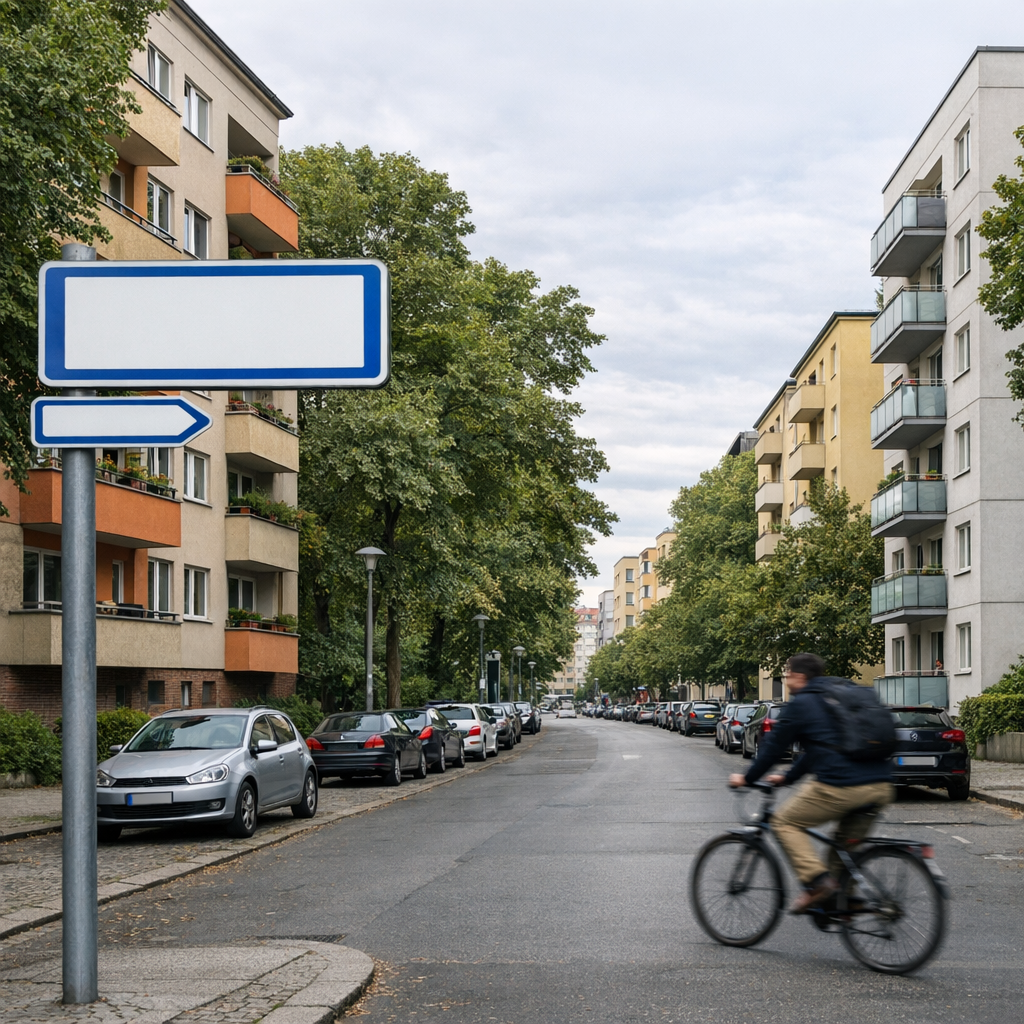
In the Wedding district of northern Berlin, a quiet grid of tree-lined residential streets carries a name that stops most visitors cold the first time they hear the backstory: the Afrikanisches Viertel, or "African Quarter." There are no colonial monuments here, no grand plazas built to celebrate empire. Instead there are mid-century apartment blocks, a big green park, families walking dogs, and street signs bearing names that sound distinctly unlike the rest of Berlin — Kongostraße, Togostraße, Ghanastraße, Guineastraße. The quarter earned its name and its street plan in the early 1900s, when the German Empire held colonies across Africa and Berlin's planners laid out this section of Wedding to honor them.
The darkest layer of that history is the one most visitors have never heard: around 1912–1914, the Hamburg animal dealer and showman Carl Hagenbeck — the same entrepreneur behind Hamburg's Tierpark Hagenbeck and a pioneer of the era's traveling "ethnographic exhibitions," in which African, Asian, and Indigenous people were displayed alongside animals for paying European crowds — proposed building a permanent colonial exhibition ground in this part of Wedding. The plan called for a "Deutsch-Afrika-Schau" that would exhibit both animals and people from Germany's African colonies on the site of what is now Volkspark Rehberge. The outbreak of the First World War in 1914 derailed the project before a single structure went up. Hagenbeck's exhibition was never built. But the streets around the planned site had already been laid out and named for German colonial territories and colonial-era figures — and those names stuck for more than a century, quietly outliving the empire that inspired them.
Reclaiming the Streets: What's Been Renamed, and What It Means
For decades, the most jarring names in the quarter weren't the country names (Kamerunerstraße, Senegalstraße, and the like, which remain) but streets named directly after individual colonial administrators and colonizers who oversaw documented atrocities against African people — including a colonial-era genocide. Local historians, the Berlin-based research and advocacy group Berlin Postkolonial, and Afro-German community members pushed for years to have those specific names removed. In April 2018, the Mitte district assembly voted to approve renaming the worst offenders. What followed was not quick: dozens of residents filed formal objections, all of which were working their way through the district bureaucracy — and, according to neighborhood reporting, every single one of the roughly 127 objections filed was ultimately rejected on procedural grounds by the district office.
The renamings finally took legal effect in late 2022:
- Lüderitzstraße → Cornelius-Fredericks-Straße. The old name honored Adolf Lüderitz, the merchant whose land grabs opened the door to German colonization of present-day Namibia. The new name honors Cornelius Fredericks, a Nama leader who fought German colonial forces during the 1904–1908 genocide of the Herero and Nama peoples and died as a prisoner on Shark Island.
- Nachtigalplatz → Manga-Bell-Platz. Renamed on December 2, 2022, this square dropped the name of colonial administrator Gustav Nachtigal in favor of Rudolf Duala Manga Bell and Emily Manga Bell, the Duala royal couple in Cameroon who organized resistance against German land seizures and were executed by German authorities in 1914.
- Petersallee → split into Maji-Maji-Allee and Anna-Mungunda-Allee. Petersallee had honored Carl Peters, a colonial administrator in East Africa whose brutal conduct was notorious even by the standards of his own colonial government. The street was divided into two new names: Maji-Maji-Allee, commemorating the Maji Maji Rebellion against German rule in East Africa (1905–1907), and Anna-Mungunda-Allee, honoring Namibian anti-colonial activist Anna Mungunda.
As of today, the renaming campaign inside the Afrikanisches Viertel itself is complete — the street signs on the ground now read Cornelius-Fredericks-Straße, Manga-Bell-Platz, Maji-Maji-Allee, and Anna-Mungunda-Allee. (Note for the historically curious: Wissmannstraße, another frequently cited colonial-name renaming — now Lucy-Lameck-Straße, honoring Tanzanian politician Lucy Lameck — is a separate street in the Neukölln district, not part of the African Quarter itself; the two projects are sometimes conflated online.) The neighborhood's country-name streets (Togostraße, Kamerunerstraße, Ghanastraße, Guineastraße, Senegalstraße, and others) remain unchanged, since they name former colonies rather than individual colonizers — though they, too, are a live subject of debate among historians and residents about how Berlin should ultimately reckon with this whole chapter of the city.
A Real, Living Afro-German Neighborhood
What makes the Afrikanisches Viertel worth visiting isn't just the renaming story — it's that the neighborhood the colonial planners imagined as a monument to empire has become, generations later, an actual home for African and Afro-German Berliners. Starting in the late 1990s, several hundred African immigrant families — many from Ghana, Cameroon, and Nigeria — settled in and around the quarter, drawn partly by ironic, unplanned resonance with the streets' names and partly by ordinary factors like affordable rents in Wedding at the time. Today the neighborhood is home to several thousand residents of African descent, alongside a broader Afro-German population born and raised in Berlin.
It's worth setting expectations honestly: this is not a nightlife district and it will never be mistaken for the African and Caribbean diaspora scenes of Paris's Château Rouge, London's Peckham, or Amsterdam's Bijlmer. The Afro-German community here is comparatively small, and the quarter reads first as a quiet, residential corner of Wedding rather than a buzzing cultural hub. That's precisely what makes it worth a deliberate visit rather than a passive wander-through — this is a history-forward destination, not a nightlife one. The reward is intellectual and emotional rather than social: walking these streets with the context of what they used to be called, and who they're named for now, turns an ordinary residential walk into one of the more quietly powerful history experiences in Berlin.
What to See and Do
Take a Berlin Postkolonial walking tour. Berlin Postkolonial e.V., the advocacy group at the center of the renaming campaign, runs guided "Antikoloniale Stadtführungen" (anti-colonial city walks) through the quarter, departing from U-Bahnhof Afrikanische Straße. These tours are the single best way to understand the neighborhood in proper context, street by street, from people directly involved in the renaming fight.
Walk the renamed streets yourself. Start at Manga-Bell-Platz, walk down Cornelius-Fredericks-Straße, and finish at the Maji-Maji-Allee/Anna-Mungunda-Allee split — reading the small explanatory plaques the district installed alongside several of the new signs.
Volkspark Rehberge. The large park at the heart of the quarter sits on the exact site where Hagenbeck's colonial exhibition was meant to be built. Today it's simply a well-used Berlin city park with a small zoo (unrelated to the colonial history), walking paths, and a lake — a strange, quiet coda to a plan that never came to pass.
U-Bahnhof Afrikanische Straße. The U6 station serving the neighborhood is itself part of the story and a useful orientation point for a self-guided walk.
Where to Eat
Wedding overall has a growing and increasingly visible West African and Afro-German food scene, concentrated more broadly along Müllerstraße and in neighboring parts of Wedding than inside the immediate Afrikanisches Viertel grid itself. Look for Ghanaian and Cameroonian home-style restaurants serving jollof rice, waakye, and grilled tilapia, West African grocery stores stocking cassava, plantain, and palm oil, and African hair braiding salons and shops that anchor the neighborhood's day-to-day community life. This is a food scene best explored with a bit of local knowledge or a resident recommendation rather than a curated "top five" list — part of the charm of Wedding is that its African food culture is lived-in rather than packaged for tourists.
Getting There and Around
Berlin Brandenburg Airport (BER) has direct flights from major US cities including New York, Washington DC, and increasingly other East Coast hubs, plus extensive connections from London, Paris, and Amsterdam. From BER, the neighborhood is a straightforward ride via Berlin's excellent public transit network — the FEX airport express train into the city center, then a transfer onto the U6 U-Bahn line directly to Afrikanische Straße station, right in the heart of the quarter. Total travel time from the airport runs about 45–60 minutes.
Berlin's U-Bahn and S-Bahn network is clean, frequent, and easy to navigate even for first-time visitors — a Berlin ABC day ticket covers the whole trip. Wedding is a flat, walkable district, and the Afrikanisches Viertel itself can be fully explored on foot in an afternoon.
Visa and Entry Requirements for US Travelers
US citizens can currently enter Germany visa-free for stays of up to 90 days within any rolling 180-day period, under the Schengen Area's standard visa-waiver rules — no advance visa application is required for tourism. A passport valid for at least three months beyond your planned departure date is recommended. Note that the EU's ETIAS pre-travel authorization system, a light screening step layered on top of the existing visa-free arrangement (not a visa itself), has been repeatedly delayed in its rollout; confirm its current status at travel-europe.europa.eu/etias before you book, since requirements can shift close to your travel dates.
Best Time to Visit
Late spring through early fall — May through September — brings Berlin's best weather for walking tours, with long daylight hours and mild temperatures in the 60s–70s°F. Winters are cold, gray, and short on daylight, which makes the outdoor street-walking element of this itinerary considerably less pleasant, though indoor museum and archive visits related to Berlin's colonial history work fine in any season.
Budget Guide
Budget: $90–130/day — hostel or budget hotel in Wedding or Mitte, currywurst and bakery meals, U-Bahn day passes, free walking (self-guided).
Mid-range: $150–250/day — comfortable hotel, sit-down restaurant meals, a paid guided walking tour, museum entries.
Luxury: $300+/day — upscale Mitte hotel, private guide, fine dining across Berlin's broader restaurant scene.
BTN Insider Tips
Book the Berlin Postkolonial walk in advance. Tours run on a limited schedule and are frequently in German with English options — confirm language before booking.
Bring context, not just a camera. The street signs alone don't tell the story — read up on Cornelius Fredericks, the Manga Bell family, and the Maji Maji Rebellion before you go so the walk lands with its full weight.
Pair it with Berlin's broader colonial-history sites. The Humboldt Forum and Deutsches Historisches Museum both engage, in different ways, with Germany's colonial past and restitution debates, and make a natural pairing with an Afrikanisches Viertel visit.
Treat this as a half-day add-on, not a full-day destination. Pair your visit with other Wedding or Mitte attractions — this is a meaningful few hours within a longer Berlin trip, not a standalone reason to visit the city.
Is Berlin Safe for Black Travelers?
Berlin is generally a safe, walkable, LGBTQ+-friendly, and diverse European capital, and Wedding specifically is a working-class, ethnically mixed district with no particular safety concerns for visitors. As with any European city, Black travelers — and especially Black travelers of visibly African or Caribbean descent — report occasional street-level racism or uncomfortable stares in Germany, more often in the form of casual ignorance than direct hostility, and this is worth being mentally prepared for rather than expecting to encounter constantly. Standard city precautions apply: stay aware in the evening away from well-lit transit stations, and connect with Berlin's Afro-German and diaspora community networks and social media groups for current, lived-experience advice before you travel.
Book Your Berlin Trip
The Afrikanisches Viertel won't be the flashiest stop on your Berlin itinerary, but it may be the one that stays with you longest — a neighborhood invented to celebrate an empire, renamed by the descendants of the people that empire tried to erase, and quietly, steadily becoming a home for the African diaspora Berlin never planned for.
✈️ Book Your Berlin Trip Now →*Affiliate links — BTN may earn a commission at no extra cost to you.