The Nation Nobody Told You About
Ask most travelers what Belize is known for and you'll hear the same three answers: the Belize Barrier Reef, the Great Blue Hole, and Maya ruins like Caracol and Xunantunich. All true, all worth the trip. But drive two and a half hours southeast from Belize City down the Hummingbird Highway, past the citrus groves and limestone hills, and you arrive somewhere the postcards rarely mention — the Stann Creek coast, where an entire Afro-Indigenous nation with its own language, its own drum, and its own flag has been quietly keeping its culture alive for two centuries.
This is Garifuna country. Hopkins and Dangriga are its capitals, and the story that brought the Garinagu (the people's name for themselves) here is one of the most remarkable survival stories in the Americas — a story of shipwreck, resistance, exile, and a culture that refused to disappear.
Shipwreck, Resistance, and a New People Born on St. Vincent
The Garifuna story begins not in Belize but nearly 1,500 miles away, on the eastern Caribbean island of St. Vincent (Yurumein, in the Garifuna language), sometime in the mid-to-late 1600s. West Africans — some freed from shipwrecked slave ships, others who had escaped bondage on neighboring islands — found their way to St. Vincent, where the Indigenous Kalinago (Carib) and Arawak people who already lived there took them in. Over generations, the two peoples intermarried, and a genuinely new ethnic group was born: part West African, part Indigenous Caribbean, speaking an Arawakan-based language layered with African and French influence, and answerable to no European crown.
The people the British called the "Black Caribs" built a formidable, independent society on St. Vincent and, unlike almost every other community in the region, successfully resisted European colonization for more than a hundred years. That resistance came to a head in the Second Carib War of 1795–1796, when Garifuna forces under the leader Joseph Chatoyer fought the British for control of the island. The British won, and what followed was one of the more brutal exiles in Caribbean history.
1797: Exile to Roatán
In 1797, more than 5,000 Garifuna people were rounded up by British forces and forcibly deported from St. Vincent. Roughly half died in the crossing or in a British holding camp on the island of Balliceaux before the voyage even began. The survivors — a little over 2,000 people — were transported by ship and deposited on the island of Roatán, off the coast of Honduras, deliberately chosen because it was remote, largely uninhabited, and considered worthless by the British at the time.
It should have been the end of the story. Instead, the Garinagu did what they had always done: they adapted, rebuilt, and spread. From Roatán, Garifuna families and fishing communities moved along the Central American coast into mainland Honduras, then into Guatemala, Nicaragua, and Belize, establishing new settlements up and down the Caribbean shoreline of Central America over the following decades.
1832: Arrival in Belize and the Founding of Dangriga
Garifuna migration into what was then British Honduras (present-day Belize) picked up through the early 1800s, but the date the community itself commemorates is November 19, 1832 — when a significant wave of Garifuna settlers arrived by dugout canoe at the mouth of the North Stann Creek River and established what would become the town of Dangriga, then known as Stann Creek Town. The settlers came in part fleeing political upheaval in Honduras, and they brought with them the language, drumming traditions, spiritual practices, and agricultural knowledge — particularly cassava cultivation — that had carried their culture through exile.
Dangriga grew into the largest Garifuna town in Belize and remains, to this day, the cultural and administrative heart of Garifuna Belize. Hopkins, a smaller fishing village about 30 minutes south along the coast, developed in parallel as a close-knit Garifuna community that has since become better known to travelers for its laid-back beach setting, while holding onto the same drumming circles, seine-net fishing traditions, and Garifuna-owned guesthouses that define Dangriga.
Garifuna Settlement Day: A National Holiday Born From a Teacher's Vision
Every November 19, Belize stops. Garifuna Settlement Day is a national public holiday — not just a Stann Creek observance, but a day recognized across the entire country — and Dangriga becomes its epicenter. The holiday's origins trace to Thomas Vincent Ramos, a Garifuna civil rights activist and teacher who organized the first formal Settlement Day commemoration in 1941 to ensure the arrival story, and the culture behind it, would never be allowed to fade from memory. Local recognition followed in the southern districts in 1943, and in 1977 the Belizean government declared it a national holiday.
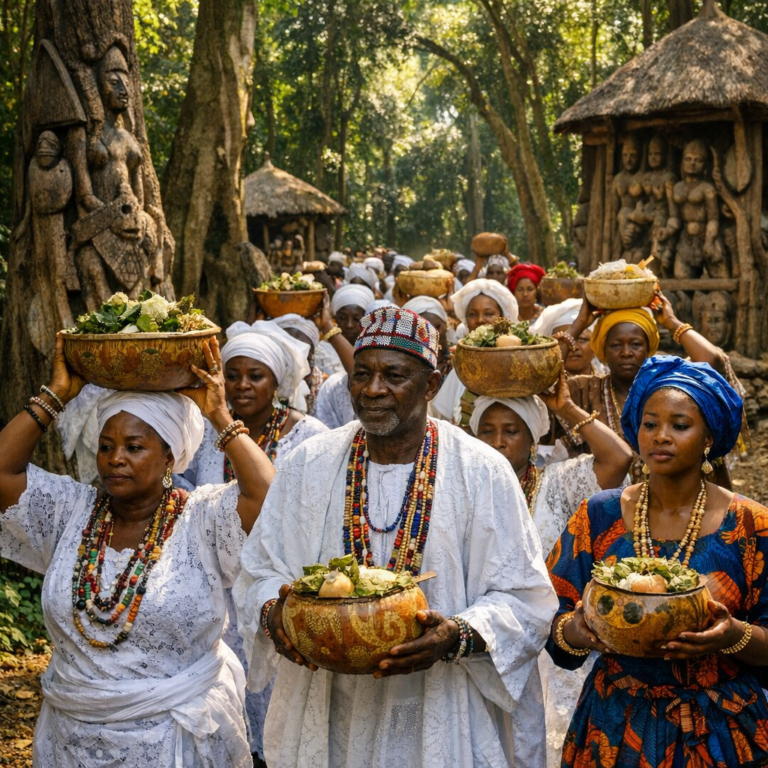
The celebration in Dangriga begins before sunrise with a re-enactment of the original 1832 landing: dugout canoes loaded with cassava, plantains, and other traditional foods paddle in from the sea and "arrive" on the beach, met by a crowd that has often been up all night in anticipation. From there the day unfolds into an all-day street party — drumming processions with the primero and segunda drums, punta dancing, a re-enactment mass in Garifuna language, and parades that fill Dangriga's streets with color, rhythm, and pride. There is genuinely nothing else quite like it anywhere in the Caribbean basin, and for travelers willing to plan around it, it is one of the most powerful cultural experiences in Central America.
UNESCO Recognition: A Culture Declared a World Treasure
In May 2001, UNESCO proclaimed the "Language, Dance and Music of the Garifuna" a Masterpiece of the Oral and Intangible Heritage of Humanity — a joint recognition submitted on behalf of Garifuna communities in Belize, Guatemala, Honduras, and Nicaragua. It was later formally inscribed on UNESCO's Representative List of the Intangible Cultural Heritage of Humanity in 2008, cementing global recognition of what Garifuna communities had known all along: that their language (spoken by dwindling but committed numbers across four countries), their punta and paranda music, and their drumming traditions constitute an irreplaceable piece of world heritage, not a regional curiosity.
Hopkins vs. Dangriga: Two Cultural Capitals, Two Different Visits
Dangriga is the administrative and historical heart of Garifuna Belize — a working town, not a resort village, with the Gulisi Garifuna Museum, drum-making workshops, and the biggest Settlement Day celebration in the country. It's the place to go for depth: museum visits, meeting elder drum makers, and experiencing November 19 at full scale.
Hopkins, by contrast, is the more traveler-friendly base — a walkable beach village with Garifuna-owned guesthouses, restaurants serving hudut (mashed plantain in coconut fish broth) and ereba (cassava bread), and easy access to drumming lessons at community-run cultural centers like the Lebeha Drumming Center. Most travelers pairing culture with beach time base themselves in Hopkins and day-trip into Dangriga for museums, markets, and (if timed right) Settlement Day itself.
Getting There and Getting Around
Philip S. W. Goldson International Airport (BZE) near Belize City is the main international gateway, with direct flights from Miami, Houston, Dallas, Atlanta, and Charlotte on American, United, and Southwest. From there, domestic carriers Tropic Air and Maya Island Air fly short hops to the Dangriga airstrip (DGA) in about 20 minutes, or you can drive the scenic Hummingbird Highway in roughly 2.5–3 hours. Hopkins is a further 20–30 minute taxi or shuttle ride south of Dangriga along a mostly paved coastal road.
Visa and Entry Requirements
US passport holders do not need a visa for tourism — Belize grants visa-free entry for stays of up to 30 days, extendable in 30-day increments (for a fee) up to six months total. Travelers need a passport valid for at least the length of their stay, proof of onward or return travel, and are required to complete Belize's online travel declaration form before arrival. Belize's official currency, the Belize dollar, is pegged to the US dollar at a fixed 2-to-1 rate, and US dollars are widely accepted throughout the country.
Where to Stay
Hopkins: Hamanasi Adventure & Dive Resort and Beaches and Dreams offer comfortable mid-range and boutique options directly on the water. Budget travelers will find clean, Garifuna-family-run guesthouses throughout the village from roughly $40–70 per night.
Dangriga: Options are more limited and more local — Pal's Guest House and a handful of small hotels serve travelers who want to be in town for the museum, drum workshops, or Settlement Day itself.
🏨 Book Hopkins & Dangriga Hotels →Best Time to Visit
The dry season, from late November through May, offers the most reliable weather for beach time and reef trips. But if the Garifuna cultural experience is the priority, plan your trip around November 19 itself — Garifuna Settlement Day — even though it falls just at the edge of hurricane season's tail. Book accommodation well in advance; rooms in Dangriga and Hopkins sell out weeks ahead of the holiday.
Budget Guide
Budget: $50–80/day — guesthouse, local Garifuna cook-shop meals, shared shuttles.
Mid-range: $120–220/day — boutique beachfront lodging in Hopkins, restaurant dining, guided cultural tours and drumming lessons.
Luxury: $300+/day — upscale dive resorts, private guides, chartered transport between Hopkins, Dangriga, and the cayes.
BTN Insider Tips
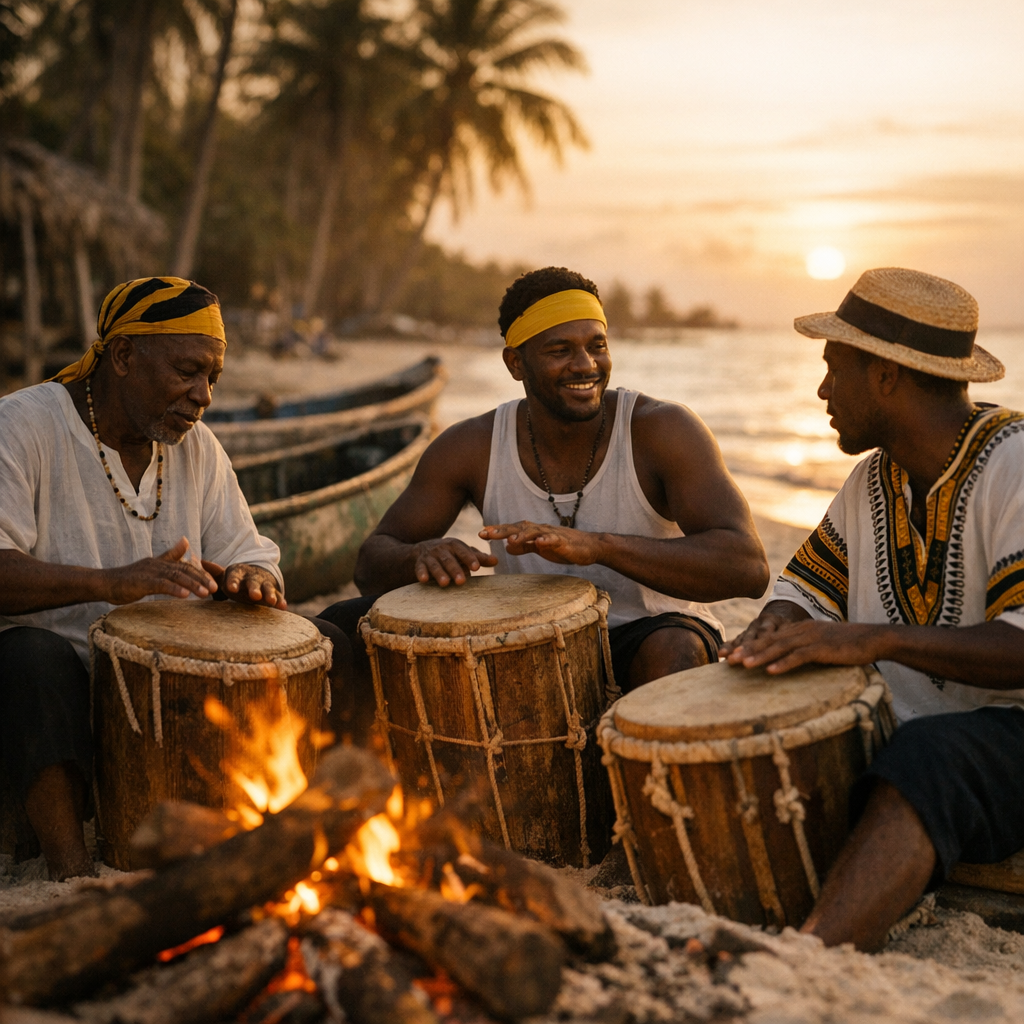
Book a drumming lesson, don't just watch one. The Lebeha Drumming Center in Hopkins and community teachers in Dangriga welcome visitors to learn the basics of primero and segunda rhythms — a far deeper experience than a passive show.
If you're there for Settlement Day, get to the beach before dawn. The canoe re-enactment landing happens early, and it is the emotional center of the entire celebration.
Try hudut and ereba from a home cook, not just a restaurant menu. Ask your guesthouse host — home-cooked Garifuna meals are often the best and most authentic version available.
Approach this as heritage travel, not spectacle. This is a living Afro-Indigenous culture with its own language and spiritual practices, not a performance staged for tourists. Ask before photographing ceremonies, and support Garifuna-owned guesthouses, restaurants, and tour guides directly.
Learn a greeting in Garifuna. "Buiti binafi" (good morning) goes a long way with hosts who are rightly proud of a language UNESCO itself has recognized as a world treasure.
Is Belize Safe for Black Travelers?
Belize is an English-speaking, majority-Black-and-Indigenous nation (Belize's population includes large Creole, Garifuna, Mestizo, and Maya communities) with a strong tradition of hospitality toward diaspora visitors. Stann Creek District, including Hopkins and Dangriga, is generally very safe, with the relaxed, community-oriented feel typical of small coastal towns. Standard travel precautions apply in Belize City, which has higher crime rates than the coastal south, so many diaspora travelers fly or shuttle straight through rather than lingering. In Hopkins and Dangriga themselves, Black travelers — solo, family, or group — consistently report a warm, welcoming reception, unsurprising in communities built on Afro-Indigenous pride.
Mark Your Calendar
- November 19 — Garifuna Settlement Day, national public holiday, dawn re-enactment and all-day celebration in Dangriga
- Late November–May — dry season, best for combining culture with beach and reef time
- Year-round — live drumming and punta performances at community cultural centers in Hopkins and Dangriga
Book Your Belize Trip
Belize's reef and ruins get all the marketing budget. Its Garifuna coast gets almost none — and that is exactly why it deserves the visit. Hopkins and Dangriga hold the living proof of a people who survived shipwreck, war, and exile with their language, their drum, and their dignity intact. Go listen.
✈️ Find Flights to Belize →*Affiliate links — BTN may earn a commission at no extra cost to you.