The Morning Barbados Chose Itself
On November 30, 2021 — the 55th anniversary of its independence from Britain — Barbados stood at the Kensington Oval in Bridgetown and did something no other Caribbean nation had done in a generation. As the clock passed midnight, Queen Elizabeth II ceased to be head of state, the Royal Standard came down, and Dame Sandra Mason, sworn in as the island's first President, stood before her people as the head of the world's newest republic. Prince Charles was in attendance and delivered a speech praising Barbadians' "extraordinary fortitude." Rihanna, Barbados' most famous daughter, was named a National Hero that same night. It was a ceremony built for cameras and headlines — but underneath the pageantry was something much older: an island finishing an argument it had been having with itself, and with the Crown, for over two hundred years.
That argument didn't start in a parliamentary chamber. It started in the cane fields.
Bussa's Rebellion: The Uprising That Barbados Never Forgot
In April 1816, an enslaved man remembered by history simply as Bussa led what is recognized today as the largest slave rebellion in Barbadian history. Bussa had been born free in West Africa before being captured and transported to Barbados, where he worked as a head ranger on the Bayley's Plantation in St. Philip. Word of Haiti's successful revolution and rising abolitionist sentiment in the British Parliament had reached the enslaved population, and Bussa organized a coordinated uprising that swept across the southern and eastern parishes of the island.
The rebellion was put down within days by British troops and colonial militia, and the retribution was brutal — hundreds of enslaved people were killed in the fighting or executed afterward. Bussa himself died in battle. But the rebellion did what rebellions of that era were rarely credited for doing at the time: it rattled the plantocracy, added fuel to the British abolitionist movement, and planted a marker in Barbadian memory that would outlast slavery itself. Slavery was formally abolished across the British Empire in 1834, followed by a four-year "apprenticeship" period, with full emancipation finally realized in 1838 — a date over 70,000 formerly enslaved Barbadians publicly celebrated. Emancipation Day is still observed every August 1st.
Bussa is now recognized as a National Hero of Barbados, one of only eleven people to hold that honor, and his name has become permanently attached to the island's most recognizable monument to freedom.
The Emancipation Statue: Freedom Cast in Bronze
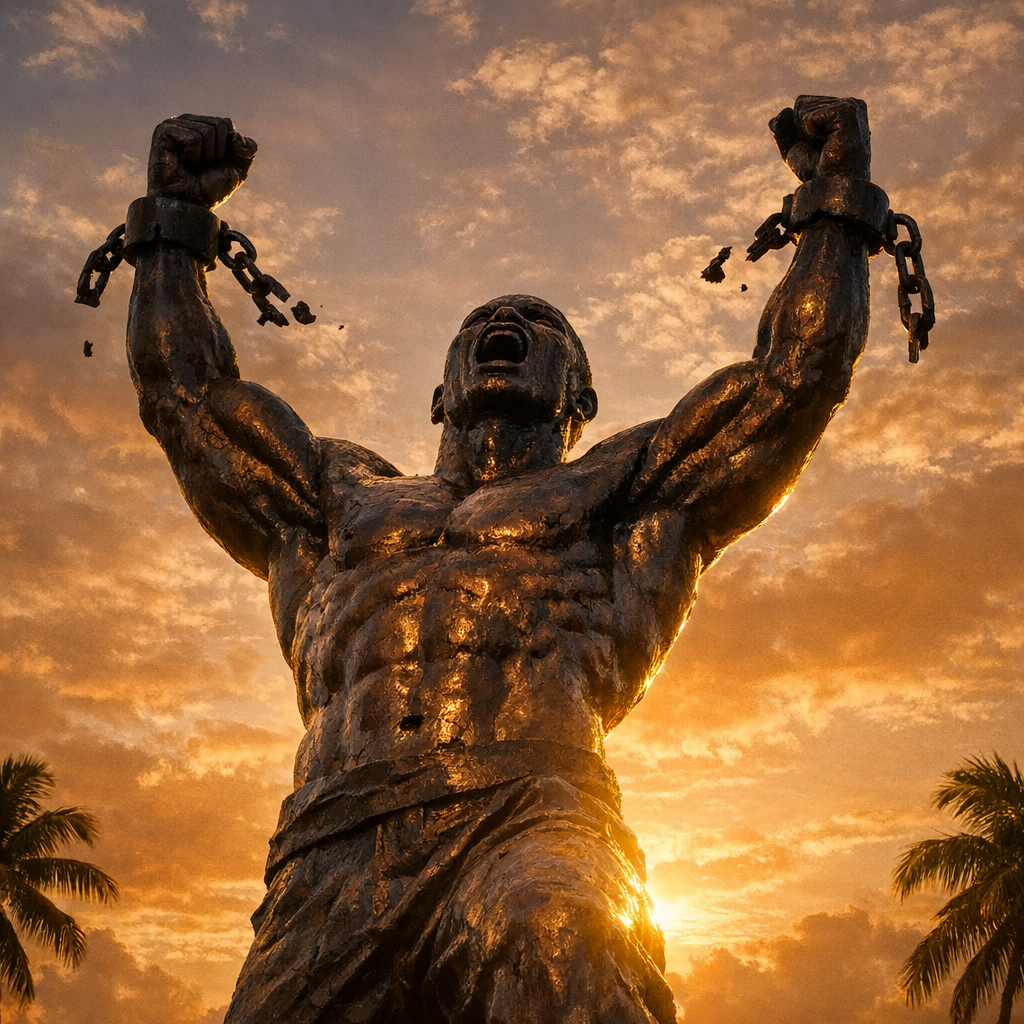
Drive the ABC Highway east out of Bridgetown and you'll pass a roundabout near Haggatt Hall, St. Michael, dominated by a striking bronze figure: arms raised, back arched, chains shattering at the wrists. This is the Emancipation Statue — known to virtually every Barbadian simply as "Bussa," even though sculptor Karl Broodhagen, the Barbadian-Guyanese artist who created it, didn't design the figure to be a literal likeness of the rebellion leader. Unveiled in 1985, 20 years after Barbados' independence from Britain, the statue was one of the first public monuments in the world to depict the moment of a formerly enslaved person breaking free, rather than the more common colonial-era statuary of conquerors and monarchs.
It's worth pausing at the Emancipation Statue not just for the photo (best captured at sunrise or sunset, when the low sun rims the bronze in gold) but for what it represents in the arc of this piece: the through-line from Bussa's Rebellion in 1816, to formal Emancipation in 1838, to political independence in 1966, to the final constitutional break from the monarchy in 2021. Few places in the Caribbean make that 200-year story so physically walkable.
Barbados Museum & Historic Garrison: Where the Story Is Kept
To go deeper than the roadside monument, head to the Barbados Museum & Historical Society, housed in a former 19th-century British military prison within the Garrison Historic Area — itself a UNESCO World Heritage Site in Bridgetown. The museum's collections trace the island's history from its Indigenous Kalinago and Taíno inhabitants through the sugar and slavery era, Bussa's Rebellion, emancipation, and on to the modern republic. It's currently open Monday through Saturday, 9:00 a.m. to 5:00 p.m., closed Sundays and public holidays — plan a morning visit if you're combining it with lunch in Bridgetown.
For travelers who want the harder, more intimate version of this history, book a heritage guide for a visit to the Newton Enslaved Burial Ground in Christ Church, roughly 15 minutes from Bridgetown. Discovered through archaeological excavation beginning in the 1970s, Newton is the final resting place of more than 570 enslaved Africans, Afro-Caribbean, and Afro-Bajan people who lived and died on the adjacent Newton Plantation between the 1670s and 1833. Skeletal analysis at the site has revealed evidence of malnutrition, forced labor, and — remarkably — burial customs that trace directly back to West African spiritual traditions, including at least one burial positioned face-down in a documented West African mortuary practice. The Barbados Museum & Historical Society has owned and protected the site since 1993. It is not a polished tourist attraction, and that is exactly the point: it is one of the most direct physical links between the Caribbean and the continent enslaved Barbadians were taken from.
The Reparations Conversation
Barbados hasn't just memorialized this history — it has turned it into policy. Prime Minister Mia Mottley, who led the push toward republic status, has also positioned Barbados at the front of CARICOM's regional reparations movement, arguing that the wealth generated by slavery in places like Barbados directly financed European industrialization and that the resulting debt — economic, historical, and increasingly climate-related — has never been settled. For heritage-minded travelers, this isn't background noise: it's the living, current-events version of the same story told at Bussa's statue and at Newton. Ask your guide about it. It's one of the more candid conversations you can have on the island.
Crop Over: The Harvest Festival Turned National Party
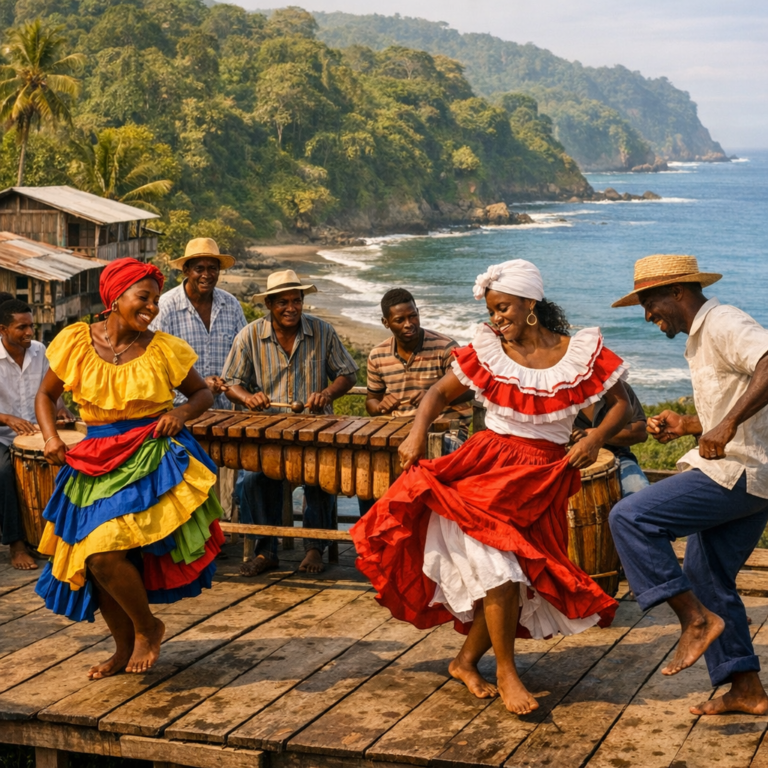
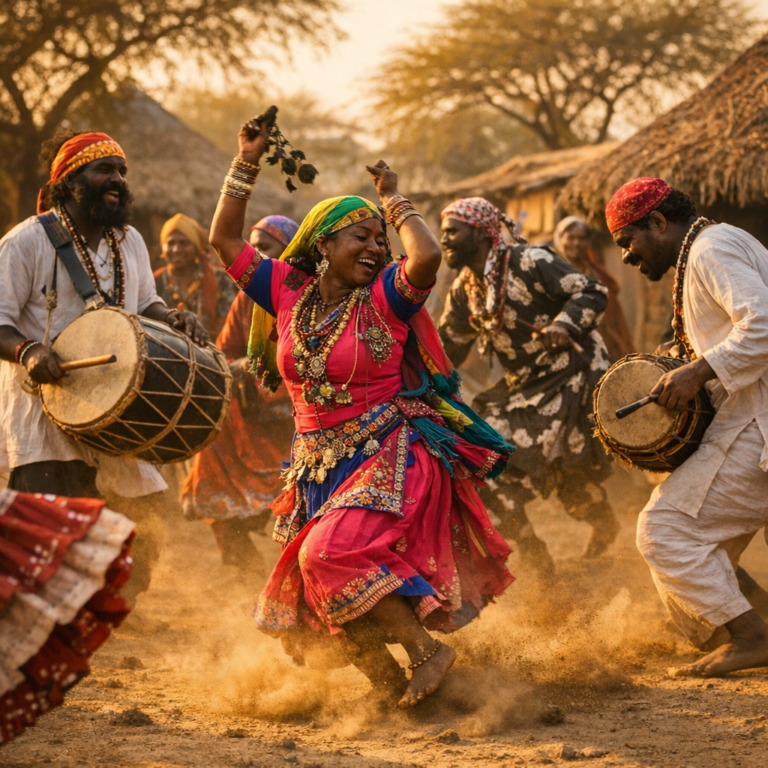
Not every layer of Barbadian heritage is somber, and that's by design. Crop Over began in 1687 as a plantation tradition marking the end of the sugar cane harvest — enslaved workers created their own music, dance, and celebration around a season the planters had claimed for themselves. The tradition faded after World War II but was deliberately revived starting in 1970 and formally re-established as a national festival in 1974, driven by cultural leaders determined to keep the tradition — and the folk culture underneath it — alive.
Today Crop Over runs from June through the first Monday in August, building toward the Grand Kadooment: a full day of costumed masquerade bands, soca music, and street parades that shuts down Bridgetown in the best possible way. It's worth treating Crop Over as a seasonal highlight rather than the whole story of Barbadian culture — the costumes and calypso are a direct descendant of enslaved people reclaiming joy on their own terms, the same spirit that produced Bussa's Rebellion a century and a half earlier. If your trip lines up with late July or early August, build a day around it (BTN has a full Crop Over Festival guide if you want the complete rundown). If it doesn't, the history at Bussa's statue, the Garrison, and Newton stands on its own year-round.
Getting There and Getting In
Grantley Adams International Airport (BGI), just outside Bridgetown, has direct flights from New York, Miami, Atlanta, Charlotte, and Toronto, plus regional connections across the Caribbean. According to the U.S. State Department, American citizens do not need a visa for tourist stays of up to six months — just a valid U.S. passport and proof of onward travel. That makes Barbados one of the easiest heritage trips in the Caribbean to plan on short notice.
Getting around is straightforward: rental cars are widely available (drive on the left), reliable taxis and ZR vans cover the island, and Bridgetown itself is walkable enough to cover the Garrison, the Careenage waterfront, and the Parliament Buildings in a single day.
Planning Your Heritage Trip
Best time to visit: December through April for driest weather; late July into the first week of August if you want to catch Crop Over and the Grand Kadooment.
Suggested heritage itinerary: Morning at the Barbados Museum & Historical Society in the Garrison, lunch in Bridgetown near the Careenage, afternoon at the Emancipation Statue and a guided walking tour of Historic Bridgetown, and a half-day heritage tour out to the Newton Enslaved Burial Ground with a local historian guide.
Budget: Mid-range travelers should plan for a comfortable trip with boutique guesthouses, local rum shops, and beach time built around the heritage sites above; museum admission and guided tours are modest compared to lodging and flights.
🏨 Book Barbados Hotels →BTN Insider Tips
Book heritage walking tours and Garrison/Museum tickets in advance during Crop Over season (late June through early August), when local guides and popular time slots fill up fast.
Visit the Emancipation Statue at sunrise or golden hour. The low light on the bronze is dramatic, and traffic around the roundabout is lightest early in the morning.
Pair Bussa's statue with the Garrison museum in the same day. Seeing the monument first and the fuller historical context second makes the story land harder.
Ask about the reparations conversation. Barbadian guides and hosts are often candid and thoughtful about it — it's a live national issue, not just a history lesson.
Respect Newton as a burial site, not a photo backdrop. Go with a knowledgeable guide and treat the visit with the same solemnity you'd bring to any cemetery.
Is Barbados Safe for Black Travelers?
Barbados is one of the most stable democracies in the Caribbean, with a Black-majority population, Black-led government, and a national identity now explicitly built around African heritage and self-determination. Crime against tourists is relatively low, and the island's tourism infrastructure is mature and well-regulated. Standard travel precautions apply in Bridgetown at night, but heritage travelers — solo, family, or group — consistently report Barbados as one of the most welcoming and easiest Caribbean islands to navigate.
Mark Your Calendar
- November 30 — Independence Day / Republic Day, marking both 1966 independence and the 2021 transition to a republic
- June – early August — Crop Over Festival season
- First Monday in August — Grand Kadooment, Crop Over's finale
- August 1 — Emancipation Day
Book Your Barbados Trip
Barbados isn't asking visitors to just lie on a beach — though the beaches are excellent. It's asking them to stand at a bronze statue of a man breaking his own chains, to walk a Garrison that once held an empire's soldiers, and to understand that a republic sworn in on live television in 2021 was two centuries in the making.
✈️ Find Barbados Flights →*Affiliate links — BTN may earn a commission at no extra cost to you.