Skip Nassau. This Is the Bahamas the Postcards Actually Mean.
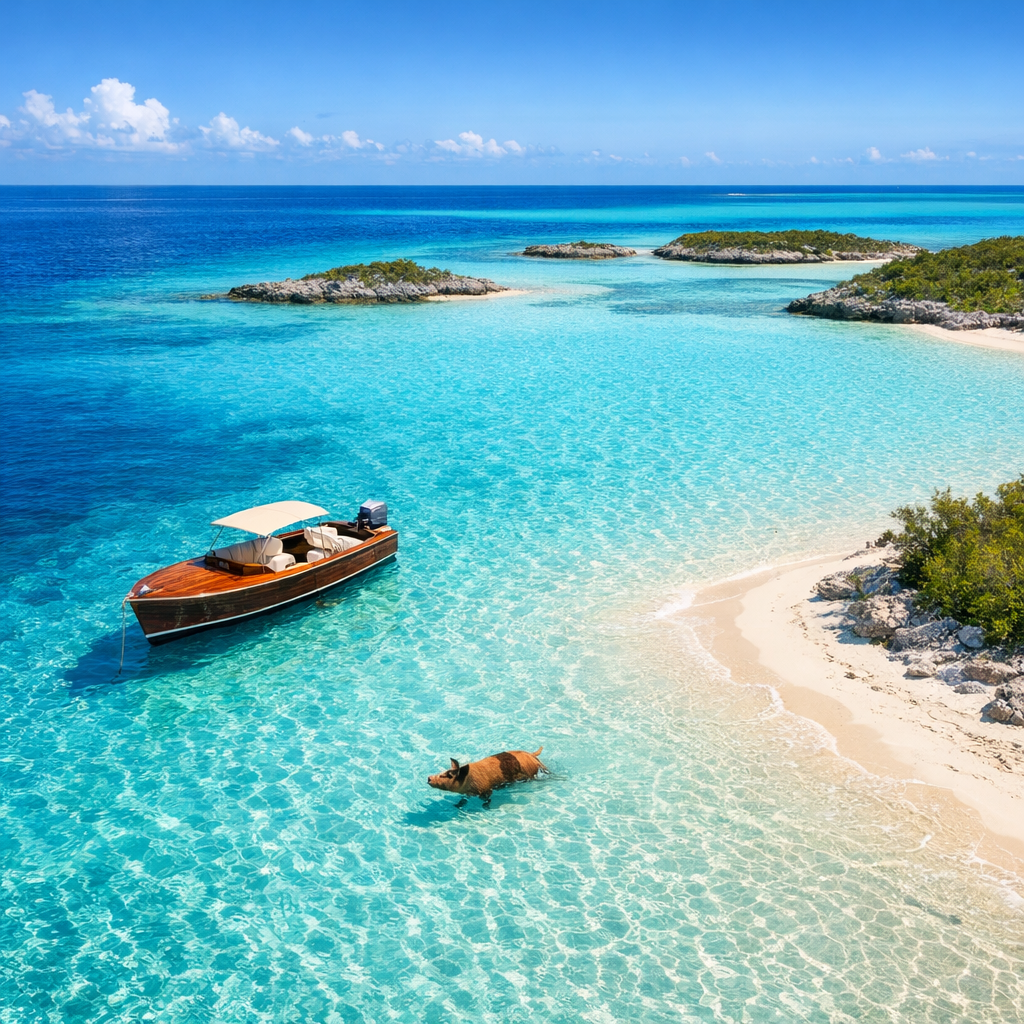
Everyone who has ever scrolled past a photo of water so clear it looks fake, so blue it looks Photoshopped, has probably been looking at the Exumas without knowing it. Not Nassau's Cable Beach. Not the cruise-ship gangway on Prince George Wharf. A 120-mile chain of more than 365 small cays strung between Nassau and the southern Bahamas, where the water goes from turquoise to sapphire to navy in bands you can see from the air, and where the loudest sound most days is an outboard motor and a rooster.
The Bahamas is not one destination — it's roughly 700 islands and cays spread across 100,000 square miles of ocean, and the experience changes completely depending on which dot on the map you choose. Nassau is where the cruise ships dock, where Junkanoo takes over Bay Street every Boxing Day and New Year's (BTN has a full guide to Junkanoo in Nassau if that's the trip you're planning). The Exumas and the rest of the Out Islands — Eleuthera, Andros, Harbour Island — are the other Bahamas: slower, more local, boat-driven, and largely free of the mega-resort towers and casino floors that define New Providence and Grand Bahama. If Nassau is the Bahamas' front porch, the Out Islands are the family cookout happening quietly out back.
The Exuma Cays: Swimming Pigs and Water in Colors With No Names
The Exumas' single most famous resident isn't human. On Big Major Cay, an uninhabited island informally nicknamed "Pig Beach," a colony of feral pigs — estimated at somewhere between 50 and 60 animals in recent years — swims out to greet arriving boats. Nobody agrees on exactly how they got there: competing stories point to sailors who meant to come back and eat them, a shipwreck survival story, an escape from a nearby settlement, or a deliberate 1990s stocking effort by residents of nearby Staniel Cay who planned to raise them for food and never got around to it. Whatever the origin, the pigs are now one of the most photographed animals in the Caribbean, and tour operators running out of Great Exuma and Staniel Cay build entire boat-day itineraries around a stop at Pig Beach.
A word of honest guidance here, because BTN doesn't do puff pieces: this is a wild animal encounter, not a petting zoo. Pigs have bitten visitors who got too close with food in hand, and there have been documented pig deaths linked to tourists feeding them things they shouldn't eat or drink. Bring food a licensed guide approves, keep your hands visible and open, and treat the pigs with the same respect you'd give any large wild animal that outweighs you.
Beyond the pigs, the Exuma Cays are a boat-day paradise almost without equal: Thunderball Grotto near Staniel Cay is a partially submerged limestone cave (yes, the James Bond filming location) that fills with shafts of sunlight and reef fish at the right tide; the shallow sandbanks around Elizabeth Harbour and the Tropic of Cancer beach on Great Exuma turn ankle-deep water into an infinity pool that stretches for a mile; and the string of private and semi-private cays between George Town and Staniel Cay is exactly why charter culture, not hotel culture, drives this region's economy.
Harbour Island: The Pink Sand Isn't a Filter
Off the northeastern tip of Eleuthera sits Harbour Island — locally called "Briland" — home to one of the most photographed beaches in the entire Caribbean. The three-mile stretch of sand on the island's eastern shore genuinely reads pink in person, and the science behind it is real: the color comes from foraminifera, a microscopic marine organism with a reddish-pink shell, whose broken shell fragments mix into the crushed coral and shell sand over centuries. It is not a filter, not a trick of the light, and not a marketing exaggeration — it's a slow accumulation of an entire ecosystem's exoskeletons, and it is genuinely striking to walk on.
The island's only town, Dunmore Town, is a working town first — pastel colonial-era buildings, narrow lanes built for foot traffic and golf carts rather than cars, and a slower pace that has drawn discreet celebrity vacationers for decades without ever tipping into resort-strip chaos. You reach Harbour Island by flying into North Eleuthera Airport and taking a short water taxi across the harbor — there's no bridge, no ferry from Nassau directly, and that inconvenience is exactly what keeps the island from turning into another cruise stop.
Andros and the Rest of the Out Islands: Where the Locals Actually Live
Andros is the largest island in the Bahamas by landmass and one of the least visited by percentage of tourists — which is precisely its appeal for travelers who want the Bahamas beyond the brochure. It's the bonefishing capital of the world for serious anglers, home to some of the planet's most significant blue holes (flooded vertical cave systems), and fronted by a barrier reef that ranks among the largest in the Western Hemisphere. Eleuthera beyond Harbour Island — Governor's Harbour, Gregory Town, the Glass Window Bridge where Atlantic and Caribbean waters visibly meet in different shades of blue — rounds out a version of the Bahamas built around small, Black-owned guesthouses, family fish fries, and settlements that have operated the same way for generations, largely independent of the Nassau and Freeport tourism machine.
Boat Day and Villa Culture: How This Region Actually Monetizes
Here's the honest planning truth about the Out Islands: this is not a beach-chair-and-buffet destination, and trying to book it like one will disappoint you. The real spend here goes toward boat charters and private villas, not big hotel towers. A day charter out of George Town or Staniel Cay — running $900-$2,500+ depending on boat size and group count — typically strings together Pig Beach, Thunderball Grotto, a sandbar lunch stop, and snorkeling over a reef or two, and is genuinely the centerpiece experience of an Exumas trip. Multi-day private charters and liveaboard sailing trips let you island-hop the cays for a week without ever booking a hotel room. On the accommodation side, private villas and cottages — often waterfront, often with their own dock — are the dominant lodging style across the Exumas and Harbour Island, frequently booked out for a group of friends or a family splitting the cost of a boat for the week. If you're budgeting this trip like a Nassau resort stay, you're budgeting it wrong; budget it like a boat-and-villa week instead.
Where to Stay
Great Exuma / Staniel Cay: Sandals Emerald Bay is the marquee full-resort option in George Town for travelers who want an all-inclusive base with easy boat-charter pickup. Staniel Cay Yacht Club is the legendary, low-key hub for the boating crowd — rustic cottages, a busy marina, and direct access to Pig Beach and Thunderball Grotto right out the front door.
Harbour Island: The Dunmore and Coral Sands sit directly on the pink sand beach with classic Bahamian-colonial style. Private villa rentals across Dunmore Town and along the beach road are the move for groups wanting space, a kitchen, and golf-cart independence.
Andros: Small, owner-operated fishing lodges (Andros is built around bonefishing lodges more than resorts) offer full-board packages aimed at anglers and divers rather than beach loungers.
🏨 Book Exumas & Out Islands Stays →Getting There
Nearly every Out Islands trip routes through Lynden Pindling International Airport (NAS) in Nassau first. From there, Exuma International Airport (GGT) in George Town is a short domestic hop of roughly 30-45 minutes on Bahamasair, Southern Air, or Flamingo Air — book that connecting flight in advance during winter high season, since seat counts on these small aircraft are limited. Harbour Island travelers fly into North Eleuthera Airport and finish the trip with a quick water taxi across to Dunmore Town. Andros has its own small airports at Andros Town, Congo Town, and San Andros. Direct charter flights from South Florida into several Out Island airstrips are also worth pricing out if you're traveling with a group and want to skip the Nassau layover entirely.
✈️ Find Flights to the Exumas →Entry Requirements for US Travelers
US citizens do not need a visa for Bahamian tourist stays of up to 90 days. You do need a valid US passport — valid through your entire stay, not just your entry date — since the Bahamas is not a destination where a birth certificate or ID card is sufficient for air travel. Confirm current entry requirements with the Bahamas Department of Immigration and US Customs and Border Protection before you fly, as stay-length rules and entry forms are periodically updated.
Best Time to Visit
Mid-November through May is the sweet spot: dry season, calmer seas for boat charters, and lower humidity. December through April is also peak season and peak pricing, so book charters and villas well ahead. Hurricane season runs June through November, with August-October carrying the highest storm risk — charter and villa cancellation policies are worth reading closely if you're booking during that window. Crawfish (Bahamian rock lobster) season runs roughly August through March, so a summer or fall trip does have its own upside at the dinner table even with the added storm risk.
Budget Guide
Budget-conscious: $150-250/day — a modest guesthouse or off-beach cottage, self-catering or casual conch-shack meals, and joining a shared group boat tour rather than a private charter.
Mid-range: $300-450/day — a nicer villa or resort room split among a group, a half-day shared charter, and restaurant dining.
Full boat-and-villa experience: $500-1,000+/day per couple — waterfront villa, a private full-day charter split across the week, and dinners built around fresh-caught seafood.
BTN Insider Tips
Book your boat charter before you book your hotel. In the Exumas, the charter is the trip — lock in a reputable operator (ask about pig-feeding protocol and cave/tide timing at Thunderball Grotto) before you finalize where you're sleeping.
Bring reef-safe sunscreen and a dry bag. You will be on and in the water for most of a boat day, and the sandbanks offer zero shade.
Don't feed the pigs anything but what your guide provides. Bread, alcohol, and sand ingestion have all been linked to pig deaths at Pig Beach — this is a wild animal encounter, treat it like one.
Pack cash in small bills. Many Out Island settlements, marinas, and roadside fish fries are cash-first, and ATMs are sparse once you're off George Town or Dunmore Town.
If Nassau's Junkanoo culture is what pulled you to the Bahamas, don't skip it to chase the Exumas. They're genuinely different trips — see BTN's Junkanoo in Nassau guide for the Boxing Day and New Year's parade experience, and treat the Out Islands as the boat-and-beach half of a two-region Bahamas trip.
The Verdict
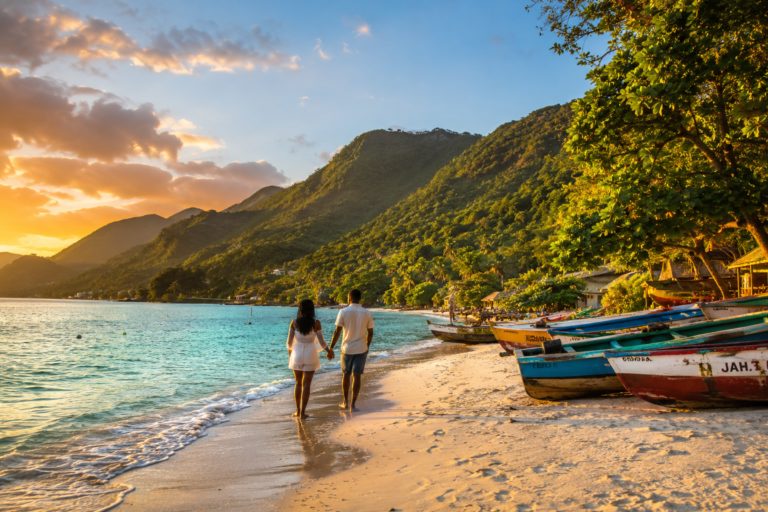
Nassau will always be the Bahamas most people picture first — cruise ships, Cable Beach resorts, and, for one unforgettable week each winter, Junkanoo taking over Bay Street. The Exumas and the rest of the Out Islands are the correction to that picture: swimming pigs on an uninhabited cay, sand that is legitimately pink because of a microscopic shell-building organism, water so layered in blue it looks color-graded, and a pace of life built around boats, villas, and settlements that have run the same way for generations. Book the charter first, the villa second, and go find the Bahamas the postcards were actually talking about.
✈️ Book Your Exumas Trip Now →*Affiliate links — BTN may earn a commission at no extra cost to you.