An Island That Counted Its Own Beaches
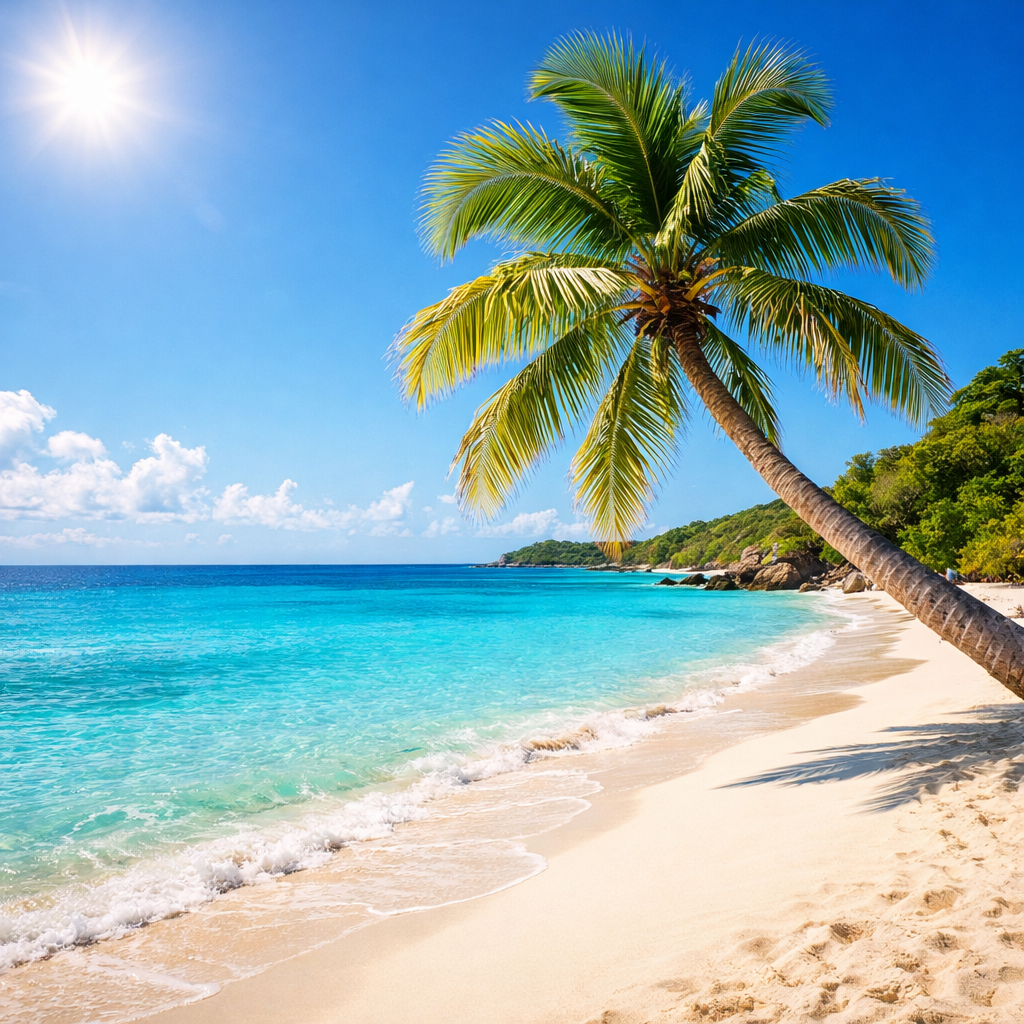
Antigua's most famous line about itself is also its most repeated: 365 beaches, one for every day of the year. It's a claim you'll hear from every taxi driver, every hotel concierge, and every tourism brochure on the island, and it has become inseparable from Antigua's identity as a beach destination. It's worth saying up front — nobody has ever produced an official survey backing the exact number 365. It's a popular claim, not a geological fact, and Antigua's tourism board itself markets it as a tagline rather than a verified count. What is true is that Antigua packs an extraordinary number of distinct, swimmable, postcard-grade beaches onto a coastline of roughly 87 square miles — more variety per mile than almost anywhere else in the Caribbean. Whether the real number is 200 or 365 barely matters once you're standing on your fourth different beach in two days and none of them look alike.
That density is the entire pitch. You can beach-hop for a week and never repeat a view: the calm, reef-protected shallows of Dickenson Bay on the north coast; the pink-tinged sand and turquoise flats of Half Moon Bay on the windward side; the secluded coves around Rendezvous Bay that you can only reach by boat or a hike; and Jolly Harbour's long stretch backed by resorts and beach bars. Catamaran beach-hopping tours are the single best way to see several of these in one day, sailing the coastline and dropping anchor at spots you'd never find on your own by car.
Nelson's Dockyard: A Working Piece of the 1700s
English Harbour, on Antigua's south coast, holds the island's most significant historic site: Nelson's Dockyard, part of the UNESCO World Heritage Site officially inscribed as "Antigua Naval Dockyard and Related Archaeological Sites." It's widely described as the only continuously working Georgian-era naval dockyard left in the world — a working harbor of stone warehouses, careening wharves, and boathouses built in the mid-1700s that still services yachts and sailboats today rather than sitting preserved behind glass. Horatio Nelson himself was stationed here in the 1780s as a young naval captain, and the dockyard carries his name because of it.
Walking through it now, past restored Georgian buildings that house boutique shops, restaurants, and a small museum, it genuinely does feel like stepping into another century — which is exactly why it's worth doing the history right rather than treating it as a pretty backdrop for cocktail hour.
The History the Postcards Leave Out
Here's the part that a British-naval-heritage framing tends to skip: the Royal Navy built and maintained English Harbour to protect the commercial interests of Antigua's sugar planters, at a time when Britain, France, and other European powers were fighting for control of the Eastern Caribbean's sugar wealth. That wealth was built entirely on the forced labor of enslaved Africans, who were trafficked to Antigua by the tens of thousands to work the cane fields that made the island profitable enough to defend with a permanent naval base. And the dockyard itself — the stone walls, the wharves, the buildings you walk through today — was constructed substantially by enslaved Africans sent from nearby plantations, whose labor and skill the UNESCO listing itself credits as essential to the site's existence. Slavery in Antigua wasn't abolished until 1834. None of this erases the site's significance; it deepens it. Nelson's Dockyard isn't just a well-preserved naval curiosity — it's a physical record of the Caribbean's colonial economy, built by the very people that economy exploited, and it's worth carrying that context with you when you walk its stones.
Barbuda: The Quiet Sister Island
Antigua's twin island, Barbuda, sits about 30 miles north and operates on a completely different frequency. Where Antigua has resorts, marinas, and a steady cruise-ship crowd, Barbuda has roughly 1,600 residents, one main settlement, and beaches that go essentially empty. Seventeen-Mile Beach on Barbuda's west coast is the headline attraction — a genuinely pink-tinged stretch of sand (the color comes from crushed coral and shell fragments) with almost no development along it. Barbuda is also home to a frigatebird sanctuary in Codrington Lagoon, one of the largest colonies of magnificent frigatebirds in the Western Hemisphere, and a worthwhile day trip if you want wildlife alongside your beach time.
Getting to Barbuda means a short ferry or small charter flight from Antigua — it isn't a spontaneous afternoon trip, so budget a full day or an overnight if you want to actually feel the island rather than just glimpse it. Barbuda is still rebuilding tourism infrastructure in the years since Hurricane Irma hit the island directly in 2017, so go in with realistic expectations about amenities: this is a barefoot, off-grid kind of stop, not a resort-lined one.
Where to Stay
Luxury: Antigua's south coast around English Harbour and Falmouth Harbour has the island's most polished boutique properties, several set right into the hillside with harbor views. Expect infinity pools, private beach clubs, and villa-style suites at the top end.
Mid-range: Jolly Harbour and Dickenson Bay offer a strong run of all-inclusive and semi-all-inclusive resorts with direct beach access, popular with couples and honeymooners.
Villas: For groups and longer stays, private villa rentals around the northwest coast and Nonsuch Bay give you a full kitchen, more space, and often a private or semi-private beach — usually the better value if you're traveling with family or a group of friends splitting the cost.
🏨 Book Antigua Resorts & Villas →Getting There
V.C. Bird International Airport (ANU) near St. John's has direct flights from New York (JFK), Miami, Charlotte, and Atlanta on American, Delta, and JetBlue, along with direct connections from London and Toronto. Flight time from the US East Coast runs roughly 3.5 to 4.5 hours, making Antigua one of the more accessible Eastern Caribbean islands for a long weekend or a full week.
For US citizens, entry is straightforward: a valid passport and no visa are required for tourist stays, and immigration will typically ask for proof of a return or onward ticket, confirmed accommodation, and evidence you can support yourself during the visit. Standard tourist stays run up to a few weeks and can be extended locally if needed — check current limits with Antigua and Barbuda immigration before you fly, since allowances can change. Your passport should be valid well beyond your travel dates; airlines and immigration routinely want several months of validity remaining, not just coverage for the trip itself.
✈️ Find Antigua Flights →Best Time to Visit
December through April is Antigua's dry season and the best window for reliable sun, calm seas, and lower humidity — it's also peak season, so book resorts and flights early. Hurricane season runs June through November, with the highest risk in August and September; the island isn't hit every year, but travel insurance is worth the small cost during those months. Antigua Sailing Week, one of the Caribbean's premier regattas, fills English Harbour with yachts every April and is worth timing a trip around if you want the dockyard at its liveliest.
Budget Guide
Plan on roughly $1,100 per person for a 4-night trip, covering flights, mid-range accommodation, meals, and a couple of activities like a catamaran beach-hopping tour or a Nelson's Dockyard history tour.
- Budget: $120-180/day — guesthouse or budget hotel, local restaurants, public buses, free public beaches.
- Mid-range: $250-400/day — beachfront hotel or all-inclusive resort, rental car, a tour or two.
- Luxury: $500-900+/day — boutique villa or five-star resort, private catamaran charter, fine dining.
BTN Insider Tips
Rent a car or hire a driver for a beach-hopping day. Public buses run but on limited schedules; a rental car or a driver for the day gives you the freedom to chase down multiple beaches without a set itinerary.
Book the catamaran tour with the dockyard stop included. Several operators combine a half-day of beach-hopping with a stop or sail past English Harbour, which is an easy way to fit the history in without dedicating a separate day to it.
Go to Barbuda for the day if you can. It's a genuinely different experience from Antigua's resort coast, and Seventeen-Mile Beach alone justifies the ferry ride.
Pack reef-safe sunscreen. Antigua's reefs are a real part of the beach ecosystem here, and several beaches and tour operators now ask visitors to use reef-safe products specifically.
Visit the dockyard museum, not just the shops. The small museum inside Nelson's Dockyard has the historical context — including the site's construction by enslaved labor — that the restored boutiques and restaurants around it don't spell out on their own.
Book Your Antigua & Barbuda Trip
Antigua gives you the beach math — 365 of them, real number or not — and a working piece of 18th-century history in the same island, with its quieter sister Barbuda a short hop away for anyone who wants the crowds to disappear entirely. Between the sand, the sailing, and the dockyard's honest history, this is a Caribbean trip that rewards slowing down.
✈️ Book Your Antigua Trip Now →*Affiliate links — BTN may earn a commission at no extra cost to you.