The Chains Are Broken: What Keti Koti Means
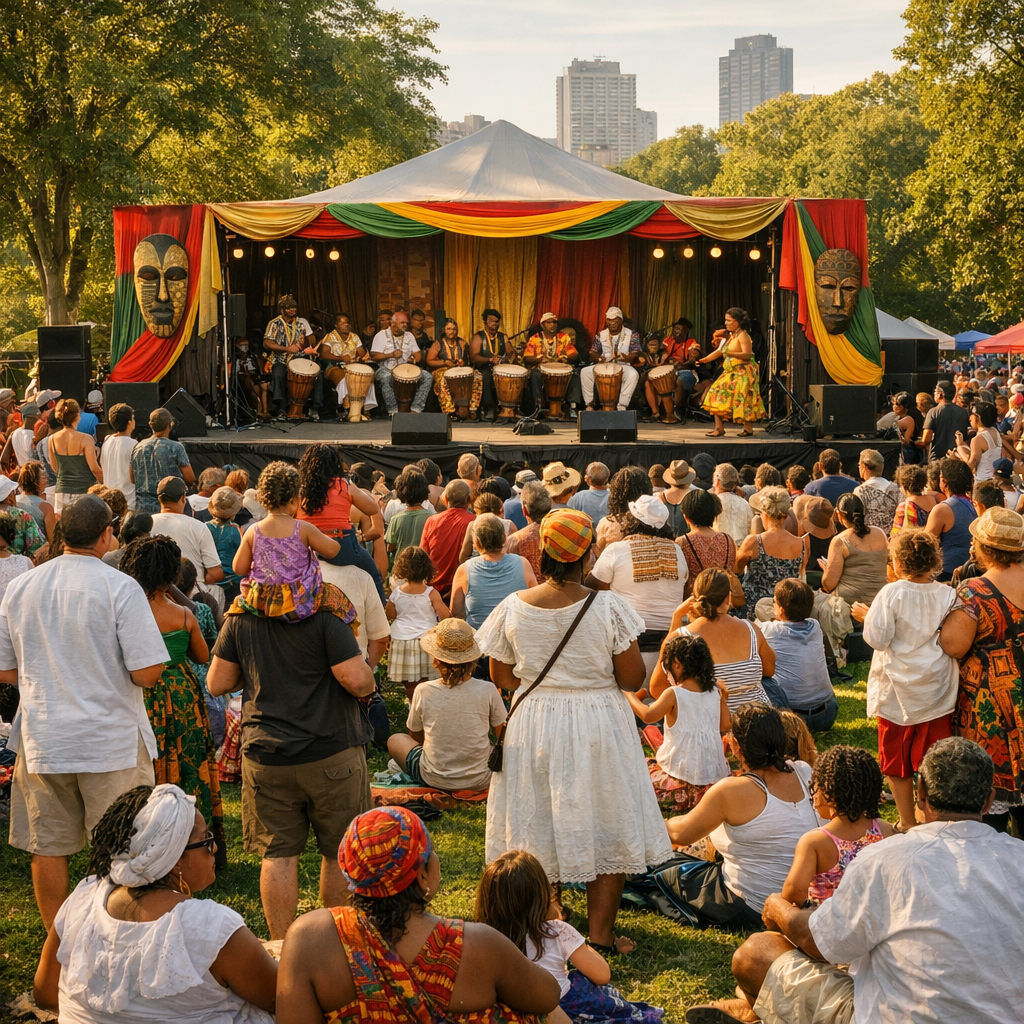
"Keti Koti" is Sranan Tongo — the lingua franca of Suriname — for "the chains are broken." It is not a metaphor. It is a date, a debt, and a promise all at once. Every July 1st, Amsterdam's Oosterpark fills with drumming, orange-red-gold-green fabric, roti stalls, and thousands of people of Surinamese, Antillean, and Caribbean-Dutch descent gathering to remember the moment slavery was formally abolished in the Dutch colonies — and to reckon, publicly and unavoidably, with everything that abolition did and did not fix.
For Black travelers, especially those from the US, UK, and Caribbean, Keti Koti is one of the most powerful and least-known commemorations in Europe. It sits at the intersection of everything Black Travel Now exists to cover: diaspora history, living culture, food, music, and a country still actively working out how to hold its own past.
July 1, 1863: The Day Slavery Was "Abolished" in Suriname and the Dutch Caribbean
On July 1, 1863, the Kingdom of the Netherlands formally abolished slavery in Suriname and the Dutch Caribbean colonies (Curaçao, Aruba, and the other islands then known as the Netherlands Antilles). On paper, roughly 33,000 enslaved people in Suriname alone were freed that day. In practice, freedom was withheld for another decade: a mandatory "state supervision" period (staatstoezicht) required the newly emancipated to keep working on the same plantations, under contract, for minimal pay and continued state coercion, until true freedom arrived on July 1, 1873 — the date Keti Koti also honors.
The abolition came with another detail that still shapes the holiday's tone today: the Dutch state compensated slaveholders — not the enslaved — for their "loss of property," a sum equivalent to roughly €250 million in today's money. The people who were actually enslaved received nothing. That asymmetry is central to why Keti Koti in the Netherlands has never been only a celebration; it is also, deliberately, a reckoning.
Keti Koti became an official public holiday in Suriname in 1955, marked there with parades, church services, and Bigi Spikri ("Great Speech") gatherings. In the Netherlands, where hundreds of thousands of people of Surinamese and Caribbean-Dutch descent live — a legacy of colonial ties and 20th-century migration — the day has grown steadily in visibility since the early 2000s, with Amsterdam's Oosterpark emerging as its undisputed center of gravity.
Oosterpark and the National Monument to Slavery History
At the heart of Oosterpark stands the Nationaal Monument Slavernijverleden — the National Monument to Slavery History — unveiled in 2002 as the Kingdom of the Netherlands' first official memorial to its role in the transatlantic and Indian Ocean slave trades. Designed by Surinamese-Dutch sculptor Erwin de Vries, the monument depicts figures breaking free from a ship's hull, moving toward a tree of life.
Every July 1st, the monument becomes the site of the day's most solemn moment: a formal wreath-laying ceremony attended by government officials, members of the Surinamese and Caribbean-Dutch community, and — in recent years — increasingly senior representation from the Dutch state itself. That shift matters. In December 2022, then-Prime Minister Mark Rutte issued a formal government apology for the Netherlands' role in slavery. On July 1, 2023 — the 150th anniversary of the end of state supervision — King Willem-Alexander stood at the Oosterpark monument and delivered his own historic apology on behalf of the House of Orange-Nassau, acknowledging the monarchy's direct involvement in and profit from slavery. That moment reset what Keti Koti in Amsterdam means: not just a diaspora community holiday, but a date the Dutch state itself now treats as a day of national accountability.
Inside the Festival: Music, Food, and the Bigi Spikri
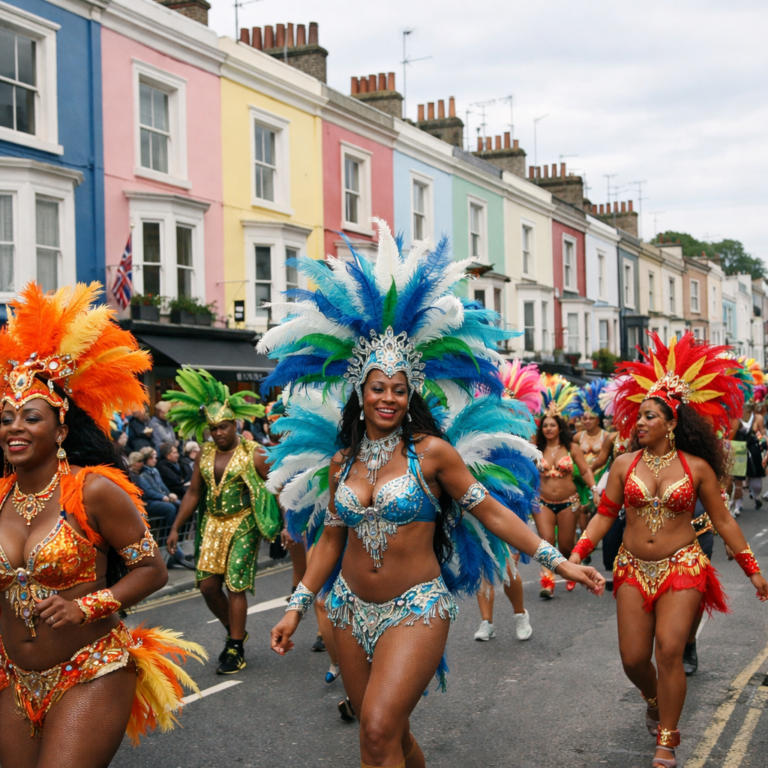
After the wreath-laying, Oosterpark shifts into full festival mode. The Bigi Spikri parade — a procession rooted in the Surinamese tradition of public proclamation and testimony — winds through the park and surrounding streets, often with participants in white clothing and traditional koto dresses, a nod to the garments enslaved and newly freed Surinamese women wore. Drum circles anchor the afternoon, with winti and kaseko rhythms carrying across the grass. Food stalls sell Surinamese staples — roti with curried chicken or goat, pom (a baked casserole of taro root and chicken), moksi meti (mixed grilled meats), bakabana (fried plantain with peanut sauce), and saoto soup — alongside Caribbean and West African vendors. Live performances, spoken word, youth programming, and community organization booths round out the day. The tone is unusual and, honestly, hard to replicate elsewhere: grief, pride, celebration, and unfinished business, all held in the same park on the same afternoon.
Recap: Keti Koti in Amsterdam, July 2026
This year's commemoration fell on Wednesday, July 1, 2026 — just weeks before this piece published. Consistent with the pattern set since 2023, Oosterpark's wreath-laying ceremony at the National Monument again anchored the morning, followed by the Bigi Spikri procession and a full afternoon of music, food, and community programming that has become the template for how Amsterdam marks the date. As always, the day drew a mix of longtime Surinamese-Dutch Amsterdammers, younger diaspora descendants reconnecting with the tradition, and a small but visibly growing number of international visitors — including African American and Caribbean travelers building Keti Koti into broader European diaspora-heritage trips.
If you're reading this because you just missed it — you're in good company, and you're exactly who this next section is for.
The Public Holiday Debate: Where Things Actually Stand
One of the most-asked questions from travelers researching Keti Koti is whether it's an official public holiday in the Netherlands. As of this writing, it is not a national public holiday — Dutch national holidays are set by law and Keti Koti has not been added to that list. What has changed is momentum at the local level: Amsterdam and several other Dutch municipalities have in recent years given their own civil servants July 1st as a paid day off or half-day, a symbolic but meaningful shift, and Surinamese-Dutch advocacy groups, along with left-leaning parties in the Dutch parliament, have continued pushing for full national recognition. The debate is real, ongoing, and unresolved — don't book a trip assuming banks, offices, or transit will run on a holiday schedule, because for most of the country, July 1st remains a normal working day layered on top of an extraordinary commemoration.
Planning Ahead: Keti Koti, July 2027
Because this is an annual, fixed-date commemoration, the best way to experience it is to plan a year out. Keti Koti 2027 will fall on Thursday, July 1, 2027. Amsterdam hotel prices climb through the summer as tourist season peaks, so booking flights and accommodations by early spring 2027 is smart. Arrive a day or two early to settle in, and plan to spend the entire day of July 1st in and around Oosterpark — the wreath-laying typically begins mid-morning, with festival programming running into the evening. This is also an ideal anchor for a broader Dutch-Caribbean diaspora itinerary: pair it with a visit to Rotterdam's Zomercarnaval (Rotterdam Summer Carnival), which typically falls later the same month and draws the same Surinamese, Caribbean, and Latin American diaspora communities for a multi-day parade.
Getting There
Amsterdam Airport Schiphol (AMS) is one of Europe's best-connected hubs, with direct flights from New York (JFK, EWR), Atlanta, Boston, Washington DC, and most major US gateway cities, plus one-stop connections from nearly anywhere else. Flight time from the US East Coast runs roughly 7-8 hours direct. Book 3-4 months ahead for the best summer fares — late June through early July is peak season in Amsterdam, so prices run higher than shoulder-season months.
Getting Around
Amsterdam's public transit (GVB trams, buses, and metro) is fast, clean, and easy to navigate with an OV-chipkaart or contactless card. Oosterpark sits in Amsterdam Oost (East), a short tram ride from Centraal Station and easily walkable from the surrounding neighborhoods. Renting a bike for the day — the classic Amsterdam move — is also a great way to experience the city between festival visits.
Visa and Entry Requirements for US Travelers
US citizens do not need a visa for short tourist stays in the Netherlands. Under current Schengen Area rules, Americans can stay up to 90 days within any 180-day period across the whole Schengen zone without a visa — plenty for a Keti Koti trip of any length. Keep an eye on ETIAS (the EU's new pre-travel authorization system for visa-exempt visitors), which has been in a multi-year rollout and is expected to become mandatory at some point after 2026; check current requirements before you book, since the exact enforcement date has shifted more than once.
Is Amsterdam Safe for Black Travelers?
Amsterdam is generally very safe, with low violent crime and a well-developed tourist infrastructure. Like any major European city, petty theft (pickpocketing on trams and in crowded tourist areas) is the most common risk — keep bags zipped and secured, especially in festival crowds. The Surinamese and Caribbean-Dutch community is large, established, and visible across the city, particularly in Amsterdam Zuidoost (Southeast), so Black travelers will find themselves far from a novelty here.
Where to Stay
For proximity to Oosterpark, look at Amsterdam Oost and the De Pijp neighborhood, both a short tram ride from the festival and full of independent cafes and restaurants. Centrum (city center) hotels put you closer to canals and major sights but require a longer trip out to the park on festival day.
Budget Guide
Budget: $90-140/day — hostel or budget hotel, tram pass, market and casual dining, free festival entry.
Mid-range: $180-280/day — boutique hotel, sit-down meals, museum entries, occasional taxi.
Luxury: $350+/day — canal-view hotel, fine dining, private guides and tours.
BTN Insider Tips
Arrive at Oosterpark early on July 1st if you want a clear view of the wreath-laying ceremony — space around the monument fills up quickly. Dress with the same respect you would for any solemn memorial event during the ceremony portion of the day, even as the mood opens up into festival energy afterward. Bring cash for food stalls, as not all vendors take cards. And take time to actually read the plaques and context around the National Monument — this is a site meant to be understood, not just photographed.
Mark Your Calendar
- July 1 — Keti Koti, Oosterpark, Amsterdam
- Late July — Rotterdam Zomercarnaval (Summer Carnival)
- August — Kwakoe Festival, Amsterdam Zuidoost — one of Europe's largest Caribbean and African diaspora summer festivals
Book Your Amsterdam Trip
Keti Koti is a rare thing: a genuinely moving historical commemoration and a joyful community festival happening in the same park, on the same afternoon. Whether you're catching up on this year's recap or already planning for July 2027, Amsterdam rewards travelers willing to sit with its history as much as its canals.
✈️ Book Your Amsterdam Trip Now →*Affiliate links — BTN may earn a commission at no extra cost to you.