Recreation and Relaxation Without Humiliation
There is a phrase carved into American Beach's history that says everything you need to know about why this stretch of sand on Florida's Amelia Island matters: "Recreation and relaxation without humiliation." That was the promise A.L. Lewis made to Black families in 1935, at a time when nearly every beach in the American South turned them away. It is still the promise this place keeps today.
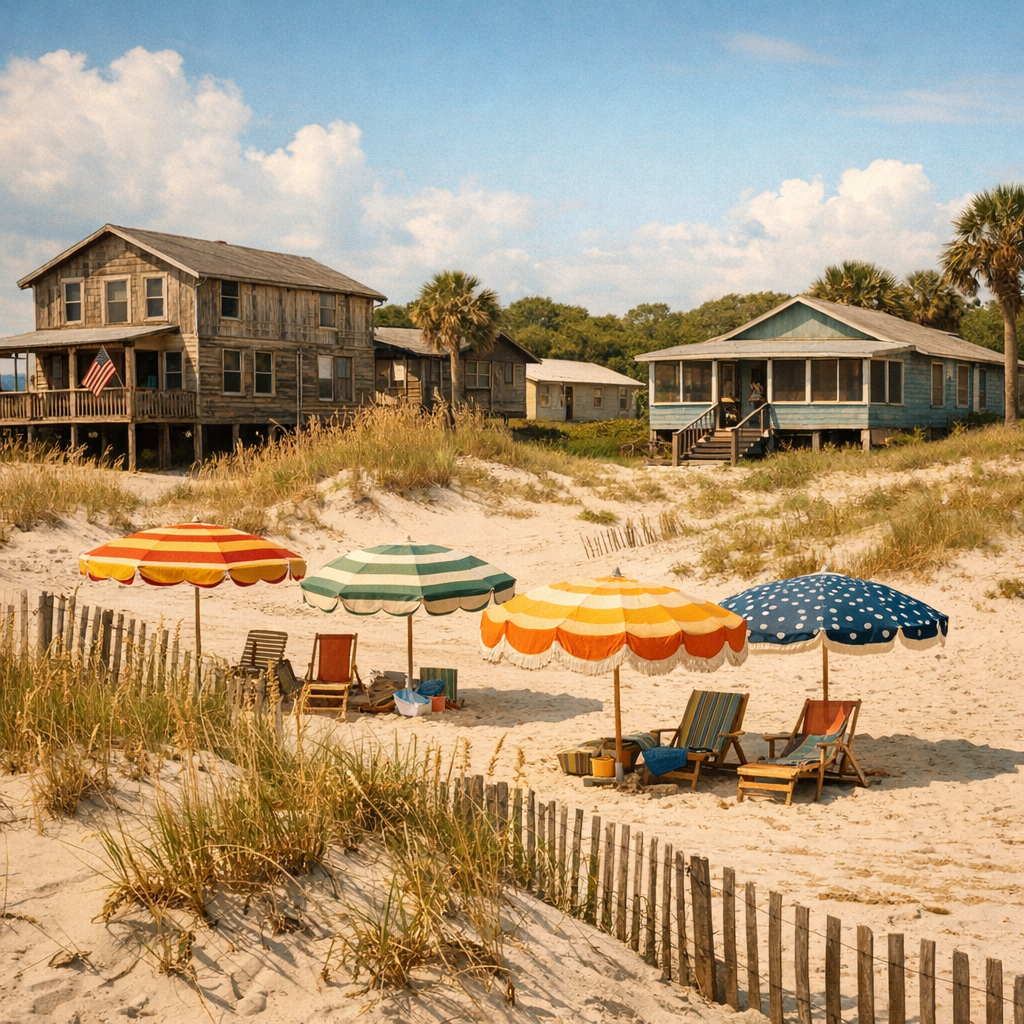
American Beach is not a resort in the modern sense. There is no lobby, no check-in desk, no infinity pool. What it is instead is 216 acres of dunes, weathered cottages, live oaks, and ocean that Black Americans built, owned, and vacationed on entirely for themselves — a place where, for the first time, "No Negroes" signs simply did not apply. For anyone tracing the full arc of the Black travel experience in this country, American Beach is essential ground.
A.L. Lewis's Vision: A Beach Built By and For Black Families
Abraham Lincoln Lewis was Florida's first Black millionaire, and he earned that fortune by solving a problem the white insurance industry refused to touch. In 1901, Lewis co-founded the Afro-American Life Insurance Company in Jacksonville because, as Black Americans of the era knew all too well, most white-owned insurers would not write policies for Black customers at any price. The company thrived, and Lewis became one of the wealthiest and most influential Black businessmen in the South.
Lewis used that wealth and influence to build institutions his community was locked out of elsewhere — including the Lincoln Golf and Country Club and, in 1935, American Beach. The Afro-American Life Insurance Company purchased the oceanfront land specifically as a retreat for its employees and for Black families across the region who had nowhere else to safely swim, sunbathe, and gather by the ocean. Lewis's stated purpose was direct and unambiguous: American Beach would offer Black travelers "recreation and relaxation without humiliation" — a radical idea in the Jim Crow South, where Black beachgoers were routinely arrested, harassed, or run off public shorelines.
It worked. Lots were sold to Black families and businesses, cottages went up along the dunes, and American Beach quickly became one of the only places on the Atlantic coast where a Black family could rent a room, order a plate of food, dance at a nightclub, and fall asleep to the sound of the ocean without a single thought about who might object to their presence.
The Negro Ocean Playground: American Beach's Golden Era
By the 1940s and into the 1950s, American Beach had earned a nickname that traveled across the entire segregated South: "The Negro Ocean Playground." Church groups chartered buses from as far away as Georgia and the Carolinas. Families saved all year for a week at American Beach. Hotels, boarding houses, restaurants, and juke joints filled in along the dunes, and the beach became one of the premier Black leisure destinations in the country — spoken of in the same breath as Idlewild in Michigan or the Chicken Bone Beach communities that dotted the segregated Atlantic coast.
The entertainment lineup at American Beach reads like a who's-who of mid-century Black excellence. Ray Charles and Cab Calloway performed at the beach's nightclubs. Bandleader Billy Eckstine played to packed houses. Baseball legend Hank Aaron and boxing champion Joe Louis were known to visit. Author and anthropologist Zora Neale Hurston spent time there, as did actor Ossie Davis and, decades later, Sherman Hemsley. The beach's most famous nightclub, Evans' Rendezvous, was the social heart of it all — though it wasn't without its own quiet controversies; a then-unknown James Brown was reportedly turned away from performing there before he became a household name, a small footnote in a much larger story of Black joy carving out its own space.
For nearly three decades, American Beach offered something that simply did not exist anywhere else along that coastline: a place where Black vacationers set the terms.
Decline, and the Fight to Remember
Two forces converged in 1964 to change American Beach forever. The passage of the Civil Rights Act began dismantling the legal segregation that had made a separate Black beach a necessity in the first place, and Black travelers slowly gained access to previously whites-only beaches and resorts across Florida. That same year, Hurricane Dora tore through Amelia Island, badly damaging American Beach's hotels, cottages, and businesses. Without the built-in demand of segregation and with much of its infrastructure destroyed, American Beach entered a long, quiet decline. Development pressure crept in around its edges as the rest of Amelia Island transformed into a high-end resort corridor.
MaVynee Betsch: The "Beach Lady" Who Saved American Beach
American Beach might have simply disappeared into condominiums and golf courses if not for one woman: MaVynee Elisabeth Betsch, A.L. Lewis's own granddaughter.
Betsch's early life looked nothing like a preservationist's origin story. Raised in considerable wealth within Jacksonville's Black elite, she trained at the Oberlin Conservatory of Music and moved to Europe, where she built a genuine career as an opera singer, making her professional debut in Braunschweig, Germany, in 1959. She spent roughly a decade performing on European stages before returning home to Florida.
Back in the United States and facing a cancer diagnosis, Betsch's priorities transformed completely. She gave up her opera career, gave away her fortune to environmental and preservation causes, and dedicated the rest of her life — starting in the mid-1970s and continuing until her death in 2005 — to protecting American Beach from the same development consuming the rest of Amelia Island. She became known simply as "the Beach Lady," a woman who let her fingernails and hair grow untrimmed for decades as a symbol of environmental preservation, planted trees, led visitors on personal historical tours of the dunes and cottages, testified at zoning hearings, and refused every offer to sell.
Her advocacy paid off. Largely due to her tireless campaigning, the American Beach Historic District — roughly 40 acres encompassing 67 buildings and one contributing structure — was added to the National Register of Historic Places on January 28, 2002, permanently protecting the community's most significant sites from unchecked development. Betsch was posthumously honored by the Dalai Lama as an "Unsung Hero of Compassion," and her life has been the subject of multiple documentary films. She died in 2005, but the beach she refused to let disappear is still standing because of her.
The A.L. Lewis Museum Today
Betsch didn't live to see it, but her vision of a permanent home for American Beach's story was realized when the A.L. Lewis Museum opened at American Beach on September 6, 2014. Housed in a modest building within the historic district, the museum tells the full story of Lewis's founding vision, the Negro Ocean Playground era, the celebrities and everyday families who filled the beach's golden decades, and Betsch's decades-long preservation fight.
Because it is a small, community-run museum with limited staffing, hours and open days can shift seasonally and are not something we recommend relying on secondhand. Before you plan a visit, call ahead or check the museum's current listing with the Amelia Island Convention & Visitors Bureau (ameliaisland.com) to confirm today's hours — it's a short call that will save you a wasted trip. Docent-led tours, when available, are widely regarded as the single best way to understand the site; many are led by residents with direct family ties to the beach's founding families.
What to See and Do at American Beach
NaNa Dune (Devil's Dune) — Rising roughly 60 feet above the sand, this is one of the tallest natural dunes in Florida and was Betsch's favorite spot on the entire property. She is said to have spent countless hours here, and it remains a quiet, powerful place to sit with the history of the beach beneath you.
The American Beach Historic District — A walk through the district's surviving cottages, many still family-owned across generations, tells the story better than any placard could. Go slowly and respectfully; this is a living, occupied community, not an open-air exhibit.
The beach itself — Wide, uncrowded, and largely undeveloped compared to the resort strips elsewhere on Amelia Island. Swimming, shelling, and simply sitting with the Atlantic are still the point, exactly as Lewis intended in 1935.
Fernandina Beach's historic downtown — Five miles north, Fernandina Beach's Victorian-era Centre Street offers shops, galleries, and restaurants worth an afternoon, and pairs naturally with a day trip to American Beach.
Where to Eat Nearby
American Beach itself has limited commercial development today, so most visitors eat in Fernandina Beach, a short drive north. Fresh, local seafood is the throughline — this is still a working shrimping town. Look for Minorcan clam chowder (a distinctly North Florida dish, spiked with the region's fiery datil pepper), fried and blackened local shrimp, fresh mullet, and classic Southern sides. Family-owned soul food spots in Nassau County are worth seeking out for a plate that connects directly back to the community traditions American Beach was built to preserve.
Where to Stay
Lodging directly at American Beach is limited to a handful of vacation rental cottages, many owned by founding families — booking one is one of the most meaningful ways to experience the place and support the community directly. For hotel options, Fernandina Beach and greater Amelia Island offer everything from historic bed-and-breakfasts downtown to full-service beach resorts a short drive away.
🏨 Book Amelia Island Hotels →Getting There
Jacksonville International Airport (JAX) is the closest major airport, roughly 35–40 minutes by car from American Beach, with direct flights from most major East Coast and Midwest hubs. A rental car is essential — American Beach sits about 5 miles south of downtown Fernandina Beach via A1A and Bailey Road, and there is no meaningful public transit or rideshare coverage on this end of Amelia Island.
✈️ Find Flights to Jacksonville →Best Time to Visit
May through September brings the warmest water and the full beach-day experience, though North Florida summers run hot and humid. Late April and October offer a sweet spot — mild temperatures, thinner crowds, and comfortable conditions for walking the historic district and NaNa Dune. Hurricane season (June through November) is worth watching if you're planning a coastal trip, given the beach's own history with Hurricane Dora in 1964.
Budget Guide
Budget: $100–150/day — modest Fernandina Beach lodging, local seafood spots, free access to American Beach and its historic sites.
Mid-range: $150–250/day — a family-owned cottage rental at American Beach or a boutique inn downtown, sit-down dining, a docent-led museum tour.
Higher-end: $300+/day — full-service Amelia Island resort, private historical tour, fine dining on Centre Street.
BTN Insider Tips
Call ahead for the museum. The A.L. Lewis Museum is small and community-run with limited staffing, so hours can vary by season. Confirm before you drive out.
Treat the historic district as a residential neighborhood. Many cottages are still owned by descendants of the original families. Photograph the dunes and public spaces freely; be respectful around private homes.
Pair it with Fernandina Beach. There's limited food and lodging directly at American Beach, so build your trip around Fernandina Beach's downtown, five miles north.
Read up on MaVynee Betsch before you go. Knowing her story transforms a walk on the dunes into something much deeper — look for documentaries on "the Beach Lady" ahead of your visit.
Visit NaNa Dune at sunrise or sunset. It's the quietest, most reflective spot on the property and was reportedly Betsch's own favorite place to sit.
Mark Your Calendar
- January 28 — Anniversary of the American Beach Historic District's 2002 listing on the National Register of Historic Places
- September 6 — Anniversary of the A.L. Lewis Museum's 2014 opening
- Summer months — Community events and reunions organized by American Beach's descendant families, announced locally each year
Book Your Trip
American Beach isn't a place you visit for a resort experience — it's a place you visit to understand what Black families built for themselves when the rest of the country refused them the ocean. A.L. Lewis's promise of recreation and relaxation without humiliation, and MaVynee Betsch's refusal to let that promise be paved over, are both still here, in the dunes and the cottages and the water. Go see it.
✈️ Book Your Amelia Island Trip Now →*Affiliate links — BTN may earn a commission at no extra cost to you.